Stine Janvin Motland, Morten JohFeaturing: Lucy Railton, Jules Reidy
Or Gare: funeral procession music from Ryfylke, Norway (LP)
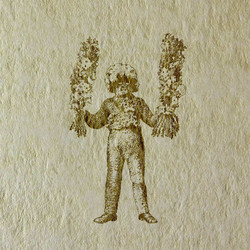
Or Gare begins in the space between footsteps, in the near‑forgotten air of rural funeral processions from Ryfylke, Norway. Working with the old “liksong” practice – songs once intoned by small groups as they walked the dead toward their resting place – Stine Janvin and Morten Joh don’t simply reconstruct an ethnographic fragment; they prise open its intervals and its slowness, letting the music bloom into something uncannily present. This debut collaboration treats funeral‑processional song as an ancient kind of microtonal devotional music, stretching its already unbearably slow melodic movement into a suspended state where every shift in pitch feels like a change in weather.
Janvin’s voice, multiplied and refracted through electronics, becomes both cantor and chorus, sliding into the cracks between major and minor, brushing against pure tone, breath, and faint distortion. Around and beneath it, Joh’s synths, tape machines and measured percussion move with ritual gravity: low tones that seem to come from the ground itself, glinting overtones, dull chimes that resemble distant bells heard through fog. Together they recast the procession as a kind of slow, continuous modulation, a line of sound that carries the weight of ceremony yet glows with an otherworldly modernity, as if a lost liturgy had been retuned for a dimly humming chapel of circuits.
Guest appearances are woven in with the same care. On the opening side, Lucy Railton’s cello folds into the vocal and electronic fabric like an extended, resonant throat, while Jules Reidy’s electric guitar later threads a pale, sustained light through the texture. Their contributions don’t break the spell so much as deepen it, adding new timbres to the shared, halting stride. Across the record, the pacing remains resolutely processional: phrases hang, overlap, decay; drones gather and thin; silence is allowed to speak. Or Gare is stark but never austere for its own sake – it is animated by a gentle, persistent attention to how mourning, memory and landscape sound when stretched over distance. The result is a quietly radical act of excavation and re‑voicing, a funeral music from the past that finds, in electronics and extended technique, a new way to walk alongside the living.