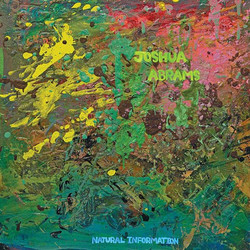
Joshua Abrams
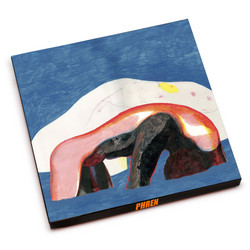
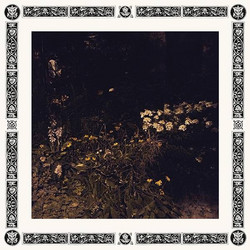
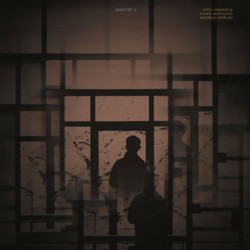
Music for Pulse Meridian Foliation (LP)
Label: Drag City
Format: LP
Genre: Experimental
In process of stocking: On backorder: usually ships within a few days.
Music for Pulse Meridian Foliation is the sonic counterpart to an environment already charged with image, text and embodied history. Composed by Joshua Abrams for Lisa Alvarado’s exhibition of the same name at REDCAT in Los Angeles, the piece was originally conceived as a four‑channel sound installation, looping through the gallery day after day from April to August 2023. Scored for two violas (both played by James Sanders), harmonium (Alvarado) and electronics (Abrams), it was designed not as a background but as an active “in‑between space” – an access point to a pulsating experience connecting body and land, to borrow the exhibition’s own language. In its recorded form, mixed down to stereo, that intention remains intact: the music still behaves like a slowly turning coil, drawing the listener into an evolving, gently insistently charged field.
Where Abrams’s work with Natural Information Society focuses on the form of music as inhabited by a particular ensemble, here his writing is in strict dialogue with Alvarado’s visual and conceptual matrix. The two violas become the primary carriers of that dialogue, passing material back and forth across the stereo field like information moving between different temporal or geographic zones. Lines emerge from oppositional points, weave together, separate, and meet again, echoing the exhibition’s engagement with Gloria Anzaldúa’s notion of Nepantla – the in‑between state where transformations are enacted. The harmonium sits beneath and within this exchange as a sustained, breathing ground, while the electronics shade and echo the acoustic gestures, thickening or thinning the air as needed. What results is music that is minimal in terms of material, but expansive in effect: small changes in emphasis or harmony register like pressure shifts in a weather system.
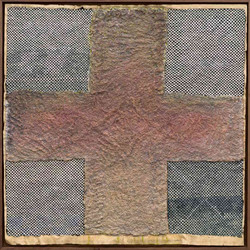
The exhibition itself, as REDCAT’s chief curator Daniela Lieja Quintanar notes, is a threshold: mural, double‑sided paintings, photographs and sound installation exploring how memory is transformed through the body’s relation to geography and geology, and how histories such as the “Mexican Repatriation” of the 1930s reverberate across generations. Abrams’s composition lets that weight pass into sound almost imperceptibly. The “extreme pressures” invoked in Alvarado’s metaphor of foliation – rocks recrystallising under strain – become here the slow, nearly incalculable shudder of intervals, the way a held note thickens with overtones, the way recurring figures return just slightly altered, like memories replayed under new conditions. Horizontal and vertical planes intersect: long tones and melodic filaments, foreground and background, left and right. The space feels ambient yet never static, in constant minimal change.
In translating the original four‑speaker layout to two channels, Abrams pays close attention to the small details, relocating former vertices of a triangulated sound field into a new, coherent stereo “ecosystem.” That care preserves an essential aspect of the installation: the sense that the music is less an object than a living border environment through which the listener moves. Across its length, Music for Pulse Meridian Foliation enacts the core question Alvarado poses – “How does memory transform and live within the body?” – by making transformation itself the music’s basic gesture. Every hand‑off between the violas, every slight shift in harmonium colour, every electronic trace that rises and dissolves, is a tiny, audible change of state. The result is a work that feels both conceptually exacting and deeply sensorial: an aural foliation where land, history and body leave their layered imprint in the ear.