John Zorn
Curling (John Zorn's Olympiad Volume 4)
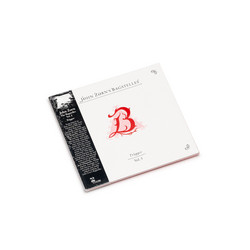
John Zorn’s Olympiad Vol. 4 – Curling continues the deep excavation of John Zorn’s early game pieces, focusing on one of the most elusive scores from that formative 1970s period. Written in 1978, Curling belongs to the same family of rule‑based works that produced classics like Cobraand Lacrosse, yet it stands apart in both method and mood. Where many game pieces embrace jump‑cut chaos and rapid‑fire cueing, Curling narrows the field to a single, radical constraint: long tones. It is a composition built from sustained sound – breath, resonance, decay – turning duration itself into the main arena of play. Within Zorn’s catalogue, it’s unusually meditative, almost ascetic: a slow, hovering structure where tension comes not from sudden shifts but from minute inflections and the unpredictable friction between overlapping tones.
For this first fully documented realisation, Zorn turns to two long‑standing Bay Area ensembles who have lived with his language for decades: the ROVA Saxophone Quartet and the William Winant Percussion Group. ROVA, pioneers of the sax quartet as an experimental laboratory, bring a mastery of micro‑tuning, multiphonics and ensemble blend that lets the sax section behave like a single, many‑throated organ. The Winant group, meanwhile, supplies an extended battery of percussion – from drums and cymbals to gongs, tam‑tams and resonant metals – capable of sustaining pitches and noise clouds that can meet the saxes on equal terms. Together they approach Curling not as a piece of historical curio but as a live system: a set of constraints to be inhabited, tested and gently stretched in real time.
The music that emerges over roughly 45 minutes feels like the audible trace of slow motion. Long sax notes slide against each other, sometimes locking into rough unisons, sometimes grinding in dissonant clusters that beat and shimmer. Percussion sounds enter not as rhythmic figures but as sustained colours: bowed metals that bloom into eerie harmonics, rolls that build and recede like weather, strikes whose resonance lingers long after the initial impact. The game structure governs who can enter, how long tones must be held, how overlaps accumulate; within those rules, the players choose exact pitch, dynamics, timbre and placement. The result is a music that is simultaneously precise and porous – a drone‑like field that never quite settles, constantly alive with internal motion.
Conceptually, Curling extends the “Olympiad” idea at the heart of this series: each game piece functions like a sport with its own rules, tasks and strategies, demanding both skill and responsiveness from the performers. Where earlier volumes mapped out more frenetic games, Vol. 4 showcases a discipline closer to endurance: a test of breath control, listening and restraint. The title’s echo of the winter sport is apt – much of the drama is in the slow glide and subtle steering rather than in overt gestures. For listeners accustomed to Zorn’s more explosive side, this is a chance to hear how his interest in structure and interaction can manifest as a kind of collective deep listening, closer in spirit to minimalism and spectral music than to downtown skronk.
Released by Tzadik in early 2026, John Zorn’s Olympiad Vol. 4 – Curling further fleshes out a once half‑mythical corner of Zorn’s output, confirming that the game pieces are not just historical anecdotes but living scores that can still generate fresh, unexpected music in the hands of the right players. With ROVA and the William Winant Percussion Group treating the instructions as a springboard for sustained, patiently unfolding sound, Curling becomes both a document of 1970s conceptual thinking and a vividly present‑tense experience – a single, extended breath that seems to suspend time while it lasts.