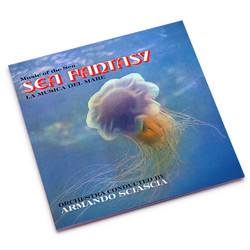
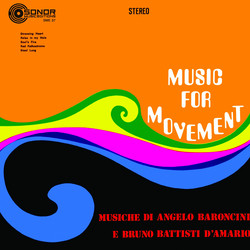
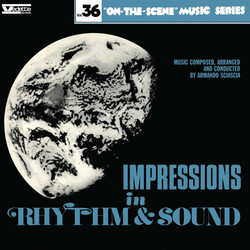
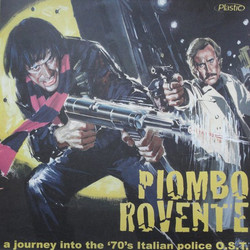
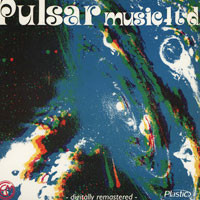
Bruno Battisti D'Amario, Puccio Roelens, Armando Sciascia
Phase 6 Super Stereo - Introducing The Alternative Italian B-Movie Soundtrack (2LP)
Tracked express shipping from Italy, no customs or import VAT in the EU. Shipping costs
Lucky Restock - Limited Quantities Please note: these are original copies that may show minor sleeve wear due to long-term storage. The vinyl is in excellent condition. Electric harpsichord cascades over thunderous drum breaks. Fuzz guitar tears through blistering psychedelic workouts. Bossa nova rhythms collide with proto-disco grooves. This is Phase 6 Super Stereo, the fifth entry in Plastic Records' excavation of Italian library music archives and one of the most sonically adventurous compilations the label ever released. Spread across a gatefold double LP, these sixteen tracks from the vaults of Vedette Records demonstrate why the Phase 6 Super Stereo imprint became a holy grail for crate diggers and soundtrack collectors worldwide.
The Phase 6 Super Stereo label was founded in the early 1970s by Armando Sciascia (1920-2017), the Abruzzese violinist, conductor, and composer who had already established Vedette Records in Milan in 1962. Where Vedette's main catalog ranged from Italian beat pop to American rock imports (Sciascia was the first Italian label owner to release The Doors domestically, and launched the careers of I Pooh and Equipe 84), Phase 6 Super Stereo was conceived as a specialized sublabel for instrumental easy listening, orchestral works, film themes, and library music recorded using innovative technologies. The label's name derived from the "6 Fasi Superstereo" mixing and equalization process applied to each channel during recording, a forward-thinking production technique that gave these tracks a razor-sharp stereo separation still capable of bursting listeners out of their seats decades later. Sciascia composed prolifically for the series under his own name and using pseudonyms including H. Tical (for music) and Pantros (for lyrics), while his artistic director Francesco Anselmo appeared on countless Phase 6 releases under an array of aliases: Lee Selmoco, Pinto Varez, Peter Hamilton, Dorsey Dodd, Alex Brown, Arsenio Bracco, and Peter Dracula among them.
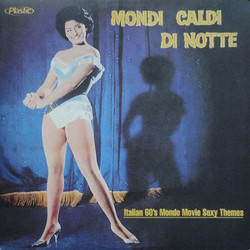
The compilation opens with "Desert Heat" by Peter Hamilton, one of Anselmo's many pseudonyms, before plunging into the heavy psychedelic rock of Blue Phantom's "Diodo." Blue Phantom was Sciascia's secret project, a studio assemblage of unknown session musicians performing music he composed under the H. Tical alias. Their sole album Distortions (1971), released on Vedette subsidiary Spider Records, has become one of the most sought-after Italian psychedelic recordings, its tracks later used by director Jess Franco in his 1972 film Sinner: Diary of a Nymphomaniac. "Diodo" layers slashing fuzz guitar riffs over a thunderous drum beat, channeling early Pink Floyd through a uniquely Italian sensibility - proof that Sciascia, renowned for his "sexy film" soundtracks for mondo documentaries like Mondo caldo di notte (1962) and Sexy (1963), could conjure seriously heavy psychedelia when the mood struck.
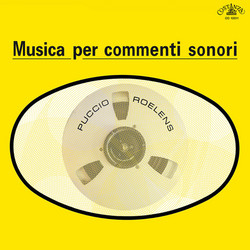
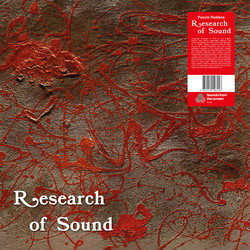
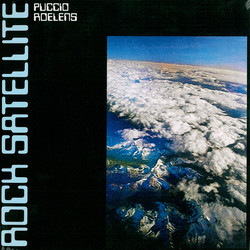
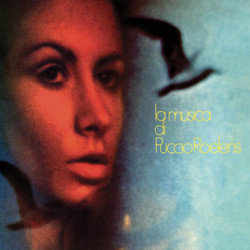
The Genoese pianist and orchestra conductor Puccio Roelens (born Amleto Armando Roelens, 1919-1985) contributes two tracks, "Caravan" and "Senza Archi," representing one of the first Italian musicians to play jazz with his orchestra at the end of World War II. Roelens had a career almost entirely devoted to jazz, forming a trio with Baldo Rossi and Otello Canapino specializing in instrumental covers of Nat King Cole songs, and his late-period library recordings for Costanza Records like Research Of Sound (1976) and Rock Satellite (1977) remain legendary among collectors. His 1969 album La Musica Di Puccio Roelens, featuring session men including Giovanni Tommaso on bass, Roberto Podio on drums, and Bruno Battisti D'Amario on guitar, is considered a holy grail of Italian funk.
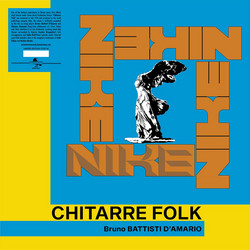
D'Amario himself appears three times on this compilation with "Mas Que Nada," "Su Delicia," and "Desbocado" (the latter featuring Edda Dell'Orso's otherworldly vocals), demonstrating the range of the Roman classical guitarist who became Ennio Morricone's favorite session player. Having performed on The Good, the Bad and the Ugly and studied composition with Domenico Guaccero and Morricone himself, D'Amario founded his own Nike label and became Professor of Classical Guitar at the Santa Cecilia Conservatory while simultaneously producing sophisticated bossa nova and Latin funk recordings for various library imprints.
Other highlights include Green Future's punchy cover of "I'm A Man," which mixes gritty saxophone with hard-hitting proto-disco rhythms; Billy & Friends' "Hua Rock" and "I Found My Love In Portofino"; Nilton Castro's samba groove "Segura O Sambura"; Cat Collins' sultry "Le Grisbi"; and Dom Boga's "Mattino Di Fuoco." These tracks mix rock, soul, and jazz in a stylish manner that blends easy listening pop hooks with an experimental instrumental approach, making the Phase 6 catalog equally suited for B-movie soundtracking or deep listening sessions.
Sciascia retired from music in the 1980s and moved to Connecticut in 1988, where he lived until his death at 97 in 2017. But the Phase 6 Super Stereo catalog he created remains a testament to the innovative spirit of Italian library music, where anonymous session musicians were free to experiment with early electronic equipment, exotic instrumentation, and revolutionary production techniques that continue to influence contemporary producers and soundtrack composers.
Format
Comes in gatefold sleeve.
Titles selected by Marco Villanti and Andrea Mancini
Release notes
Comes in gatefold sleeve. Titles selected by Marco Villanti and Andrea Mancini
| A1 | Desert Heat | 2:31 | |
| A2 | Diodo | 3:53 | |
| A3 | Caravan | 3:28 | |
| A4 | Mas Que Nada | 2:33 | |
| B1 | Segura O Sambura | 2:54 | |
| B2 | Obsessively | 2:40 | |
| B3 | Assonanza In Mi | 3:05 | |
| B4 | Mattino Di Fuoco | 2:41 | |
| C1 | Hua Rock | 2:17 | |
| C2 | Le Grisbi | 2:50 | |
| C3 | Su Delicia | 2:48 | |
| C4 | Disperazione | 2:14 | |
| D1 | I'm A Man | 3:36 | |
| D2 | I Found My Love In Portofino | 2:55 | |
| D3 | Desbocado | 3:01 | |
| D4 | Senza Archi | 2:19 |
- Andrea Mancini
- Compiled By
- Marco Villanti
- Compiled By