Various
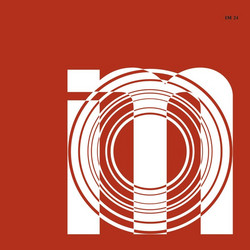
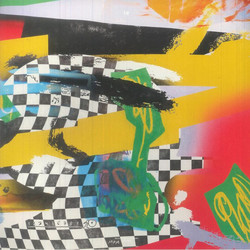
Morphine Mambo Jazz Club (LP)
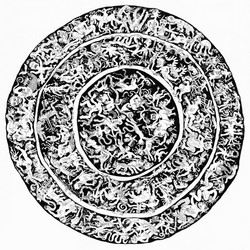
Lucky Restock - Limited Quantities. Please note: these are original copies that may show minor sleeve wear due to long-term storage. The vinyl is in excellent condition. What happens when you crack open the vaults of Britain's oldest music library and let the smoke drift in? Morphine Mambo Jazz Club answers that question with eighteen cuts of mid-century tension: music conceived in dimly-lit studios for purposes no one fully remembers, now resurrected as a document of a peculiarly British form of cool.
The sixteenth release in Plastic Records' excavation series digs deep into the archives of De Wolfe Music, the London institution that's been supplying production music since 1909 - predating even the talkies. Founded by Dutch musician Meyer de Wolfe, the company built its recorded library in 1927 and spent the following decades providing soundtrack material for everything from newsreels to television dramas, Monty Python films to ITV crime series. By the 1960s, De Wolfe had assembled a remarkable stable of composers who worked in anonymity, crafting miniature noir scenarios designed to score industrial films, documentaries, and television programmes.
Reg Tilsley (1926-1987), whose "Slow Moody Blues" became unexpectedly famous decades later as the slowed-down theme for Adult Swim's Harvey Birdman, Attorney at Law, was one of De Wolfe's most prolific contributors. A Croydon-born chorister who studied conducting in Stuttgart under the Polish composer Jerzy Gert, Tilsley began working with De Wolfe in 1967 and produced an astonishing body of work - including ten volumes of the Tilsley Orchestral series - that ranged from big band swagger to strings-drenched melodrama. His "Warlock" has been sampled by KRS-One, Cam'ron, and most notably by Drake and Soulja Boy on "We Made It." With Johnnie Gray, Tilsley also contributed compositions marked here under the Tilsley and Gray credit, including "Jumbo Waltz" and "Mobster Scene" - the latter title alone suggesting the noir atmospherics this compilation celebrates.
Johnny Hawksworth (1924-2009) represents the jazz end of the De Wolfe spectrum. Initially trained as a pianist, Hawksworth became one of Britain's most respected jazz bassists during his tenure with the Ted Heath Orchestra in the 1950s and '60s. His television work made him a household presence even if his name wasn't: he composed the famous Thames Television ident and theme tunes for Roobarb, George and Mildred, and Man About the House. He even contributed incidental music to the 1967 Spider-Man cartoon. His bass-driven pieces for De Wolfe - including "It's a Bass No. 3" and "Elusive Samantha" featured here - bring a sophisticated jazz sensibility to the compilation's smoke-wreathed atmosphere.
The Dutch connection runs deep through De Wolfe's history, and Jack Trombey - the primary pseudonym of Jan Stoeckart (1927-2017) - exemplifies this transatlantic collaboration. An Amsterdam-born trombonist who graduated from the Amsterdam Conservatory in 1950, Stoeckart was introduced to De Wolfe by his conductor Hugo de Groot in the early 1960s and proceeded to compose between 1,200 and 1,300 works for the library under various guises. His "Eye Level" - originally titled "Amsterdam" - became a million-selling number one hit in 1973 when Thames Television selected it as the theme for Van der Valk, and his "Homeward Bound" serves as King Arthur's heroic theme in Monty Python and the Holy Grail. His "World of Strategy No. 4" on this compilation showcases the tension-building craft that made him indispensable to producers seeking instant mood.
Peter Reno was the working name of Cliff Twemlow (1937-1993), a figure so improbable he deserves his own documentary: a Manchester nightclub bouncer, horror novelist, actor in ultra-low-budget British action films, and - under the Reno pseudonym - composer of over 2,000 pieces of library music. Entirely self-taught, Twemlow developed what he called the "De Dum Da Principal," humming orchestral arrangements into a tape recorder for later transcription. His Peter Reno compositions for De Wolfe scored Public Eye, Rutland Weekend Television, Queenie's Castle, and The Sweeney. Tracks like "Silent Service," "Armed Escort," "Harder They Fall," and "Coast Ride" - several of which feature here - were orchestrated with help from Reg Tilsley, transforming Twemlow's hummed sketches into fully-realized spy-jazz scenarios.
Keith Papworth, another De Wolfe regular, contributes "Journey Into Sound No. 6" and "Journey Into Sound No. 7" - titles that suggest the functional anonymity of production music even as the compositions themselves pulse with personality. Papworth's work has appeared in Monty Python sketches and films, and his 1975 album Hard Hitter became a holy grail among crate-diggers and hip-hop producers seeking sample-ready breaks.
The remaining composers - P. Willsher and K. Chesher with their eerie "Dr. Witch-wot," W. Hill with "Serra Acura," John Reids with the impeccably-titled "Tuxedo" - complete a picture of British library music at its mysterious peak. These were musicians working in deliberate obscurity, crafting two-minute dramas for situations that existed only in the imagination of some future television producer. That they succeeded so brilliantly - that this music still sounds like the score to a film you half-remember from a fever dream - is testament to craft exercised without ego, professionalism applied to creative ends.
Compiled with the obsessive care that defines Plastic Records' approach, Morphine Mambo Jazz Club offers a portal into a world of snap-brim hats, trenchcoats, and rain-slicked streets that never quite existed except in the minds of British composers imagining American danger. The music spans roughly 1964 to 1969 - the golden age of British library production - and arrives with the characteristic Latin-tinged swing that the subtitle promises.