Steve ReichFeaturing: Los Angeles Philharmonic Orchestra, Susanna Malkki
Runner - Music For Ensemble And Orchestra (LP)
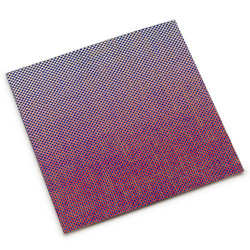
** 2026 Stock ** Runner / Music for Ensemble and Orchestra documents a significant late chapter in Steve Reich’s output, pairing a large-ensemble piece from 2016 with its orchestral “expansion” from 2018, both performed by the Los Angeles Philharmonic Orchestra under Susanna Mälkki. Issued by Nonesuch with sessions recorded at Walt Disney Concert Hall in 2018 and 2021, the album offers first recordings of works that revisit Reich’s core strategies - phased pulses, additive processes, bright harmonic fields - while testing how they function when scaled up to a modern symphony orchestra. The collaboration with the LA Phil, one of the few orchestras with both the technical discipline and the minimalism-savvy culture to take this writing in stride, gives the music a precision and luminosity that match its conceptual clarity.
In notes for the release, Reich describes Runner as written “for a large ensemble of winds, percussion, pianos, and strings,” cast in five movements played without pause, all at essentially the same tempo but distinguished by changing note values within a constant pulse. The formal plan is simple and elegant: an arch of durations - first even sixteenths, then irregularly accented eighths, then a very slowed-down Ghanaian bell pattern in quarters, back to eighths, then concluding with sixteenths transformed into sustained wind pulses “for as long as a breath will comfortably sustain them.” The result is music that feels both steady and alive, a kind of long-distance run in which the ground (tempo) stays fixed while the stride (subdivision) keeps shifting. As the New York Timesnoted, Runner emerges as a “calmly luminous orchestral piece with the pulsating, propulsive rhythms that animate much of Mr. Reich’s music,” more glowing than aggressive.
Music for Ensemble and Orchestra takes that same five-part, arch-shaped duration design and reimagines it as a contemporary answer to the Baroque concerto grosso. Reich calls it “an extension of the Baroque concerto grosso where there is more than one soloist,” specifying twenty soloists drawn from the orchestra’s principals (first stands of strings and winds) plus two vibraphones and two pianos, arrayed as a chamber group in dialogue with the full orchestra. The tempo again never changes; only the value of the constant piano pulse shifts, moving in the same sixteenth–eighth–quarter–eighth–sixteenth arc as Runner. What this yields in sound is a dense, bright lattice of interlocking lines in the ensemble, periodically enveloped or refracted by orchestral blocks that thicken the harmony and colour without smearing the rhythmic engine. Critics have called the piece “a beautiful and dramatically charged masterpiece” and “the finest thing he’s done in years,” noting how naturally the writing inhabits the orchestral medium without losing Reich’s idiomatic clarity.
Across the album, Mälkki’s handling of balances and articulation is crucial. Reviews singled out the performances for a “clever mix of pinprick precision and reverberant haze,” with the LA Phil’s soloists and sections able to maintain clean attacks and exact subdivision even as the textures accumulate into what one writer likened to an organism that “was starting to wiggle away on its own.” The recording captures that dual perspective: up close, the ear can track individual contrapuntal strands; from a distance, the music coalesces into large, surging planes of sound, closer in impact to orchestral Stravinsky or Britten than to stereotype “background minimalism.” For a composer long associated with smaller, amplified ensembles, this album makes a strong case that the late orchestral works are not outliers but a natural extension of the same rhythmic and harmonic thinking, reframed at symphonic scale.