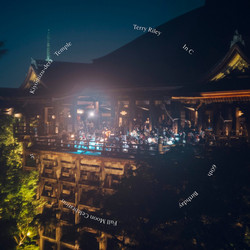
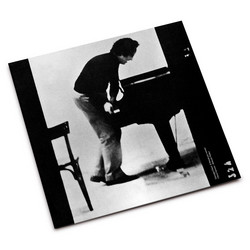
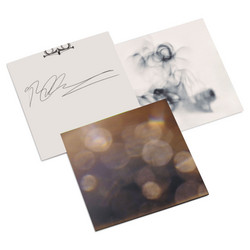
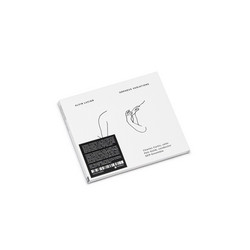
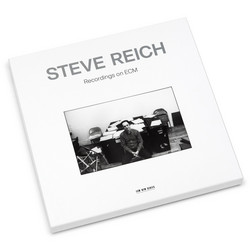
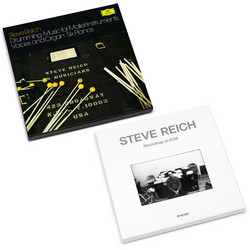
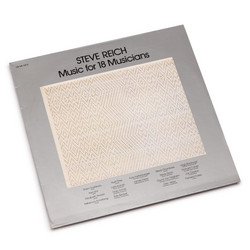
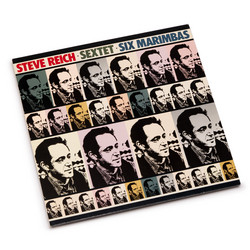
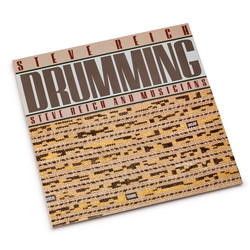
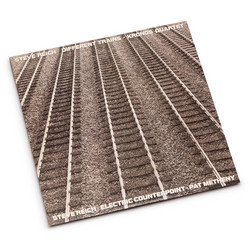
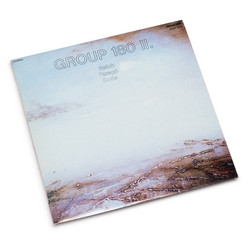
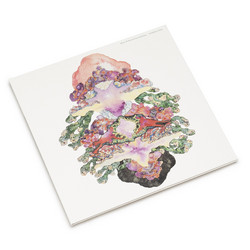
Box set on Nonesuch with 27 disc (26 CDs + 1 DVD) in wallets, plus two booklets (132 + 120 pages). Nonesuch Records releases Steve Reich Collected Works, a twenty-seven-disc box set featuring music recorded during composer Steve Reich's forty years on the label, on March 14, 2025, available to pre-order here. The collection represents six decades of Reich’s compositions, ranging from It’s Gonna Rain (1965) to first recordings of his two latest works: Jacob’s Ladder (2023) and Traveler’s Prayer (2020). Two extensive booklets contain new essays by longtime Nonesuch President Robert Hurwitz, conductor Michael Tilson Thomas, Steve Reich and Musicians percussionist Russell Hartenberger, producer Judith Sherman, and composer Nico Muhly, as well as a comprehensive listener’s guide by pianist and composer Timo Andres.
“There’s just a handful of living composers who can legitimately claim to have altered the direction of musical history," says the Guardian, "and Steve Reich is one of them."
Nonesuch made its first record with Steve Reich in 1985. He was signed exclusively to the label that year, and since then the company has released twenty-two all-Reich albums, two retrospectives, and two remix releases. Among his many honors, two of Reich’s Nonesuch records, Different Trains and Music for 18 Musicians, won Grammy Awards and his Double Sextet recording for the label won a Pulitzer Prize.
“I first heard Music for 18 Musicians when I was in my mid-twenties, at a moment when I was still in the process of figuring out my own taste in contemporary music. I wasn’t yet certain what modern classical music really meant, nor was I sure how it stacked up against work from the past.” Hurwitz says in his liner note. “Music for 18 Musicians was an event of such immense importance that it changed how I felt not only about Steve, but about minimalism, modernism and, in some respects, classical music. Music for 18 was a piece that could sweep listeners up with its non-stop kinetic activity, its opulent sound, its rhythmic invention, its stunning architecture. But only years later did I recognize what drew me in to such an intense degree: it was harmony.
“Here were the kinds of colors and voicings I loved in the earlier twentieth-century music of Stravinsky and Bartók and others, but had found missing in practically all of the new music I had been hearing for years. It was the key that unlocked the music of modern times for me,” Hurwitz continues. “It now seemed possible to love contemporary music. With Music for 18 Musicians, Steve suddenly flung open a door to the possibilities of what a modern composer could be in our time.”
Reich also has become a significant mentor of the younger generation of American composers. “This music is as part of my artistic ecosystem as air is to my respiratory system, and I can’t imagine saying anything about it which wouldn’t somehow get its importance wrong,” composer Nico Muhly says in his liner note. “Steve once told me that the trick is to ‘find your band,’ the group of instruments that form the core of your musical language, and this is advice I pass on to all younger composers who cross my path.”
Composer and pianist Timo Andres adds, “It is Steve Reich, perhaps more than any other musician, who prefigured our ideas of a twenty-first-century composer ... For audiences, too, Reich has proven that contemporary music can thrive outside the insular world of its own practitioners.
“On initial approach, Reich’s music appears both friendly and a little forbidding, its surfaces immaculate, polished, yet also playful and viscerally beautiful ... It exudes a specific kind of energy in live performance as well,” he continues. “Watching an ensemble play Music for 18 Musicians, for example, one has the sense of observing a utopian society in miniature, a mass of people working towards a common goal with no apparent leader.”
Steve Reich has been called “the most original musical thinker of our time” (New Yorker) and “among the great composers of the century” (New York Times). Starting in the 1960s, his pieces It’s Gonna Rain, Drumming, Music for 18 Musicians, Tehillim, Different Trains, and many others helped shift the aesthetic center of musical composition worldwide away from extreme complexity and towards rethinking pulsation and tonal attraction in new ways. He continues to influence younger generations of composers and mainstream musicians and artists all over the world.
In addition to his Grammy Awards and Pulitzer Prize, Reich received the Praemium Imperiale in Tokyo, the Polar Music Prize in Stockholm, the Golden Lion at the Venice Biennale, the BBVA Foundation Frontiers of Knowledge award in Madrid, the Debs Composer’s Chair at Carnegie Hall, and the Gold Medal in Music from the American Academy of Arts and Letters. He has been named Commandeur de l’Ordre des Arts et des Lettres in France, and awarded honorary doctorates by the Royal College of Music in London, the Juilliard School in New York, and the Liszt Academy in Budapest, among others.
One of the most frequently choreographed composers, several noted choreographers have created dances to his music, including Anne Teresa de Keersmaeker, Jirí Kylián, Jerome Robbins, Justin Peck, Wayne McGregor, Benjamin Millepied, and Christopher Wheeldon.
Reich’s documentary video opera works—The Cave and Three Tales, done in collaboration with video artist Beryl Korot—opened new directions for music theater and have been performed on four continents. His work Quartet, for percussionist Colin Currie, sold out two consecutive concerts at Queen Elizabeth Hall in London shortly after tens of thousands at the Glastonbury Festival heard Jonny Greenwood (of Radiohead) perform Electric Counterpoint, followed by the London Sinfonietta performing his Music for 18 Musicians.
Nonesuch Records has historically had close relationships with modern composers. During the years of the label’s first president, Tracey Sterne, it made multiple recordings of Elliott Carter, George Crumb, Charles Wuorinen, and William Bolcom. Since 1985, Nonesuch has made multiple recordings of works by Philip Glass, Stephen Sondheim, Laurie Anderson, Caroline Shaw, Louis Andriessen, John Zorn, Adam Guettel, Henryk Górecki, Timo Andres, Nico Muhly, and Donnacha Dennehy. For John Adams, like Steve Reich, Nonesuch has recorded every new piece of his music since 1985; the label released a collection of his complete works in 2022.
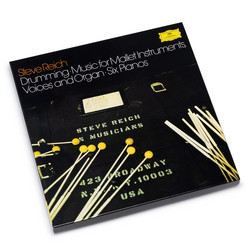
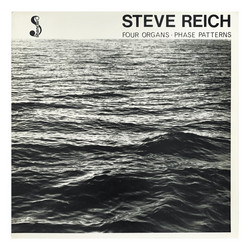
While Nonesuch recordings comprise twenty-four of the twenty-seven discs in Collected Works, the set also includes recordings licensed from other labels: Mahan Esfahani’s recording of Piano Phase (Deutsche Grammophon); Ensemble Avantgarde’s recording of Pendulum Music (Wergo); Art Murphy, Jon Gibson, Steve Chambers, Philip Glass, and Steve Reich’s recording of Four Organs and Murphy, Gibson, Chambers, and Reich’s recording of Phase Patterns (Shandar); Andreas Hartmann and Waltraut Wächter’s recording of Duet with MDR-Sinfonieorchester led by Kristjan Järvi (Sony Classical); Steve Reich and Musicians’ recordings of Music for Mallet Instruments, Voices and Organ and Six Pianos (Deutsche Grammophon); San Francisco Symphony and conductor Edo de Waart’s recording of Variations for Winds, Strings and Keyboards (Philips); Ransom Wilson’s recording of Vermont Counterpoint (Angel); and Ensemble Signal’s recording of Music for 18 Musicians (Harmonia Mundi).