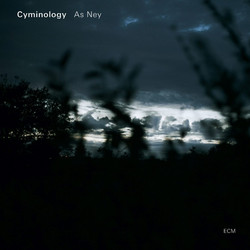
Saburi is the second ECM album by Cyminology, the Berlin quartet led by the German-Iranian singer Cymin Samawatie. ECM presents it as perhaps the only Western jazz ensemble singing ballads in Farsi. On the earlier As Ney she had set classical Persian poetry by Rumi and Hafiz alongside twentieth-century verse. Here she writes all the lyrics herself, and their themes of love and vulnerability shape the band's melodic improvising. The title means patience.
Samawatie was born in Braunschweig in 1976 to Iranian parents and studied jazz in Berlin, where the group formed in 2002. Her partners are pianist Benedikt Jahnel, double bassist Ralf Schwarz, a friend since her teens, and drummer and percussionist Ketan Bhatti. Samawatie composed most of the music, while Bhatti wrote As maa and Jahnel wrote Hedije and the closing instrumental Hawaa. The quartet recorded the eight pieces at Rainbow Studio in Oslo in January 2010, with Jan Erik Kongshaug engineering and Manfred Eicher producing.
The music moves slowly and leaves room around the voice. Sibaai opens the disc with the singing threaded through Jahnel's arpeggios. In the title track, as Ayroldi noted in Musica Jazz, the tension comes from close exchanges between drums and bass. Norma is sung without words, and together with Shakibaai it carries the most clearly Middle Eastern melodic turns. Odd meters and angular harmonies keep the melancholy of the songs from settling, a point stressed in the Neue Zürcher Zeitung. Jörg Konrad in the Süddeutsche Zeitung heard a communication of silence, where pauses and quiet transitions weigh as much as the brief explosions.
Most of the reviews came from German-speaking critics, who placed the record between song and chamber music. Berthold Klostermann in Stereo described it as a meeting of art song and contemporary, contemplative chamber jazz. Christoph Giese in Jazzthetik heard music built on atmosphere that keeps the line between jazz and chamber music fluid. Writing in English on ECM Reviews, Tyran Grillo found the quartet's blend "subtly effusive and affecting" and singled out Jahnel's harmonies on the title track.
This is the CD edition, ECM 2164, first released in January 2011, with a booklet including Samawatie's own liner photographs.