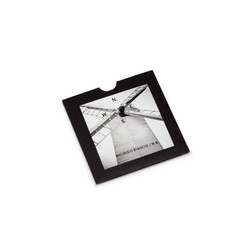
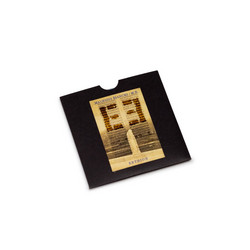
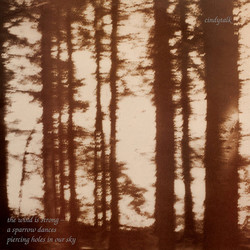
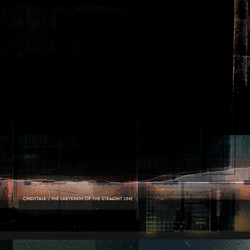
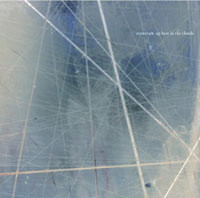
Sunset and Forever finds Cindytalk once again stepping into the faultline between collapse and renewal, extending a project that has always treated the band itself as sculptural material to be broken apart and reformed. From the earliest days of Camouflage Heart and In This World, Cinder’s vision fused post‑punk dissonance, industrial dirge, and abject rock deconstruction with a strangely luminous vocal presence – the same voice that threaded through early This Mortal Coil and Cocteau Twins recordings, permanently wiring Cindytalk into 4AD’s mythos. Yet even then, the focus was never just on song: the studio was already a laboratory for sodden drones, cobwebbed elegance, and decayed textures, as if every track were an attempt to turn the debris of rock into something spectral and half‑remembered.
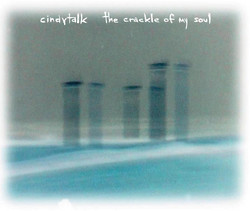
By the early 2000s, that impulse had fully rerouted Cindytalk into glitch‑born expressionism. Cinder’s first laptop-era works embraced granular processing, electro‑acoustic collage, and digital fragmentation, resulting in a run of celebrated Editions Mego releases where “fucked‑up rock music was in retreat and electro‑acoustic abstractions were becoming apparent,” as Cinder has put it. Those textures weren’t a sudden pivot so much as roots that had been growing under the music all along, eventually changing its shape from within. Sunset and Forever is explicitly tied to that history: it doesn’t disown the past incarnations but folds them into a new, labyrinthine structure, a continuation of the same long journey through different tools and states of matter.
The album returns, in a newly oblique language, to the sacred/profane tension that has haunted Cindytalk since the beginning. Opening piece “Embers of Last Leaves” feels like a slow ignition: undulating, cyclical tones coil around each other until they resemble a sorrowful chorale, with Cinder’s voice woven into the swell like a ghost in the circuitry. Rhythm, when it appears, is a disturbance rather than a scaffold. On “Tower of the Sun,” electronic drum thumps and bass drops land as painterly intrusions – impacts that bruise the surface of an already unstable, machined dissonance rather than locking anything into a grid, heightening the apocalyptic menace rather than containing it. “For Those Eyes, Shadows Of Flowers” opens another facet, its tempered electronics radiating a cinematic, almost phosphorescent glow, as if you were listening to distant signals filtered through glass, dusk, and memory.
The closing piece, “I See Her in Everywhere,” bookends the record by echoing the opener’s sense of haunted devotion, but with the human voice further abstracted. What initially reads as a chorus reveals itself as a lattice of electronic tones shaped into something choral, cast in a kind of cathedral reverence without ever resolving into liturgy. Across the album, there are fleeting kinships with the grain and blur of Fennesz, the vocal‑data entanglements of Holly Herndon, or the vaporous density of Lovesliescrushing; yet those are passing proximities rather than alignments. The core remains recognisably Cindytalk: a sensibility more than a style, one that treats noise, voice, and space as co‑equal forces in an ongoing project of transfiguration.
In the end, Sunset and Forever feels like a summation and a further shedding. It builds from micro‑details – a clipped transient, a smeared harmony, a breath‑like grain of distortion – into vast, unstable architectures that never quite settle into landscape or narrative. The record unearths vibrancy in the inanimate and reveals how fully‑fledged materiality can be implied by sound alone, yet it resists the temptation to turn these synthetic substances into a closed world. Instead, it offers them as a series of apertures: brief, intense exposures to a music that has been disintegrating and regenerating itself for decades, and that here reaches another strange, luminous plateau without ever pretending the process is complete.