In 1948, Pierre Schaeffer sat alone in a studio at Radio France, spinning shellac discs of locomotive sounds, listening for music in noise. What emerged from those experiments - musique concrète - would fracture the very notion of what composition could be. Seven decades later, Denis Dufour stands as perhaps the most complete heir to that revolution: composer, pedagogue, archivist, and tireless advocate for an art form that remains, in many quarters, stubbornly misunderstood.
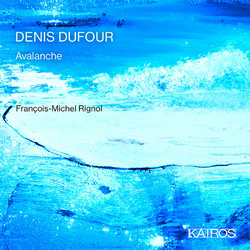
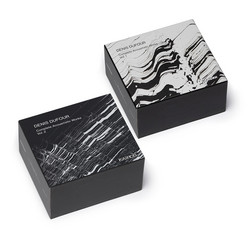
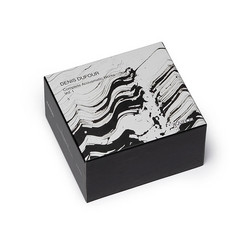
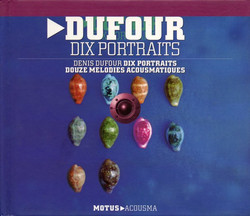
This second monumental box set from Kairos continues the documentation of Dufour's complete acousmatic output - another sixteen discs, another seventeen hours of sound that refuse easy categorization. Where the first volume mapped the terrain, this one reveals its depths: the 91-minute Voix Off' (2005), a work of staggering ambition; the ritualistic Messe à l'usage des vieillards (1987) and its companion Messe à l'usage des enfants (1986-2019); the hour-long theatrical meditation Les Joueurs de sons (1999). Works spanning nearly five decades, from the early Bocalises - Grande suite (1978) to pieces completed as recently as 2024. Dufour arrived at the Groupe de Recherches Musicales in 1976, where he served as studio assistant to Schaeffer himself, alongside François Bayle, Guy Reibel, and Marcel Landowski. He participated in the design of the Acousmographe, composed the first work for instruments with real-time digital processing on the SYTER system, and absorbed - at close range - the ideological tensions that defined French experimental music: the cold war between Schaeffer's studio-fixed musique concrète and Pierre Boulez's real-time electronics, between the poetry of captured sound and the mathematics of synthesis.
What distinguishes Dufour from many of his contemporaries is a refusal to choose sides. He composes with equal facility for orchestra and loudspeaker, for chamber ensemble and acousmonium. His instrumental works are published, his acousmatic pieces performed worldwide through organizations he himself founded: the Motus production company, the international Festival Futura, the Syntax ensemble. When French institutions proved inhospitable - the GRM's internal politics eventually prompted his resignation in 2000 - he simply built parallel structures, carrying Schaeffer's legacy to Italy, Japan, and beyond. The music itself moves between poles that orthodox practitioners often keep separate. Dufour reintroduced the human voice - with all its theatrical, narrative, dramatic weight - into an art form that had grown increasingly abstract. There is something baroque in his phrasing, a fluidity of figure and gesture that recalls the mobility of Rameau, whom he has transcribed and reinterpreted. His Symphonie des simples (2022), with its movements named for medicinal herbs - Pulmonaria officinalis, Artemisia annua, Hypericum perforatum - suggests a composer who sees no boundary between the botanical and the sonic, the healing properties of plants and the therapeutic potential of organized sound.
To survey this second volume is to encounter acousmatic art at its most expansive: the playful mechanisms of Musique à coudre (1987), the radiophonic explorations of PH 27-80 (2008, winner of the SACEM prize), the late meditations of Sommer Abschied and Liebestod (both 2024). Each of the sixteen discs functions as a discrete listening program, yet together they form a vast fresco in which no motif repeats, no territory is charted twice.
For collectors and scholars alike, these box sets represent something unprecedented: the complete acousmatic catalogue of a living master whose work has shaped generations of composers from Bérangère Maximin to Jonathan Prager to Vincent Laubeuf. The detailed trilingual booklet - French, English, German - provides essential context for an œuvre that, as KAIROS notes, rises far above the ordinary. One might feel, confronting this second installment, that Dufour's sonic universe has finally been mapped. Or one might sense, more accurately, that there remains an inexhaustible world still to discover.