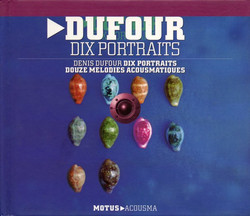
Denis Dufour
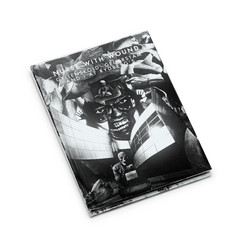
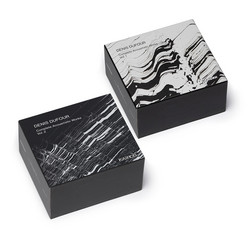
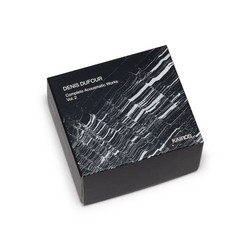
Complete Acousmatic Works — Vol 1 (16CD Box)
Epic box set containing 16 CDs, presenting more than 40 works and 18 hours of listening, including never released before music by Denis Dufour and texts in a detailed booklet. There is a title buried in this collection that serves as its unspoken manifesto: Notre besoin de consolation est impossible à rassasier - Our Need for Consolation is Insatiable. Borrowed from Stig Dagerman, it names a 67-minute work from 1989, but it might equally describe the impulse behind this unprecedented undertaking: the first volume of Denis Dufour's complete acousmatic works, a 16-disc monument to one of the most prolific and least classifiable composers of our time.
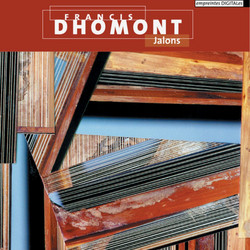
Dufour belongs to a lineage that runs from Pierre Schaeffer's 1948 experiments at Radio France through the institutional battles of the Groupe de Recherches Musicales and into territories that orthodox electroacoustic discourse has often struggled to map. Born in Lyon in 1953, he studied at the Paris Conservatoire with Ivo Malec, Claude Ballif, and Schaeffer himself, then served as studio assistant to the founding fathers of musique concrète. But where Schaeffer eventually renounced his own musical output, returning to Bach and Beethoven in his final years, Dufour has never stopped composing - and never stopped questioning what acousmatic art might become. This first box set spans works from 1977 to 2020, forty-four compositions that resist easy chronology. The earliest pieces - Bocalises - Petite Suite (1977), Rond de jambe (1979) - already display the baroque fluidity of phrasing that would become Dufour's signature. The monumental L'Apocalypse d'Angers (1980), inspired by the medieval tapestry cycle, occupies an entire disc. Les Cris de Tatibagan (2017), nearly two hours of sonic theater, requires two more. Between these poles: portraits and allegories, sacred works and secular meditations, pieces that dialogue with Jean-Philippe Rameau and Marguerite Duras, collaborations with Thomas Brando and Timothée Rémi.
What distinguishes Dufour's practice is a willingness to reintroduce into acousmatic music precisely those elements its pioneers sought to suppress: narrative, drama, the human voice in all its theatrical weight. His Missa Pro Pueris (2019) treats liturgical form not as historical citation but as living architecture. Caravaggio (2000) finds in the painter's chiaroscuro a model for sonic light and shadow. Piano dans le ciel (2001) was conceived to be interspersed between piano works by Boulez, Gilbert Amy, and Magnus Lindberg - a gesture of reconciliation in a field long divided between the studio and the concert hall.
The organizational logic here is not chronological but programmatic: each disc functions as a listening experience complete in itself. Melodramas and radio art, suites and tombeaux, sacred music and what Dufour calls "Electronica" - the categories themselves suggest a composer who refuses the narrow identities that institutions prefer. When the GRM's internal politics proved inhospitable, Dufour simply built his own infrastructure: the Motus production company, the international Festival Futura, teaching positions in Lyon, Perpignan, and Paris that have shaped generations of composers.
Awarded the prestigious Coup de Cœur from the Académie Charles Cros and La Clef from ResMusica, this first volume establishes the terms for what promises to be one of the essential documentary projects in contemporary music. Our need for consolation may indeed be insatiable - but here, at least, is seventeen hours of evidence that the search continues.