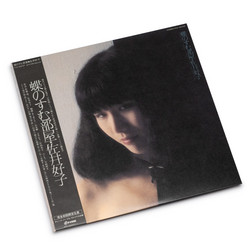
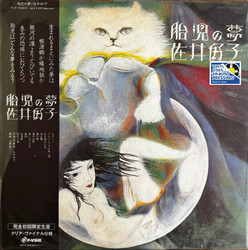
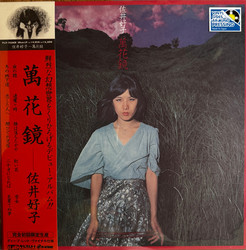
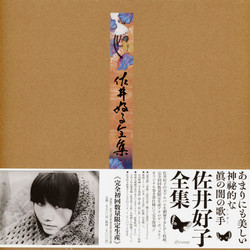
Sai Yoshiko (佐井好子) - one of Japan's most legendary and enigmatic singers - made her debut in 1975 with Mangekyou, an album of superbly crafted songs and crystal-clear vocals over Yuji Ohno's lush, funky arrangements. Three more masterpieces followed in rapid succession: Mikkou (1976), Taiji no Yume (1977), and Chou no Sumu Heya (1978). Her melancholic, poetic lyrics drew from the gothic imagination of Japanese novelists like Ranpo Edogawa, Mushitaro Oguri, and Yumeno Kyusaku - dark fairy tales set to acid-folk, progressive rock, and dreamy pop. Original copies now change hands for staggering sums.
Then, at the height of her powers, she stopped. At the end of Chou no Sumu Heya (The Room Where Butterflies Live), she declared a pause: "Until I can sing my favorite song."
The pause lasted thirty years.
In 2008, Sai Yoshiko returned with Takla Makan - named for the vast desert in Central Asia whose name translates, ominously, as "go in and you will not come out." It was another deep dive into the enigmatic mindscape that had captivated listeners three decades earlier, but transformed by time, experience, and a new generation of collaborators who had grown up worshipping her work.
Where her 1970s albums maintained a relatively consistent sonic palette, Takla Makan reveals Sai's remarkable adaptability. Album opener "Bon Voyage" is a somber farewell ironically placed at the beginning - her haunting vocals suspended within a string quartet so expressive the instruments practically sound like human voices. Yet as the strings fade, they're replaced by clacking drum sticks and overdriven guitar. "Today and Tomorrow" sees her backed by a full rock band, complete with a fiery solo from Seiichi Yamamoto of Boredoms. "Deja Vu" moves into jazz territory, her voice taking on an almost lounge-singer quality. The title track wanders the endless sands, searching for something that may not exist.
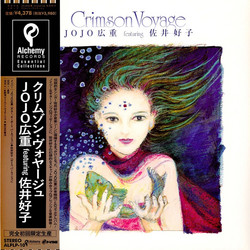
The musicians assembled to realize this vision read like a who's who of Japan's alternative scene - artists who had spent years as devoted fans before becoming collaborators. Takeharu Hayakawa on bass, Yasuhiro Yoshigaki on percussion, JOJO Hiroshige on guitar, Hiroaki Katayama on saxophone, with Nobu Yoshimori handling keyboards, arrangements, and production. Shinji Shibayama of Nagisa ni Te also participates, adding to the album's connection between Sai's original era and its contemporary inheritors.
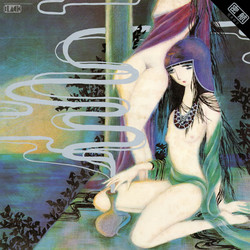
The cover artwork - as with all her albums - is Sai's own self-portrait. For this limited color vinyl edition, the record itself takes on the color of the Taklamakan's endless sand, a physical manifestation of wandering through the desert.
The 2021 vinyl reissue sold out immediately. Now, in response to overwhelming demand, P-Vine presents this limited edition color vinyl pressing - part of the long-awaited colored vinyl reissue program for Sai Yoshiko's complete catalog. With obi. Beige vinyl specification.
Born June 22, 1953, Sai Yoshiko began her career at 21 when she submitted an EP to a local radio station contest and was discovered by fellow artist Rabi Nakayama, who was convinced to help her record her first album. After her 1979 hiatus, she returned not only with Takla Makan but eventually resumed live performances - one show in Tokyo in 2014, another in 2015 - backed by the alternative musicians who had kept her flame burning through the decades of silence.
"Whenever I read comments on my albums in English, Spanish, Chinese, as well as Japanese through the Internet," Sai writes, "I feel they are all standing by me. Thank you everybody, and I am very happy to know that my works have transcended time and place, and reached many people."