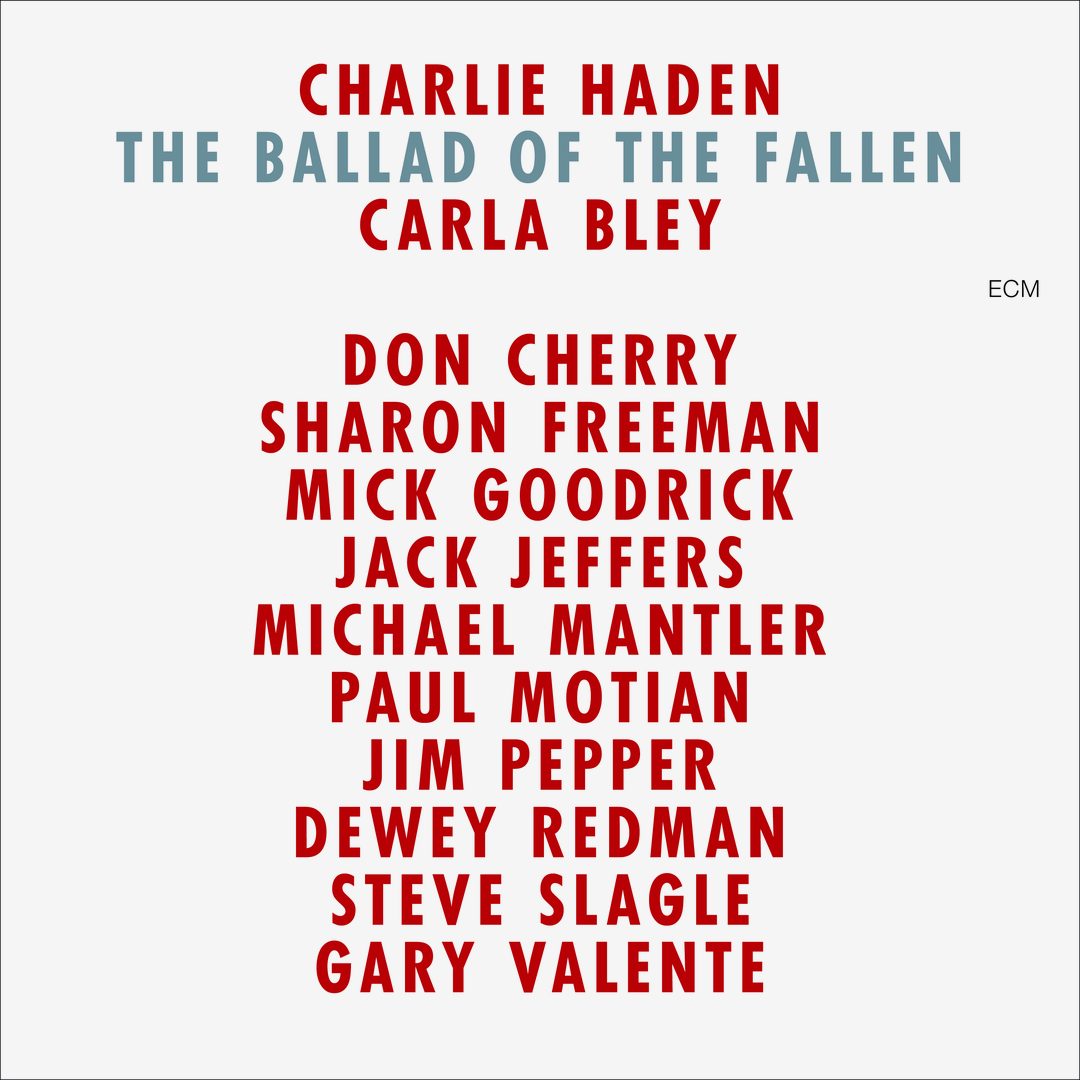
Charlie Haden
The Ballad Of The Fallen
FormatCDLabelECM RecordsGenreJazz & Improvisation
Arriving from the supplier (ships as soon as it reaches us)
Tracked express shipping from Italy, no customs or import VAT in the EU. Shipping costs
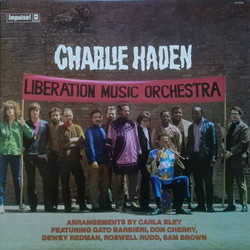
The Ballad of the Fallen is the second album of Charlie Haden's Liberation Music Orchestra, fourteen years after the band's first record, released in 1969. Again the material comes from songs of resistance, from the Spanish Civil War to Portugal, Chile and El Salvador, and again Carla Bley wrote all the arrangements. The record is purely instrumental, so its politics are carried by the choice of tunes and by the playing.
The orchestra was recorded digitally in November 1982 at Tonstudio Bauer in Ludwigsburg, with Manfred Eicher producing. Half of the twelve-piece band had played on the 1969 album, among them Haden on bass, Bley on piano and glockenspiel, Don Cherry on pocket trumpet, Dewey Redman on tenor saxophone and Paul Motian on drums and percussion. The new members filled out the sound with guitar, saxophones and flutes, trombone, French horn and tuba.
The album opens with Els Segadors, the Catalan national song, and moves through the Salvadoran title song and the Republican If You Want to Write Me. Grandola Vila Morena by José Afonso is the song Portuguese radio broadcast as the signal for the revolution of April 1974. Bley's Introduction to People leads into Sergio Ortega's Chilean anthem The People United Will Never Be Defeated. Haden's own La Pasionaria, more than ten minutes long and named after the Republican leader Dolores Ibárruri, is the longest piece, and the record closes with the Catalan La Santa Espina. Reviewing it for Rolling Stone, Joe Carey heard light march and Latin folk-waltz rhythms, free-form passages and small chamber settings for the horns inside Bley's lean structures.
Critics in Europe and the United States welcomed it at once. In The Village Voice in 1983, Howard Mandel called it "recognizable in one listen a classic". Richard Cook wrote in The Wire in 1984 that the arrangements are so sensitive to the melodies that the record is, "on its own terms, a virtual masterpiece". It was voted jazz album of the year in the DownBeat critics poll of 1984.
This is the CD edition of ECM 1248, an album first released on 1 October 1983, with an eight-page booklet.
Release notes
Comes in standard jewel case with a 8-page booklet. Printed in West Germany. Digital Recording November 1982 Tonstudio Bauer, Ludwigsburg
| 1 | Els Segadors | 4:13 | |
| 2 | The Ballad Of The Fallen | 4:19 | |
| 3 | If You Want To Write Me | 3:55 | |
| 4 | Grandola Vila Morena | 2:11 | |
| 5 | Introduction To People | 3:55 | |
| 6 | The People United Will Never Be Defeated | 1:37 | |
| 7 | Silence | 5:45 | |
| 8 | Too Late | 8:20 | |
| 9 | La Pasionaria | 10:24 | |
| 10 | La Santa Espina | 6:58 |
- Steve Slagle
- Alto Saxophone, Soprano Saxophone, Clarinet, Flute
- Charlie Haden
- Bass
- Barbara Wojirsch
- Design
- Paul Motian
- Drums, Percussion
- Sharon Freeman
- French Horn
- Mick Goodrick
- Guitar
- Celia
- Painting
- Roberto Masotti
- Photography By
- Carla Bley
- Piano, Glockenspiel, Arranged By
- Manfred Eicher
- Producer
- Dewey Redman
- Tenor Saxophone
- Jim Pepper
- Tenor Saxophone, Soprano Saxophone, Flute
- Gary Valente
- Trombone
- Michael Mantler
- Trumpet
- Don Cherry
- Trumpet [Pocket]
- Jack Jeffers
- Tuba