Tokyo Bedroom Orchestra
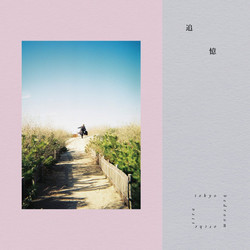
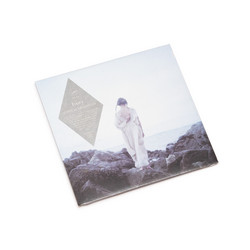
Tsuioku
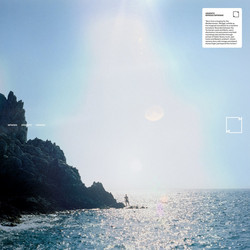
Tsuioku, meaning “a distant recollection,” draws from the scenery Nakamura encountered while living in Saitozaki, a peninsula in Fukuoka surrounded by sea and mountains. These are not direct depictions, but impressions, where light, distance, and the subtle movement of nature are gathered and reshaped over time. Working from recordings made within his immediate surroundings, often committed to cassette, Nakamura allows sound to drift between states. Field recordings, analog synthesis, and acoustic fragments move through a tape-woven texture, where guitar, strings, and voice emerge and recede, forming a language shaped as much by atmosphere as by melody. A pastoral quality emerges here, though never fixed, more a feeling that lingers at the edge of perception.
His approach remains close and tactile. Using mini synthesizers, effect pedals, and small, often whimsical, hand-built setups, compositions take shape through repetition, variation, and attentive listening. Sounds are allowed to shift and bend, occasionally surprising in their movement rather than settling into fixed forms. Imperfections are carried forward, letting texture and time define the work. A gentle lo-fi sensibility runs throughout, not as aesthetic alone, but as a way of staying close to the moment of creation. It is within this space that Tokyo Bedroom Orchestra has quietly built an international audience online, drawn to music that moves between tape-worn surfaces and a slow, emotional drift.
The album unfolds as a series of scenes, not as narrative but as accumulation. Light on water, evening warmth, distant mountains, night air. Shikijitsu and Minamo bring a clarity shaped by guitar and strings, while Yoko opens into a softer, diffused warmth. The title piece, Tsuioku, returns to this idea of recollection, where fragments gather, shift, and gradually dissolve. Nakamura’s work as a composer and sound designer for games and animation, including Steins; Gate Elite and the Yuru Camp△ series, reflects a sensitivity to sound shaped within a more defined context. Within Tokyo Bedroom Orchestra, that same awareness opens into a more personal space, where texture and form are allowed greater freedom. A sense of familiarity emerges here, resonating with the emotional language of Kitchen.Label, shaped by artists such as haruka nakamura and Aspidistrafly, while remaining distinctly his own. With Tsuioku, Tokyo Bedroom Orchestra offers a space to dwell rather than resolve, where memory is less recalled than felt in passing.