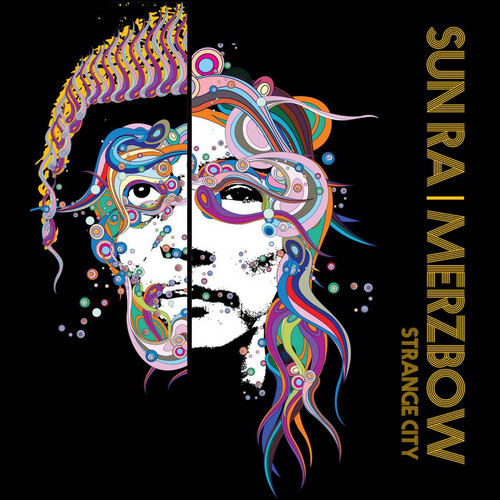
Strange City
On Strange City, Merzbow drags Sun Ra’s archival fire through a bank of howling electronics, turning rare Saturnian jazz fragments into towering, cosmic noise storms where horn blasts, rhythms and feedback fuse into a single, irradiated signal.
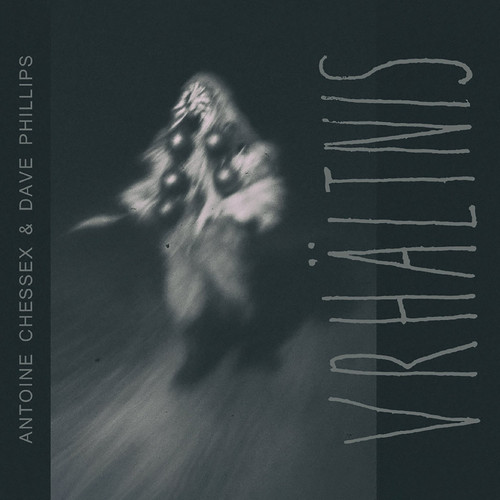
Vrhältnis
*300 copies limited edition* More than twenty years of friendship haunt Vrhältnis, the new album by Antoine Chessex and Dave Phillips, out now on Coherent States and Krim Kram. Its source material reaches back twenty years, originating from live performances during a 2005 joint tour in Lausanne and Basel and a studio session recorded the same year at the Dynamo/Popkredit Studio in Zürich.
Both sessions were then filed away, the recordings disappearing into the archive, untouched for nearly two d…

Boanerges
*2013 release. 2026 stock* Duo of Jim Sauter from Borbetomagus and Kid Millions from the Boadoms and Oneida ! "The sound of saxophone turning into an extreme noise and brutal raging percussion! Such is the latest noise jazz from NYC!" - JOJO Hiroshige / Hijokaidan. "Jim's sax playing is impulsively domineering in Borbetomagus, which is based on a usually percussion-less trio formation of two saxophones and one guitar; and I was really curious to hear what would happen when it encountered a drumm…

Annihilation of Samsara
On Annihilation of Samsara, Attila Csihar, Balázs Pándi and John Wiese converge as a single, shifting organism, dissolving borders between extreme metal, free improvisation and noise into a dense, unstable ritual where sound behaves more like weather than music.
Split
South Bohemia's Remnant (also well known for his activities as Chevallier Skrog, Cosmic Cause Productions, Pant Y Meddygon among many others...) and Western Alps exile Elisha Morningstar share this one hour long split... Plenty of tense and deranged waves of noise on the eastern side, quieter dark -mostly synth or guitar driven - tones on western side...
![Metal Machine Music: Power To Consume [Vol. 2]](https://cdn.soundohm.com/data/products/2026-05/metal-machine-music-power-to-consume-vol-2-jpg.jpg.500.jpg)
Metal Machine Music: Power To Consume [Vol. 2]
Metal Machine Music: Power To Consume Vol. 2 pushes Lou Reed’s feedback inferno into a new era, unleashing Merzbow, Masonna, Lydia Lunch, Blixa Bargeld, Martin Rev and more in a maximalist, Record Store Day 2026 hallucination of infinite noise.
![Metal Machine Music: Power To Consume [Vol. 1]](https://cdn.soundohm.com/data/products/2026-05/metal-machine-music-power-to-consume-vol-1-jpg.jpg.500.jpg)
Metal Machine Music: Power To Consume [Vol. 1]
On Metal Machine Music: Power To Consume Vol. 1, a coalition of noise heavyweights channels Lou Reed’s most infamous album into a new crucible of feedback, tape rot and industrial grind, where extremity becomes form and chaos is sculpted into brutal, hypnotic clarity.
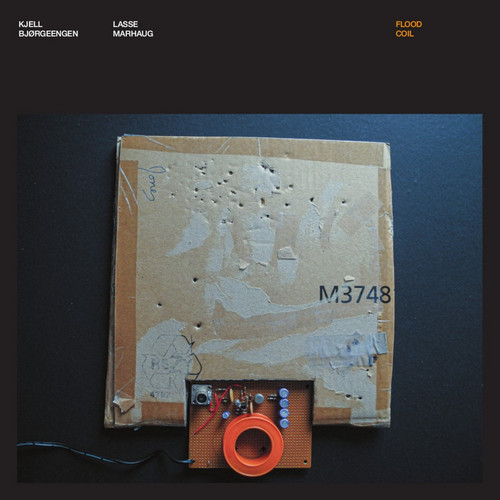
Flood Coil
On Flood Coil, Norwegian artist Kjell Bjorgeengen and noise architect Lasse Marhaug collide flickering electronics and dense signal storms, turning sound into a volatile field of interference where image, electricity and feedback are felt rather than merely perceived.
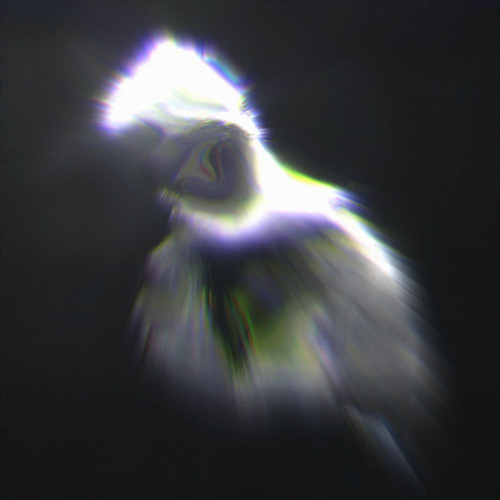
Asteroid*
*70 copies limited edition* Flung is pleased to present Raphaël Languillat’s Asteroid*, which renders celestial debris and deep-space signals as volatile synthesiser improvisations, released on limited edition cassette, exclusively on Bandcamp. Asteroid* arrives as four transmissions extracted from a self-modulating Korg MS-20 — a closed-circuit system driven by feedback and fracture. What surfaces are compositions as pressure events: ruptured drones, scorched frequencies, and signal debris spil…

Bardo Thödol
In their third collaboration, the shared project between Merzbow and Pedro Vian shifts towards less confrontational and more introspective terrain. Bardo Thödol, released as an LP, draws on The Tibetan Book of the Dead not so much as an explicit narrative framework but as a conceptual resonance: a passage, a suspension between states.
Where Inside Richard Serra Sculptures and The Wheel of Mani foregrounded a relatively defined dialectic between Vian’s environmental restraint and Masami Akita’s i…
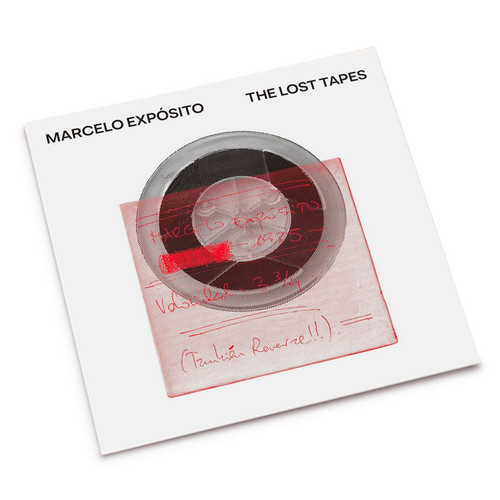
The Lost Tapes
Big Tip! *Limited edition of 200 copies* Geometrik Records is delighted to once again play a part in the exclusive recovery of Marcelo Expósito's previously unpublished work, which had been lost since its original creation in the 1980s. Marcelo Expósito is one of Spain's most internationally renowned contemporary artists, whose work is regularly exhibited across Europe and Latin America. But he began his career at a very young age during the era of sound experimentation that flourished in the wa…
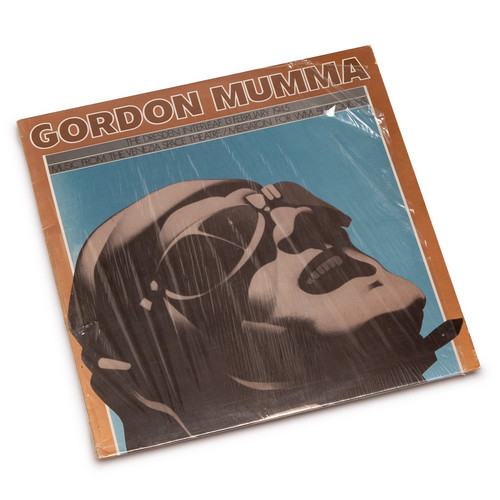
The Dresden Interleaf 13 February 1945 / Music From The Venezia Space Theatre / Megaton For Wm. Burroughs (LP)
Outstanding 1979 album on Lovely Music with three powerful and groundbreaking electro-acoustic pieces realized in the mid-1960's for theater and multi-media performances. Essential, with some of the most uncompromising and extreme electronic music ever released.
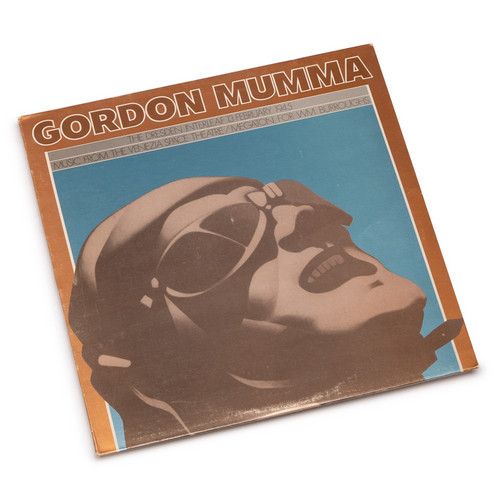
The Dresden Interleaf 13 February 1945 / Music From The Venezia Space Theatre / Megaton For Wm. Burroughs (LP)
Outstanding 1979 album on Lovely Music with three powerful and groundbreaking electro-acoustic pieces realized in the mid-1960's for theater and multi-media performances. Essential, with some of the most uncompromising and extreme electronic music ever released.
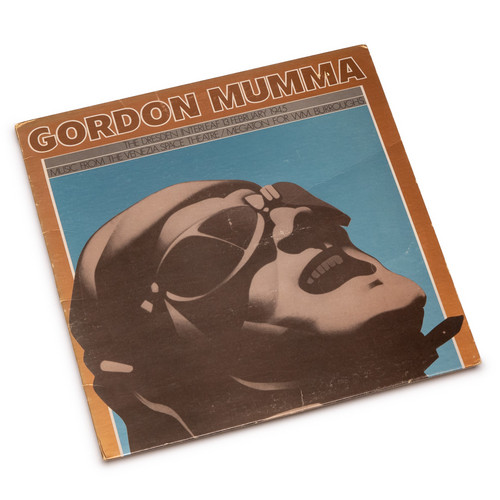
The Dresden Interleaf 13 February 1945 / Music From The Venezia Space Theatre / Megaton For Wm. Burroughs (LP)
Outstanding 1979 album on Lovely Music with three powerful and groundbreaking electro-acoustic pieces realized in the mid-1960's for theater and multi-media performances. Essential, with some of the most uncompromising and extreme electronic music ever released.

Guilty Paradise
*80 copies limited edition* Guilty Paradise is an almost 30-minute, fascinating glimpse into Michał Fundowicz’s journey to Japan. There, in the city of Kobe, he met Tim Olive, and over the course of three days they recorded the material that eventually took shape as Guilty Paradise. Both artists engage in improvisation: Tim Olive works with magnetic pickups, oscillator and tuning forks, while Michał Fundowicz manipulates cassette tapes.
What can one expect from this collaboration? The two exte…

Psychopathia Sexualis
Long whispered about and barely seen, Whitehouse’s Psychopathia Sexualis finally claws its way out of 1982’s creamy‑vinyl underworld, reborn on CD as a fully remastered, meticulously documented legacy edition for the noise faithful and the merely morbidly curious.
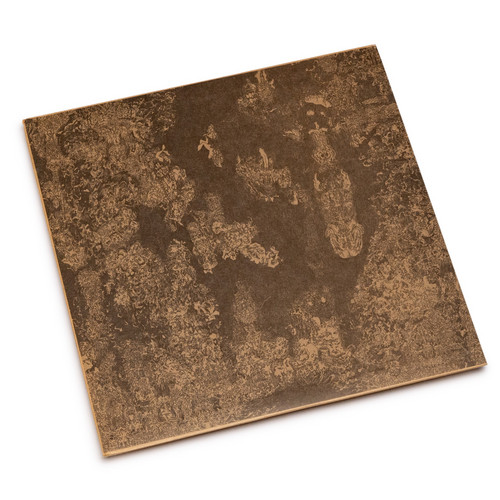
Agencement (LP)
Great and beautifully packaged first uncompromising album of solo violin improvisation and electronically-processed violin tracks by Hideaki Shimada, self-released on Pico in a limited edition of 300 copies in 1986.
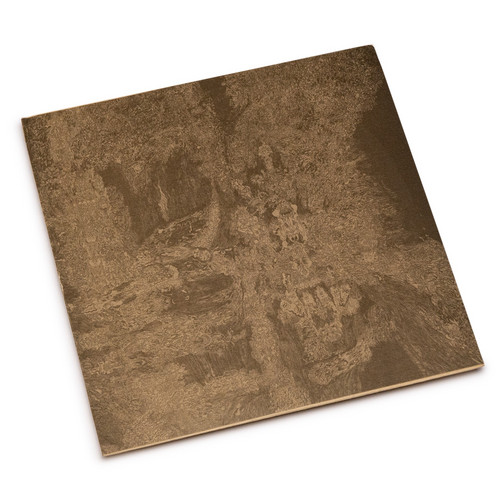
Agencement (LP)
Great and beautifully packaged second uncompromising album of electronically-processed solo violin improvisations by Hideaki Shimada, self-released on Pico in a limited edition of 300 copies in 1989 and never re-issued on either LP or CD.
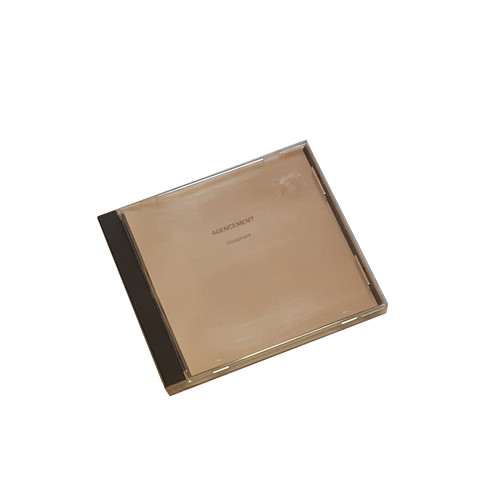
Viosphere (CD)
First edition of the CD-only third album of uncompromising electronically-processed violin tracks by Hideaki Shimada, self-released on Pico in 1991.
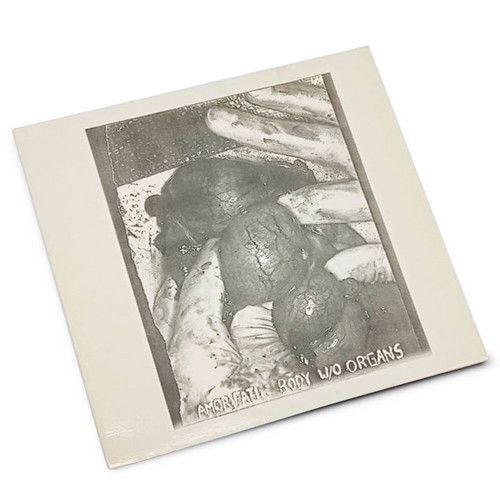
Body W/O Organs (LP)
First album by Amaury Perez's project mixing industrial/noise music and experimental rock, self-released with different paste-on covers on his own Fresh Records in 1985. With inserts.