Jazz /
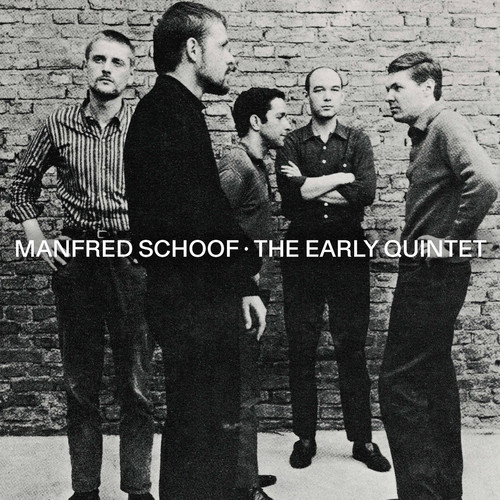
The Early Quintet
Corbett vs. Dempsey is pleased to present The Early Quintet, featuring trumpeter Manfred Schoof's highly influential mid-sixties sextet (and occasional septet), featuring pianist Alexander Schlippenbach, tenor saxophonist Gerd Dudek, bassist Buschi Niebergall, and drummer Jaki Liebezeit. (One track adds drummer Sven-Åke Johansson.) In addition to the first CD release of the 1978 FMP record, this version includes a bonus piece, never before heard. Deep cuts from the formative moment of European f…
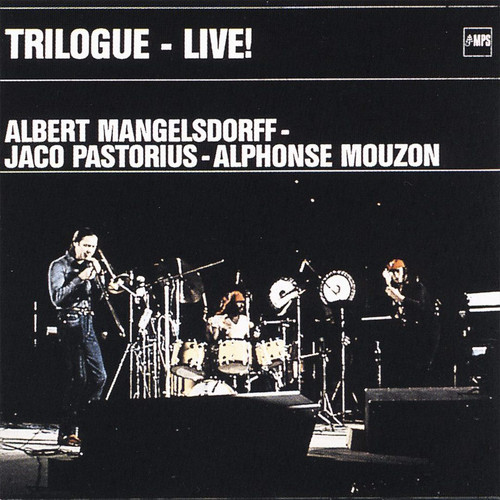
Triloque
Berlin Jazz Days, 6 November 1976. Albert Mangelsdorff's trombone, alone at the front, with Jaco Pastorius on electric bass and Alphonse Mouzon on drums, a year after Pastorius's debut. Five long pieces, recorded live, released by MPS in 1977. The trombone multiphonics against a fusion rhythm section.
The Wide Point
Walldorf Studio, near Frankfurt, 1 and 2 May 1975. Albert Mangelsdorff on trombone, Palle Danielsson on bass, Elvin Jones on drums. Seven pieces, thirty-nine minutes, released by MPS the same year.
Mangelsdorff had recorded with Jones once before, on the 1968 duet album Albert Mangelsdorff and His Friends. The Wide Point is the first of his trombone-bass-drums trio records, the format that would produce Trilogue with Pastorius and Mouzon the following year and the Montreux album in 1980. The ban…
Transfiguration
1967. Joachim Kühn had left the GDR the year before and settled in Hamburg; Rolf Kühn, his elder brother, had come back from six years in New York (Benny Goodman, the Tommy Dorsey band) to run the NDR television orchestra. They had already played Newport together. Transfiguration, on SABA, is the Rolf + Joachim Kühn Quintet with Karl Berger as guest on vibraphone, made in the months before Joachim moved to Paris for good.
It sits between two records the brothers made the same year: Re-Union in B…
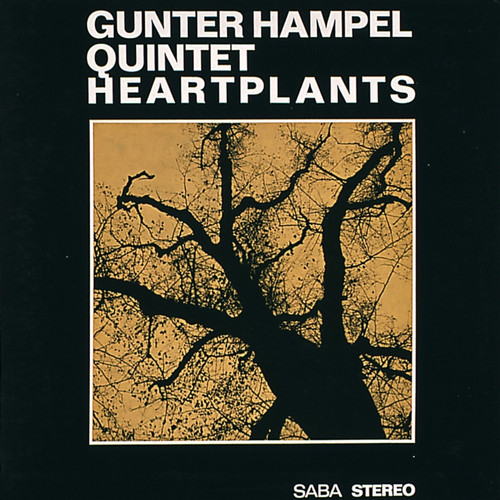
Heartplants
Gunter Hampel's first record, 1965, on SABA: a quintet with Manfred Schoof on trumpet, Alexander von Schlippenbach on piano and Buschi Niebergall on bass, a year before Globe Unity. Down Beat gave it five stars. Hampel on vibes and flute, Dolphy and Ayler in the room, nobody screaming.
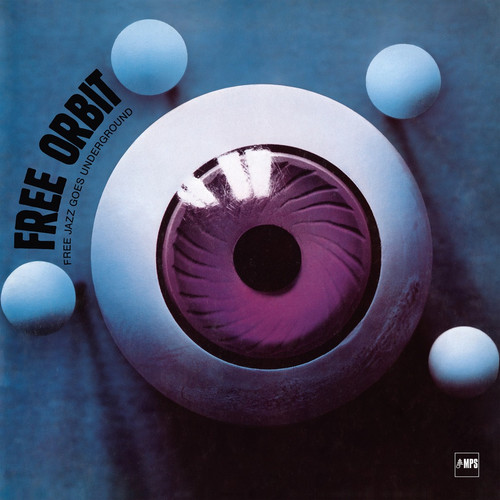
Free Jazz Goes Underground
Hamburg, 1969. A drummer recently arrived from Westphalia, known around the Jazzhouse on Brandstwiete as a capable timekeeper who could swing in 4/4 and play rock beats, which is why Klaus Doldinger had hired him for Passport. His name was Udo Lindenberg. Free Jazz Goes Underground, released by MPS in 1970 under the name Free Orbit, is the first studio album of the band he led, and he sings on it, in English, alongside a second vocalist.
MPS's own note on the reissue admits you need careful list…
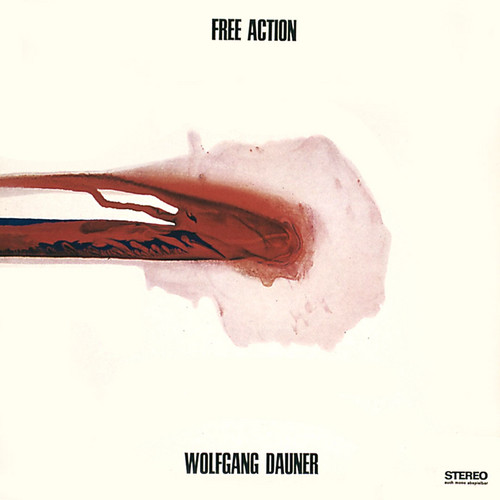
Free Action
Wolfgang Dauner's 1967 SABA septet: Jean-Luc Ponty on violin, Gerd Dudek on tenor and clarinet, Eberhard Weber on cello, Jürgen Karg on bass, and two drummers, Mani Neumeier and Fred Braceful. Mingus-like themes that dissolve into free playing, Neumeier on tabla for the Spanish disguise. Out of print for forty years.
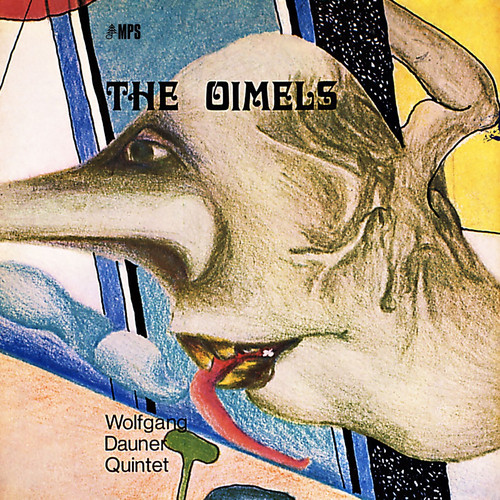
The Oimels
Two years after Free Action, a different record. The Oimels, MPS 1969, is the Wolfgang Dauner Quintet playing pop: Dauner on piano, organ and voice, Eberhard Weber on bass, cello and voice, Siegfried Schwab on guitar and sitar, Pierre Cavalli on guitar, and Roland Wittich on drums and voice, who also did the cover art with Dauner.
The programme mixes Dauner originals with a Gershwin tune, a traditional, and a Lennon-McCartney song. A RateYourMusic listener puts it plainly: a different kind of ja…
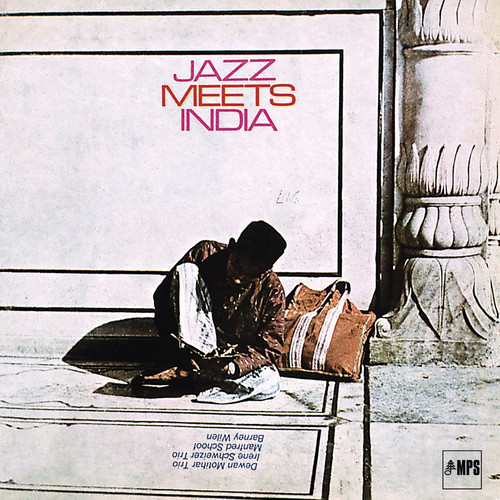
Jazz Meets India
Villingen, 23 October 1967. Irène Schweizer's trio with Mani Neumeier and Uli Trepte, a year before Guru Guru, meets Dewan Motihar's sitar, tabla and tambura, with Manfred Schoof and Barney Wilen. Three pieces, two of them long, and the seventeen-minute Sun Love. All About Jazz calls it an unqualified success.
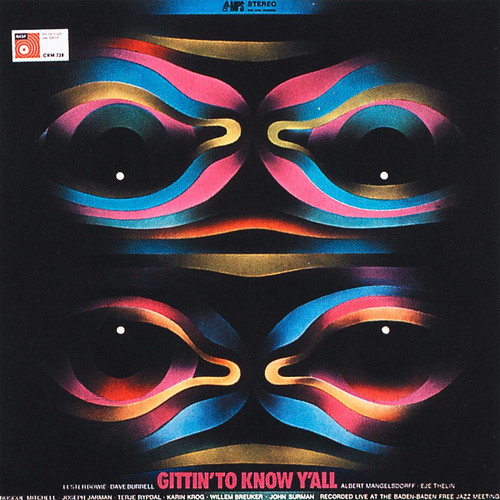
Gittin' To Know Y'All
Baden-Baden, Südwestfunk studio, 12 to 14 December 1969, the annual Free Jazz Meeting. Steve McCall had persuaded the organisers to invite the Chicago musicians living in Paris: Lester Bowie, Joseph Jarman, Roscoe Mitchell, and the pianist Dave Burrell. They met sixteen Europeans: Albert Mangelsdorff, Kenny Wheeler, John Surman, Willem Breuker, Terje Rypdal, Tony Oxley, Alan Skidmore, Heinz Sauer, Gerd Dudek, Eje Thelin, Bernt Rosengren, Hugh Steinmetz, Leo Cuypers, Claude Delcloo and Karin Krog…
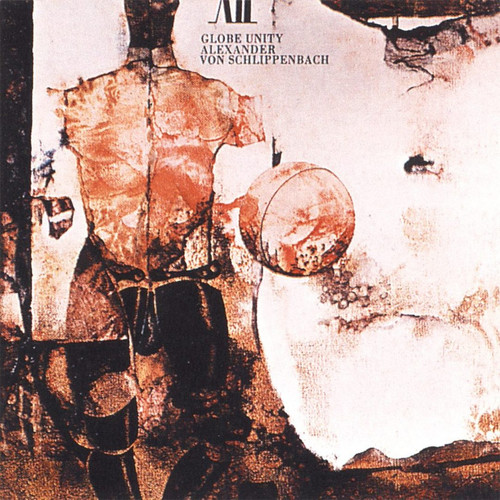
Globe Unity
December 1966, a month after the premiere at the Berlin Philharmonie: Alexander von Schlippenbach's Globe Unity, fourteen players, Brötzmann, Schoof, Hampel, Mangelsdorff, Dudek, Breuker, Kowald, Niebergall, Liebezeit, Neumeier. Two pieces, Globe Unity and Sun. European free jazz declaring itself.

Wigmore Hall 1968 + John Tchicai Quintet, John Tchicai Peter Kowald Duo (2LP Bundle)
This 2LP bundle includes the two latest Formalibera albums: John Tchicai "Wigmore Hall 1968", and John Tchicai, Peter Kowald "John Tchicai Quintet, John Tchicai Peter Kowald Duo".John Tchicai "Wigmore Hall 1968" (LP)* Edition of 300 copies. High thickness cardboard with opaque laminated cover. Comes with a printed insert.* John Tchicai (1936-2012) was one of the most visionary free jazz saxophonists of the 20th century - a rare artist whose voice stood apart even among giants. Born in Copenhagen…
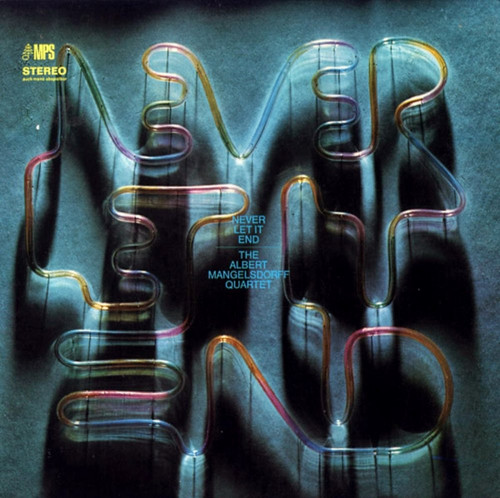
Never Let It End
Jazz enthusiasts rejoice: the legendary Never Let It End by Albert Mangelsdorff Quartet, a seminal 1970 album hailed as one of the most important in the European jazz canon, receives a fresh vinyl pressing from MPS Records. Originally recorded on March 23, 1970, at Walldorf Studio in Frankfurt under producer Joachim Ernst Berendt, this free jazz masterpiece captures Mangelsdorff's innovative trombone mastery alongside Heinz Sauer on saxophones, Günter Lenz on bass, and Ralf Hübner on drums.
The…
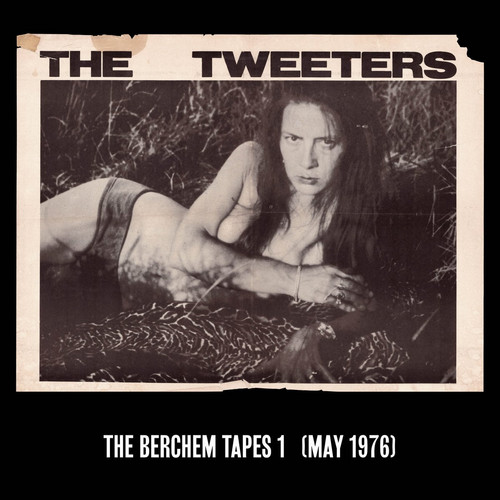
The Berchem Tapes (May 1976)
*150 copies limited edition* The Belgian free jazz scene of the early 1970s remains criminally under-documented. While Fred Van Hove's participation in the legendary Machine Gun sessions (1968) with Peter Brötzmann, Han Bennink, and Evan Parker placed Antwerp on the international map, a wild ecosystem of temporary combos and performative madness flourished in the shadows. The WIM (Werkgroep Improviserende Musici) collective - founded in 1972 after Van Hove and saxophonist Cel Overberghe refused…
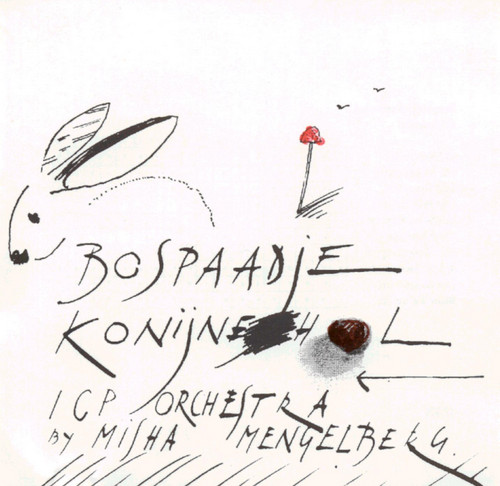
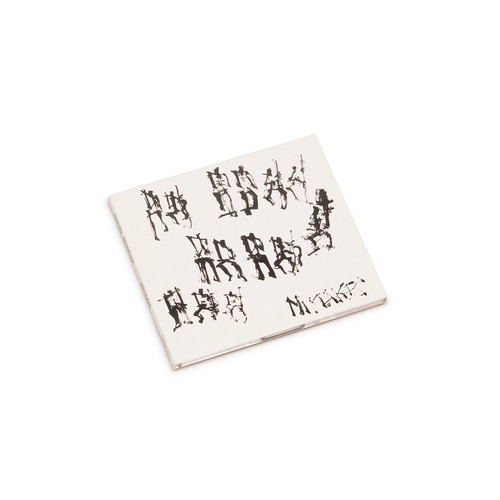
Mistakes
2025 stock In the late 1970s, Amsterdam was a crucible for radical improvisation, and Mistakes—the collaboration between South African saxophonist Sean Bergin and Dutch cellist Ernst Reijseger—stands as a vivid document of that era’s restless energy. Released on the Data label, the album captures two musicians at the threshold of their creative powers, forging a dialogue that is as unpredictable as it is intimate.
Bergin, who had recently relocated from Durban, brings a raw, searching lyricism t…
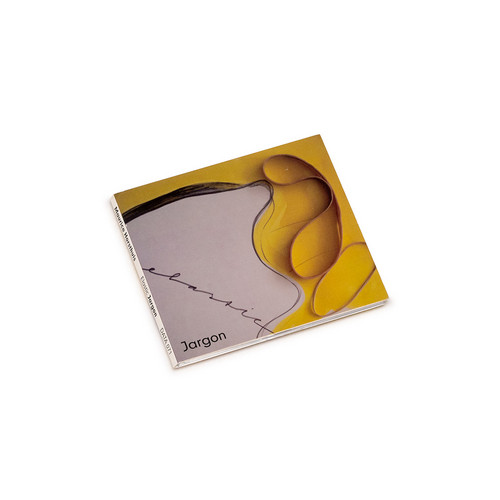
Elastic Jargon
2025 stock Elastic Jargon is an album by Dutch composer and violist Maurice Horsthuis, released in 2007 on the Data label. The project brings together a unique ensemble of string players, with Horsthuis as the sole composer, exploring the boundaries of what can be achieved with string instruments alone.
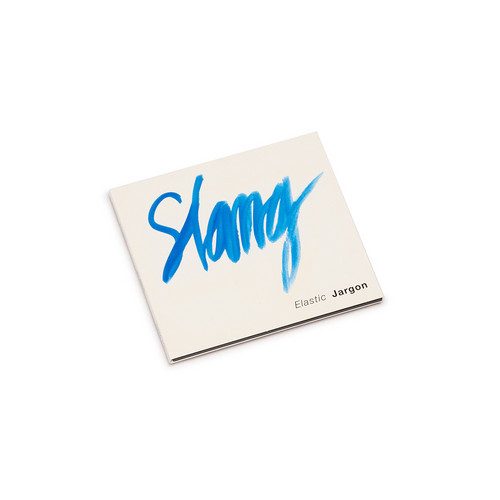
Slang
2025 stock In the shadowy interstices of contemporary jazz and free improvisation, Slang by Elastic Jargon emerges as a document of restless inquiry and coded communication. Released on the Dutch label Data in 2010, the album is a cryptic dispatch from the margins, where genre boundaries are not so much blurred as actively subverted
Elastic Jargon—true to their name—stretch the language of jazz until it snaps, then reassemble the fragments into something at once familiar and alien. The group’s a…
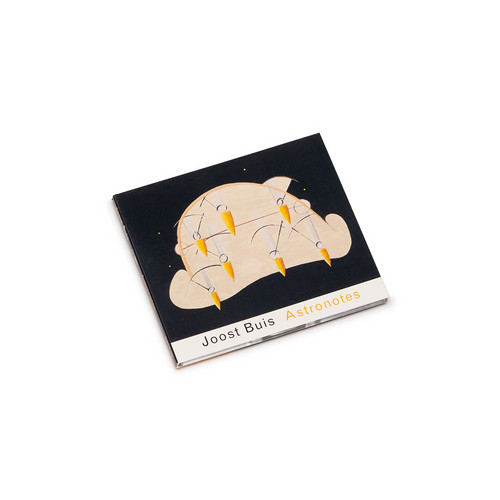
Astronotes
2025 stock In the ever-mutable landscape of Dutch jazz, Joost Buis’s Astronotes stands as a testament to the playful collision of composition and improvisation. Released on the Data label in 2004, the album finds Buis—trombonist, composer, and bandleader—at the helm of a vibrant ensemble drawn from the heart of Amsterdam’s creative music scene.
From the opening bars of “The Eggs,” it’s clear that Buis is less interested in adhering to tradition than in subverting it with wit and invention. The b…
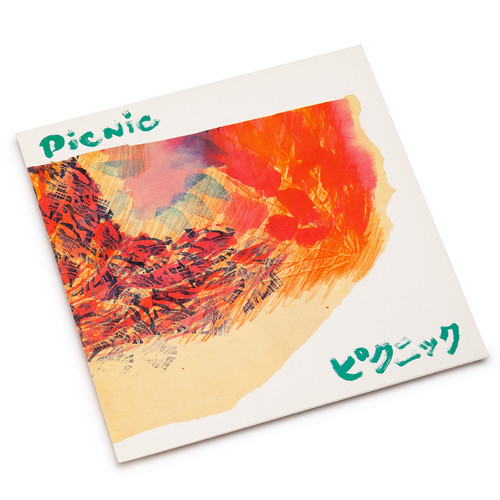
Picnic
Rare Original A little-known gem of Dutch free music, Picnic is the brainchild of cellist Tristan Honsinger, who composed all but one of its 12 compositions. Brilliant and whimsical, the tracks bring to mind Honsinger's work with ICP Orchestra, for whom he has also composed extensively. Here he's working in an incredible ensemble, with trumpeter Toshinori Kondo, saxophonist Sean Bergen, Jean Jacques Avenel on bass, Michael Vatcher on drums and percussion, and Tiziana Simona Vigni on voice. Decep…