
★Moving Furniture Records
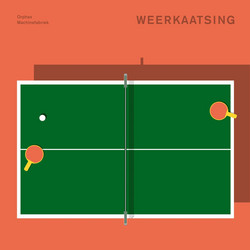
Weerkaatsing
First studio meeting between two figures long circling each other in the Dutch experimental scene. The structure is itself a kind of mirror: Spiegeling is Machinefabriek's remix of Orphax's De Eerste Dag, Reflectie is Orphax's twenty-minute remix of Machinefabriek's 2007 piece Stofstuk, and the title track is the only fully joint composition. Long-form drone built through indirect dialogue, with each signature still audible but inflected by the other.

Smelter
Second album by DNMF, the duo formed between Machinefabriek and the Dutch droning free-jazz combo Dead Neanderthals. Across some forty minutes Smelter develops a highly dynamic amalgam of metal, drone and dark ambient, the heaviness of the Neanderthals' instrumental mass folded into Zuydervelt's electroacoustic processing. The result moves between glacial expansive stasis and dense ferrous noise, holding the two registers in productive friction without resolving them into either.
Sold Out

Saxophone Studies
Two long drone pieces built around recordings of improvised saxophone. The first is a seventeen-minute work derived from material James Fella sent Orphax in 2006: multi-layered and roughly cut, with non-harmonic multitones colliding in the room and ear to produce a piercing psychedelic effect. The second, recorded with his father in late 2017, is bass-heavy and centred on baritone, working through multi-layering and phasing into a slow form from which melodic fragments quietly emerge.

Caveman
Caveman is a document of Stamou's live practice: two complete extracts of solo improvised performances using his 'portable electroacoustic studio'. The setup combines acoustic instruments (prepared zither, reeds, recorders, objects) with handmade electronics, modular synthesis and live-processed feedback loops, producing long continuous pieces built on sustained tonal textures and free improvised solos. What the artist calls ritual noise: a slow-burning, immersive electroacoustic atmosphere.

Transmutation
Two long-form pieces forgoing melody and rhythm in favour of pure texture. René Aquarius works in a register adjacent to Thomas Köner's darker drone music: a metallic sheen distributed across slowly shifting masses, gestures held to the minimum, every sonic event magnified by the quietness around it. The result is unmistakably dark ambient, but built with restraint rather than gothic excess, the focus turned to the ghostly imagery that emerges from sustained low-density listening.
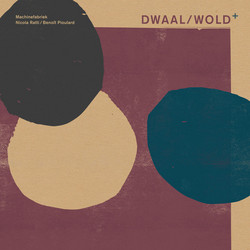
Dwaal / Wold +
Originally released by Ghent's Dauw tape label in 2016 and quickly sold out, here reissued on CD with two new interpretations added. The original is a pair of eighteen-minute pieces: Dwaal layers orchestral washes against radio static and erratic noise, while Wold spreads sparse piano notes over a bed of fine hiss, supported by wind and bird recordings from Vriescheloo. The reissue adds remixes by Benoît Pioulard (organ and guitar) and Nicola Ratti (synth sputters and rhythm).

Amsterdam CS
Cinema Perdu turns the spaces of Amsterdam Centraal Station - the roofs, the three access tunnels, the IJ-passage - into compositional material. The everyday sonic vocabulary remains constant (announcements, suitcases, conversation) but is reshaped by the changing acoustics of each space. The pieces are built in a Cagean attitude: not romantic vignettes of the station nor pure documentation, but interpretations of how each architecture stages its own atmosphere.

Focus Intensity Power
BJ Nilsen's first LP for the label, departing from his field-recording practice. Recorded during a Fall 2017 residency at Willem Twee Electronic Music Studio in Den Bosch, the five pieces document improvised sessions on modular synthesizers, tone generators and laboratory test instruments. The flâneur's ear, normally trained on wind or city traffic, is here turned on machine-generated material: analogue pulse, droning waves and subtle noise arranged with the same patient sense of texture.

Crystalline Tragedies / The Procession - Distant Motionless Shore
An unusual collective release: Comes and Aldinucci composed their two pieces in complete isolation, exchanging neither studio time nor materials, but both worked from the same Nietzschean opposition - the moral codex of the Christian church against the radical surrender to emotion. Aldinucci builds his side from a single field recording of a procession in rural Tuscany; Comes's Crystalline Tragedies traces three distinct sections through the affective dimension of major life passages.

Peripherad Debris
Second album in Haarvöl's trilogy, picking up where Bombinate left off. Where the earlier work announced its sonic intention (bombinate, to hum), Peripherad Debris turns toward the conceptual periphery and to remnants of what has already been said: away from the centre, toward the outer turbulence where residual materials remain most stimulating. The album moves between quasi-ambient stillness and dense mass-sound nearly turning to noise, holding all positions in the same hesitant qualifier.

You Are The Universe
A remix/recycle project by Preliminary Saturation (Steffan de Turck and Wouter Jaspers) built entirely from Jos Smolders's Textures and Mobiles (CONV, 2004), an album originally derived from a strictly limited palette of DTMF and CCITT telephone tones and pure interfering sine waves. The duo reprocesses Smolders's source material and folds in their own additions across tape, contact microphones, field recording and synthesis. A recursive electroacoustic exercise within a closed lineage.

Kulverzuchter
Bas van Huizen's third album for the label, and the point at which he turns explicitly toward the minimal and the ambient after the visceral noise of Kluwekracht and Waanzintraan. Kulverzuchter is hazy, ambiguous and understated: textures toned down and surface less layered, with most of the activity unfolding just beneath. Track titles are absurd compound Dutch neologisms; the artwork was made entirely from his daughter's first drawings. A study in subtle contradiction within an ambient frame.
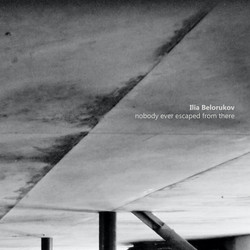
Nobody Ever Escaped From There
Follow-up to There Was Hardly Anybody There (Spina!Rec, 2016). Belorukov moves once again away from improvised saxophone toward electroacoustic studio composition. A central role is taken by Boris Shershenkov's reconstruction of the Variophone, a 1930s photo-electrical instrument by Evgeniy Sholpo that produces sound from cut-out discs recorded as optical film tracks, prized for its instability and colour. These are layered with field recordings, samples and synthesis, weighted to the low end.

Paintings
Final work in a trilogy (Sketches, Drawings, Paintings) marking Philipp Bückle's return to music after closing his Teamforest project. Recorded in 2014 across Copenhagen and Dortmund, the album combines a visually organic sensibility with experimental composition, the titles functioning as discrete sound paintings spanning warm September evenings, rainy days, a seascape, a wedding. Mastered for vinyl by Stephan Mathieu. Ambient drone abstraction grounded in figurative diaristic detail.
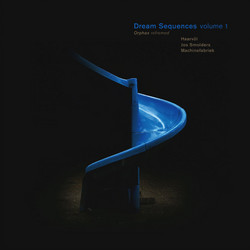
Dream Sequences Volume 1 Orphax Reframed
First compilation in a series where other musicians reframe pieces from Orphax's ongoing Dream Sequence cycle, an open-ended sequence of experimental ambient and drone works. Haarvöl, Jos Smolders and Rutger Zuydervelt (Machinefabriek) each take a different Dream Sequence as point of departure, returning quiet contemplative re-readings that fold their own languages into the source. A study in remix-as-translation across the Dutch and Portuguese electronic-experimental axes.
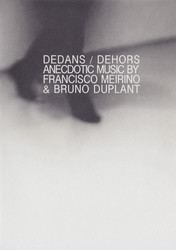
Dedans / Dehors
An exercise in musique concrète in the Luc Ferrari sense: not soundscape, not reportage, but the deliberate assemblage by montage and superposition of recorded sequences drawn from disparate origins, composed into a continuity that functions as sonic narrative. Meirino and Duplant arrange and contradict their sources so that the listener has to construct the story: recognition of materials and interpretation of their succession become themselves part of the compositional event.
Worn Tape
Imanishi's first album for the label, presenting eleven miniatures built from small sounds drawn from his immediate environment: paper, objects, radio, field recording, microphone. The work is abstract in vocabulary but warm and slow in effect, a deliberate counter-position to bombast. Its strength lies in the precision with which discrete, unspectacular materials are placed within reduced frames, locating the music in the lineage of Japanese onkyō and post-Schaefferian micro-concrete.

Paranon
Two compositions built on what van den Broek terms parameter canons of sine wave generators. The canon, classically a counterpoint device producing imitations of a line after a temporal offset, is here transposed onto pure electronic material: custom-programmed sine generators allow exact control of phase shift, interference and frequency drift between initial wave and successors. The resulting beats, difference tones and spatial events expose the physical richness of pure sound.

The Sprawl
Distorted Nude is Glenn Dick's new project after Find Hope In Darkness, marking a decisive shift from a wholly computer-based practice to one centred on electric guitar. The Sprawl is a single composed track built from improvised sessions with guitar, effect pedals and laptop, drawing on the Belgian underground's long tradition of droning post-rock. The piece flows between dark melancholic drone and more transcendental zones, holding the listener through patient, slow-burning architecture.

dp[a] + hsh
Petrovic's debut album bringing together two previously separate projects. dp[a] takes dysprosody - a rare speech disorder marked by unconventional shifts of pitch, volume and rhythm - as a model for an alternative grammar of expression. hsh, commissioned for a Dansmakers Amsterdam dance duet, takes its title from the Moroccan haschoema and addresses social control and the silencing of women. Glitch-inflected computer music as ethical and linguistic inquiry.
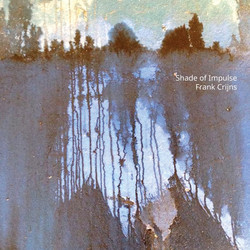
Shade Of Impulse
Crijns's first album for the label, in which he coins the term 'N-bient': ambient understood as the meeting point of nature (here, water) and acoustic instrumental writing (passages by classical ensembles). Several classes of material collide and combine - mechanical sound-fields, natural ambient, electronic textures, ensemble passages - folded into surreal, layered textures. An electro-acoustic music whose abstract elements pull the listener inward while the surface holds quiet.

Parkustomnie
First documentation of an improvised session by Jean-Luc Guionnet (church organ) and Miguel A. García (electronics) recorded at the Conservatorio Jesús Guridi in Vitoria-Gasteiz in 2016. Across two pieces, the duo plays the dynamics of the electroacoustic field itself: the work is calibrated so that playing it at different volumes produces materially different listening experiences, with the threshold of audibility used as a compositional parameter. Particularly quiet, post-reductionist.

Bombinate
*2022 stock. 200 copies limited edition* After releasing Indite at Moving Furniture Records (April of 2015), the first one with MFR but the band’s second album, Haarvöl began a series of conceptual, somehow interconnected projects, restricting the boundaries of the sonic ambience to a very concise one. This long process gave birth to three albums, each one having a very particular sonic approach but knitted in a personal Haarvöl sound idiosyncrasy, which gives the trilogy a thread that intertwi…
ABC 1-6
Score for indeterminate ensemble by Swiss composer Stefan Thut (2012), here realised by Cristián Alvear, Cyril Bondi and D'Incise. The piece is governed by three categories of sonic material - 0 for faintly coloured noise, 1 for amalgam of noise and pitch, 2 for pure pitch - circulated across six pages and as many rounds in an ever-shifting structure of repetition and turn. A rigorous taxonomy of sound material in the lineage of Wandelweiser and post-Cage indeterminacy.
1
Mens and Kouw have worked together since 2001, when their first album emerged from the clicks 'n cuts vocabulary via raw mixer feedback recorded to minidisc and broadcast live on Amsterdam's Radio 100. The duo has since migrated into tonal and timbral long-form, combining software, recorded acoustic instruments and modular synthesizer into electro-acoustic drone with audible debts to the American minimalist canon. First half of a two-part album, recorded live in December 2014.

Interventions In A Landscape
Cinema Perdu is Martijn Pieck's solo vehicle for what he calls 'soundtracks without movies': field recording as compositional starting point, layered with synthesizers, contact-microphone material and other electronic sources to reconstitute the feeling of a place at a moment. Interventions in a Landscape unfolds across four pieces drawn from coastal sites where human modification of the terrain sharpens existing contrasts. Place-based composition on the musique concrète-ambient threshold.

Trübhand
Recorded in Bad Zwischenahn in early 2016 as two live performances captured to a Zoom H4 - small Eurorack case, mixer, a couple of guitar pedals - Trübhand is built around long, slow modulations and resonant structures that rise and fall trying to find definition within the flat north-German landscape Fyans was living in. The methodology is patient sculptural patching, allowing time to do the structural work; the affect runs to the muted, modular drone shaped by its making.

Koura
Two pieces of multitrack composition built from sustained tones on solo acoustic instruments - a 'Jubel Töne' zither in the first, a 'Hohner Organetta' chord organ in the second - each extended through real-time electronic processing (feedback looping, downsampling, pitch-shifting, reverberation, oscillator interaction) and extended playing techniques. Part of an ongoing series on layered acoustic-tone composition. The title refers to a sheep-shearing ceremony still observed in rural Crete.
Interrogation Of The Crystalline Sublime
"I hear atmospheres, sound shapes, gestural narratives, spectral trajectories, stochastic rhythms and phasic space when I encounter an environment rich in sonic phenomena. But in order to be open to this meta-sensory information, I must first get my ears out of the way. I don't listen with my ears but with an inner sensory apparatus, what Goethe called "organs of perception," that I have developed over the years. Once opened to this world sound becomes something very different—it's as if one cou…
Artefact
First album under the Codespira1 alias by Stockholm-based composer Mattias Petersson, trained in electroacoustic composition at the Royal College of Music. The project began as a vehicle for one-take electronic performances built around SuperCollider patches and a modular system, here extended into longer structures. Artefact unfolds as an articulated drone modelling the subconscious cycle of memory and resonance: a continuous tonal field where small events trigger gradual reconfigurations.
Waanzintraan
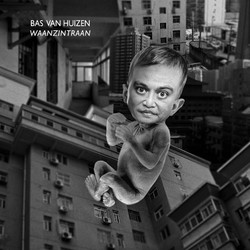
Second album for the label, composed in China where van Huizen was based. Waanzintraan extends his investigation into what he calls 'the harmony of noise': not noise as genre signal but as aesthetic and visceral material, deployed within often consonant frames. The piece weaves processed field recordings from Shanghai and Xi'an into a sustained electronic discourse of contrasts, where harsh and resonant matter coexist within a unified compositional logic, on the ambient-noise threshold.
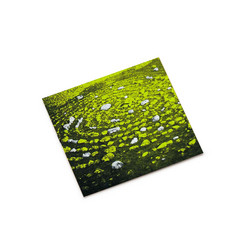
ABC 1-6
Score for indeterminate ensemble by Swiss composer Stefan Thut (2012), here realised by Cristián Alvear, Cyril Bondi and D'Incise. The piece is governed by three categories of sonic material - 0 for faintly coloured noise, 1 for amalgam of noise and pitch, 2 for pure pitch - circulated across six pages and as many rounds in an ever-shifting structure of repetition and turn. A rigorous taxonomy of sound material in the lineage of Wandelweiser and post-Cage indeterminacy.

2.20
Inspired explicitly by Eliane Radigue's Vice Versa..., Orphax records two source pieces in AudioMulch using nearly identical virtual modular settings, varying only a single parameter, and then sculpts the resulting material in Reaper into two strict twenty-minute compositions. The two pieces are conceived to be played independently or simultaneously, the listener encouraged to build their own mix; the album includes a download with both tracks plus a guide mix made with Jos Smolders.

Four Squared Wheel
Frans de Waard's first full CD under the Modelbau alias, a project built around a deliberate constraint: cassettes, small synthesizers, guitar effects, microphone and amplifier, with little or no computer involvement. Four Squared Wheel was captured in an extended studio session around a Philicordia organ routed through guitar effects and amplifier, signals mixed on the fly into a near hour-long single piece. Live electronic drone with the unmistakable grain of analogue circuitry.

Time Waves
Orphax's second proper CD, built from a live performance at the Bimhuis in Amsterdam (a STEIM evening shared with Yannick Franck and Thomas Köner) mixed and edited together with a parallel home recording into one continuous work. Sietse van Erve draws his frame from geological time scales: long, slow-floating sonic strata that emerge and recede without telegraphing what comes next, only the occasional rupture breaking the tranquil pace. Drone as an exercise in geomorphic listening.

Atsusaku
Atsusaku is the collaborative output of Gareth Davis (Oiseaux Tempete, Scanner, Elliott Sharp, Machinefabriek etc) and Japanese noise mastermind Masami Akita aka Merzbow. A massive wall of sound over two tracks that moves from the shifting low-end structures and the ricochet of howling reeds to the blistering haze of dense white noise and rapid-fire electronic tones. The title Atsusaku, suggests pressure or mechanical compression and it was from this starting point, the idea of Davis' reed sound…
Indite
Composed during 2014, Haarvöl's second album consolidates the Portuguese trio's writing practice: a non-hierarchical compositional grammar where analogue, digital and electronic sources sit on equal footing, threaded with field recordings as structural rather than illustrative material. The trio favours density over experimentation for its own sake, building rigorously detailed cinematic textures whose internal consistency works through resonant correspondences rather than repetition.

Divergence
A four-movement work probing the reciprocal interference of sound and space. The source material is reduced to elementary sonic primitives - sine waves, white noise - then physically degraded through tape manipulation to generate pulses, beats and emergent waveforms. From this collision between idealised digital signal and the analogue artefacts of magnetic media, van den Broek builds a heightened spatial perception where pure tone and altered source act on the listening field simultaneously.

Poetic Infomercial Experimentalism
Poetic Infomercial Experimentalism is a musical piece, consisting of two parts, that arose after Tapage (Tijs Ham) and Espoir (Roald van Dillewijn) found that no one else had ever tried to write it before. Since they both had a strong feeling that the world would be better if this music is available for everyone, they agreed to come together in monthly sessions to start their creative work. In each session, they tried a different approach to making music which resulted in a lot of improvisation …
Tria Atoma
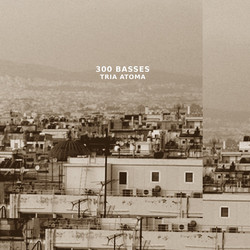
Recorded in Athens in July 2014, the second album by 300 Basses extends the trio's move from free improvisation toward fixed composition. The investigation here turns on minimal but precisely framed actions: the beating patterns generated by long tones at slightly detuned pitches, the unstable timbre that emerges when reed sustains are layered with bowed cymbal, the slow permutation of a reduced interval set. A sound world built from infinitesimal elements, dense in vibration and microvariation.