Walter Tilgner
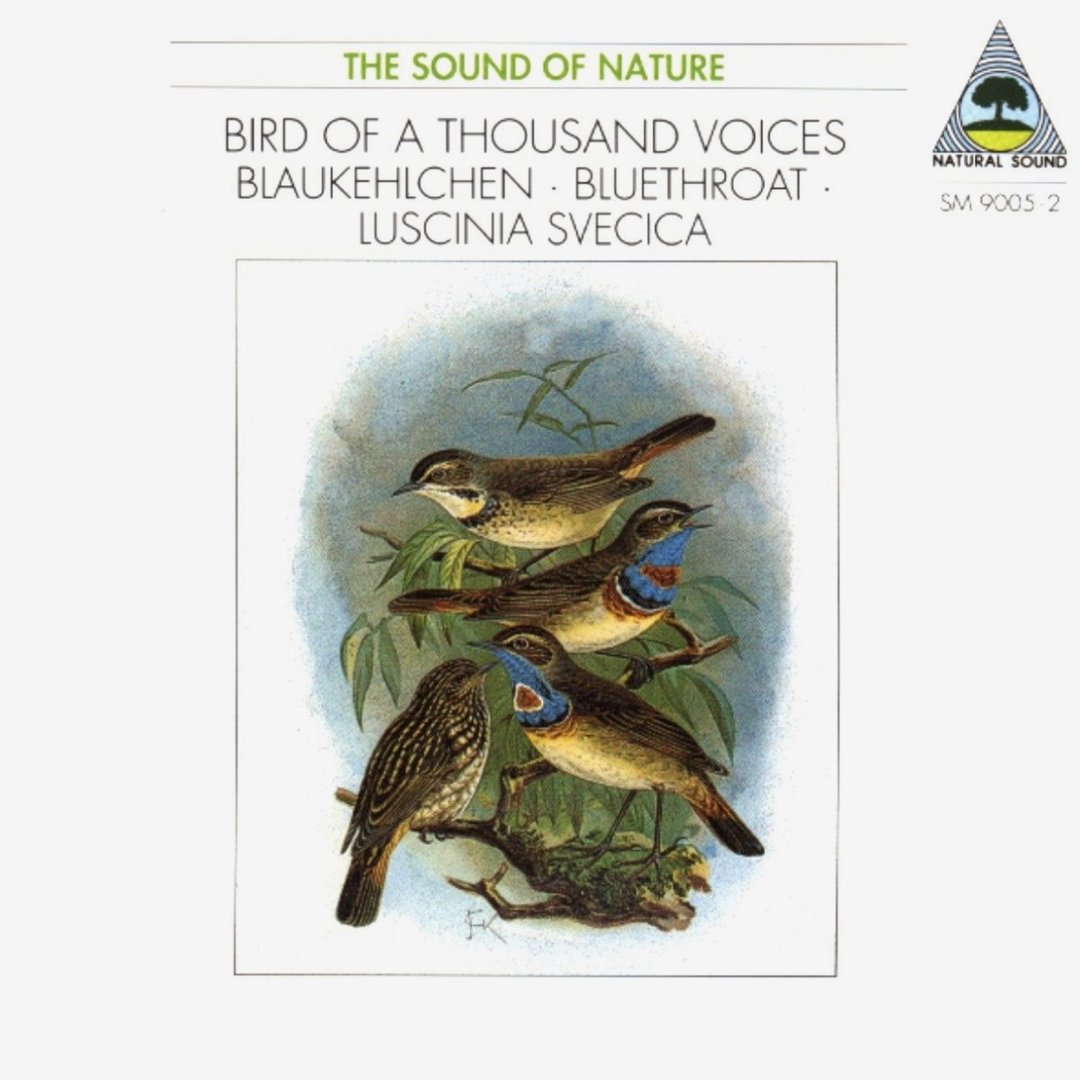
Blaukehlchen / Bluethroat / Luscinia Svenica - Bird of a Thousand Voices
Arriving from the supplier: On backorder (ships as soon as it reaches us)
Tracked express shipping from Italy, no customs or import VAT in the EU. Shipping costs
Blaukehlchen is devoted to the song of the bluethroat, Luscinia svecica, recorded by Walter Tilgner. The bird is a mimic. Its song is full of deceptively accurate imitations of other birds, and even of frogs, crickets, peals of bells and other sounds from its breeding grounds and winter quarters. The Sami of Lapland call it "the bird of a thousand voices", which gives the disc its subtitle.
Tilgner is a biologist and bioacoustician, born in 1934 in Olomouc, then Czechoslovakia. After 1945 he grew up on a farm near Hünfeld in Germany, studied zoology and botany in Frankfurt am Main in the 1950s, and until his retirement worked at the natural history museum at Lake Constance. A well-known nature photographer, he has been recording what he calls nature sound images for more than forty years, and is author and producer of more than ten Natural Sound CDs for Wergo. The World Forum for Acoustic Ecology made him an honorary member.
Here he worked with a Sony PCM 2000 DAT recorder. The red-spotted bluethroat was taken with a Neumann RSM 190 stereo microphone, the white-spotted bluethroat with two Sennheiser MKH 30 microphones in the Blumlein technique. Both needed a windshield because of the strong wind. The disc falls into two halves of about 30 minutes, one for each form of the bird. In the red-spotted half the bluethroat flies in among water pipits, imitates "bells" and, at length, a rock ptarmigan, while the morning wind rises. Another bird sings by a mountain stream. The white-spotted half begins with a morning at the Neusiedler See, where the bluethroat arrives among a great bittern, a pheasant and a female cuckoo.
The label is honest about the limits of the format: a CD is not long enough to show the full repertoire of a singing bluethroat. The longer one listens, though, the more the variety of the song becomes apparent, and the borrowed voices begin to stand out from the bird's own phrases.
CD, Wergo SM 9005 2, released in 1992 in the Natural Sound series. Total time 61 minutes 35 seconds.
Release notes
These recordings of the Bluethroat's song were made with the SONY DIGITAL SYSTEM PCM 2000 (DAT-Recorder); the Red-spotted Bluethroat with a NEUMANN RSM 190 stereo-microphone with windshield, and the White-spotted Bluethroat with 2 SENNHEISER MKH 30 microphones using the "Blümlein" technique; here too, a shield had to be used because of the strong wind. Manufactured in Germany. Printed in Germany.
| Naturaufnahmen Von Walter Tilgner [61:35] | |||
| 1 − 6 | Rotsterniges Blaukehlchen / Red-Spotted Bluethroat | 30:41 | |
| 7 − 13 | Weißsterniges Blaukehlchen / White-Spotted Bluethroat | 30:44 | |
- Walter Tilgner
- Recorded By