Walter Tilgner
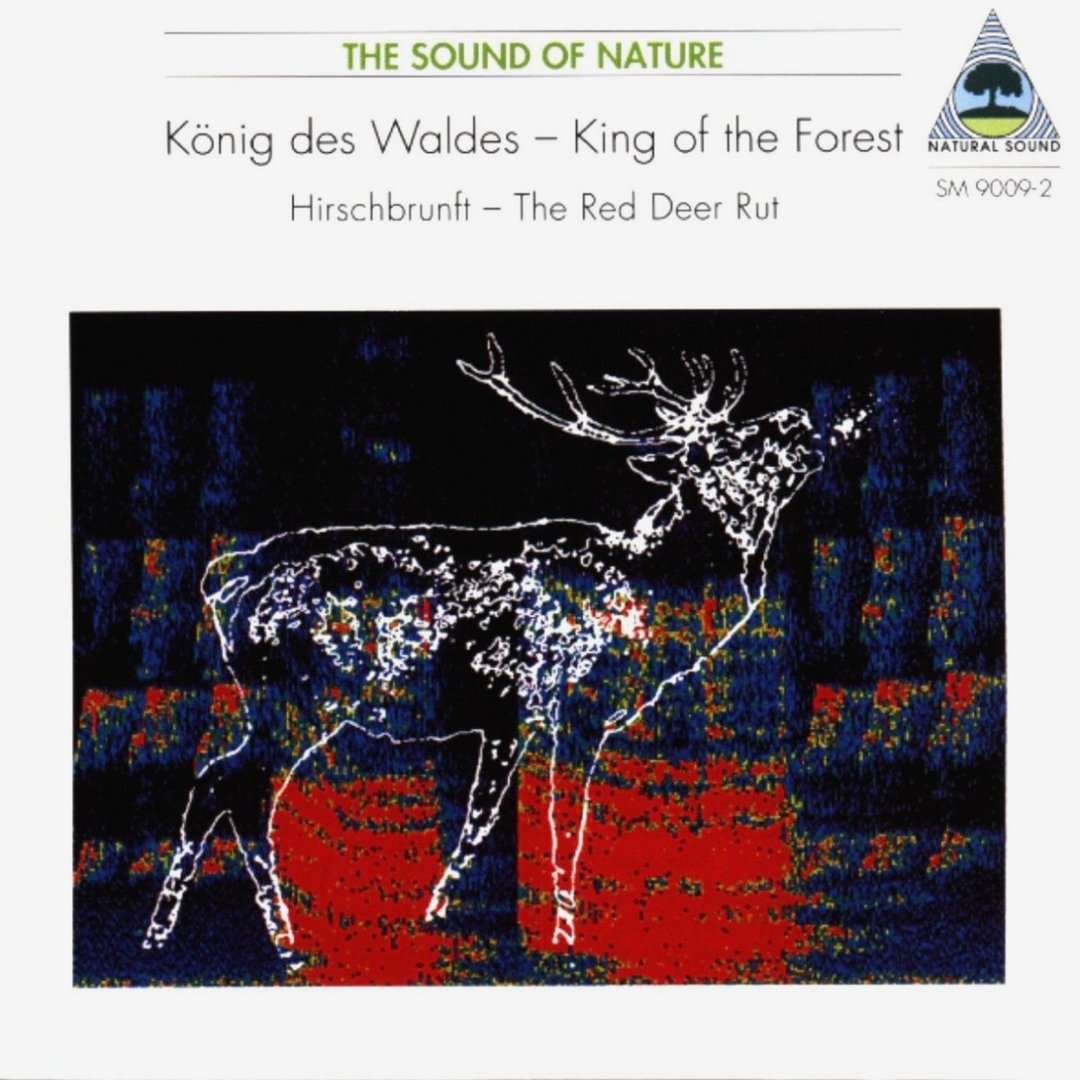
König des Waldes - Hirschbrunft
Arriving from the supplier: On backorder (ships as soon as it reaches us)
Tracked express shipping from Italy, no customs or import VAT in the EU. Shipping costs
König des Waldes (King of the Forest) is a portrait of the red deer rut, recorded by Walter Tilgner in September 1994 on the Darss peninsula, on the Baltic coast of Mecklenburg-Vorpommern. The disc runs from midday in the beech forest through a night at the rutting place to dawn. The booklet adds several sonograms and detailed explanations of the sounds of the rut.
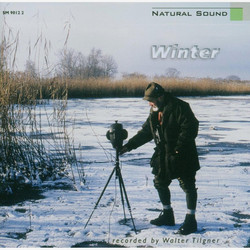
Tilgner was born in 1934 in Olomouc, then in Czechoslovakia. After 1945 he grew up on a farm near Hünfeld in Germany, studied zoology and botany in Frankfurt, and worked as a biologist at the natural history museum on Lake Constance until his retirement. He is also a photographer of woodland scenes, and the author and producer of more than ten Natural Sound CDs for Wergo. Since 1999 he has been an honorary member of the Soundscape Forum Basel and of the World Forum for Acoustic Ecology. Here he used a Denon DTR 80P DAT recorder and a Sonosax SX-M2 microphone amplifier with a Neumann KU 100 dummy-head microphone. The sonograms were made with the Avisoft SASLabPro programme of Raimund Specht, Berlin.
The sea on the western shore of the Darss opens the disc, with a stag roaring quietly behind it. Woodpeckers, a falling cone and a jay follow at midday, then grasshoppers and mosquitoes at dusk, rain and a thunderstorm. The high point is the night. More and more stags come to the rutting place, and the clash of antlers in a fight runs almost eight minutes. At dawn the stags withdraw into the undergrowth, a tawny owl calls, a robin ticks, and a male black woodpecker drums and meets the female.
Die Zeit described the scene closely: "A red deer is quietly roaring. Tree frogs croak. An older deer responds to a rival in the distance." The same review noted that the recordings come from the national park at Darss, a few hundred metres from the beaches. As a bonus the disc ends with The Wood Resounds, a shellac disc by Ludwig Koch from 1934.
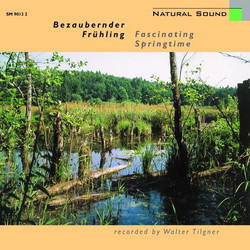
CD, Wergo SM 90092, released in 1998 in the Natural Sound series. Total time 68 minutes 32 seconds.
Release notes
The recordings were made with a Denon DAT-recorder DTR 80P and a SONOSAX SX-M2 microphone stereo Mic/Line amplifier. The microphone used was a Neumann facsimile-head KU 100 stereo model. The sonograms were made by a programme of Raimund Specht (Avisoft SASLabPro), Berlin. Recording location: Darss peninsula on the Baltic coast of the German state of Mecklenburg-Vorpommern. Recording date: September 1994 Made in EU (on CD) Manufactured in Germany. Printed in Germany. (on back cover)
| Meeresrauschen Am Darß-Weststrand / Baltic Coast Of Germany | |||
| 1 | Leise Ist Das Rohren Eines Rothirsches Zu Hören / Roaring Of Red Deer Stag | 1:23 | |
| Mittags Im Buchenmischwald Am Alten Meeresufer / Beech Forest | |||
| 2 | Ein Buntspecht "Kixt" Und Hackt / Spotted Woodpecker | 1:12 | |
| 3 | Ein Zapfen Fällt Zu Boden / A Cone Falls To The Ground | 0:08 | |
| 4 | Ein Schwarzspecht Kommt / Black Woodpecker | 0:36 | |
| 5 | Buntspecht "Kixt" Und Der Schwarzspechl Ruft "Kijah" / Spotted Woodpecker And Black Woodpecker | 0:48 | |
| 6 | Ein Eichelhäher "Rätscht" / Harsh Screeching From A Jay | 0:35 | |
| Abenddämmerung Am Brunftplatz / Dusk At The Red Deer Rutting-Place | |||
| 7 | Heuschrecken Zirpen Und Stechmücken Schwirren In Der Luft. Hirsche Röhren / Grasshoppers And Mosquitoes | 3:08 | |
| 8 | Ein Tier Schreckt. Es Beginnt Zu Regnen, Heuschrecken Zirpen / Deer, Rain And Grasshopper | 3:01 | |
| 9 | Es Donnert, Wind Und Regen Nehmen Zu / Thunder, Wind And Rain | 3:04 | |
| 10 | Der Regen Hat Aufgehört, Der Wind Und Das Waldesrauschen Aber Haben Zugenommen / Black Woodpecker And Mute Swans | 0:55 | |
| 11 | Laubfrösche Quacken, Ein Alter Hirsch Trollt Zum Brunftplatz / Tree Frogs And Stag | 3:48 | |
| 12 | Er Antwortet Einem Weit Entfernten Rivalen, Schreit (Röhrt) / Rival Deer | 3:14 | |
| 13 | Hirsch "Trenzt" / Stag And Deer | 3:22 | |
| Hochbrunft, Nachts Am Brunftplatz / High Point Of The Rut, Night-Time | |||
| 14 | Am Brunftplatz Treffen Immer Mehr Hirsche Ein / More Stags | 2:51 | |
| 15 | Brunftkampf (Stangenschlagen) / Rutting Fight (Clash Of Antlers) | 7:56 | |
| 16 | "Sprengruf" / "Sprengruf" | 7:26 | |
| Morgendämmerung / Dawn | |||
| 17 | Die Hirsche Entfernen Sich Ins Dichtere Unterholz / Stags Seek Refuge In The Denser Undergrowth | 6:19 | |
| 18 | Ein Waldkauz-Weibchen Ruft "Kiuwitt" Und Ein Hirsch Röhrt / Female Tawny Owl | 1:14 | |
| 19 | Ein Rotkehlchen "Tixt" / Robin | 1:01 | |
| 20 | Ein Schwarzspecht-Männchen Steht Auf Und Fliegt Aus Seiner Höhle / Black Woodpecker | 1:29 | |
| 21 | Das Schwarzspecht-Männchen Klopft Demonstrativ (Kein Nahrungshacken) / Black Woodpecker Taps Demonstratively | 7:04 | |
| 22 | Das Schwarzspecht-Männchen Trommelt Kurz / Male Black Woodpecker Drums | 2:13 | |
| 23 | Das Schwarzspecht-Männchen Und -Weibchen Begegnen Sich / Male And Female Black Woodpecker Meet | 2:40 | |
| Der Wald Erschallt / The Wood Resounds | |||
| 24 | Schellackplatte (B-Seite) Von Ludwig Koch 1934. Jagdhornsignal ”Hirschtot” Und ”Halali” (Beendigung Der Jagd) / Ancient Hunting-Horn Signal "Stag Dead" ("Mort") And "Halali" (The Hunt Is Over) | 2:52 | |
- Walter Tilgner
- Recorded By, Field Recording