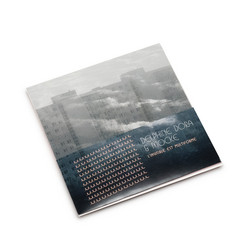
Edition of 200 ** D'une nostalgie inconnue begins with an invitation and unfolds as a quiet dérive. In 2022, Delphine Dora travelled to Lisbon to perform at the Appleton festival, curated by Manuel Mota and David Maranha. From there, the journey expanded: concerts, residencies, stretches of solitude, and a growing archive of sounds gathered almost as a reflex. After a stop at Sonoscopia in Porto, she arrived at Osso, a residency space in rural São Gregório, where she stayed more or less alone for ten days. The record that emerged is less a “Portuguese album” than a porous diary of that time - a way of re‑hearing a place once you’ve left it.
Over roughly three weeks, Dora moved between stages and thresholds, but the dominant activity was listening. She recorded reality in small, passing fragments: the surf of the Atlantic, voices crossing on a street corner, a song leaking from a park loudspeaker, incidental noises that might otherwise evaporate. Anonymous and fleeting, these sounds are vivid with presence. On D'une nostalgie inconnue, they become raw material for an inner landscape, a memory of territory that refuses documentary neatness in favour of an intuitive, vibratory logic. The field recordings don’t illustrate so much as perfume the pieces, arriving like half‑remembered details in a dream.
At Osso, two instruments became the frame for her response: the centre’s piano and a harmonium lent by David Maranha. Alone with these keyboards, Dora improvised daily, letting the feel of the rooms and the residue of her walks seep into slow, searching pieces. The resulting tracks are born in the moment yet threaded together by tone and touch: hesitant melodic lines, hovering chords, small repetitions that feel like someone trying to hold on to a feeling long enough to understand it. The title, taken from a fragment by Fernando Pessoa, captures the mood: a nostalgia whose object is unknown, a longing aimed at something that might only exist in the act of playing and listening.
She describes the album as an interior map, a wordless diary, an attempt to chart the “sensitive memory” of places. In practice, that means folk elements appear more as ghosts than as forms: traces of song, modal turns, a sense of melody carried like a folk tune, but dissolved into dreamlike structures. The record sits somewhere between imaginary travelogue and reinvented folk, balancing reality and reverie. The geography that emerges is emotional rather than cartographic: coordinates are replaced by timbre, light, mood, the way certain chords seem to carry the colour of a sky at a particular hour.
D'une nostalgie inconnue is also part of a longer‑running project in Dora’s work: a personal and poetic mapping of the places she passes through, using music, improvisation and collected sounds as ways to “fix the evanescent” and momentarily catch the invisible. Each album becomes a page in a subjective travel diary where borders blur and topography gives way to inner weather. Here, folk steps away from its traditional structures to dream itself otherwise - reinvented, oneiric, hovering between outside and inside, between listening to the world and listening to its echo within.
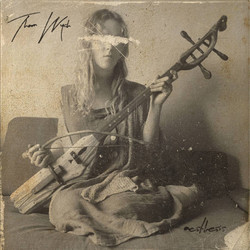
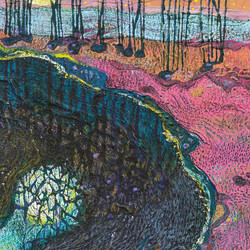
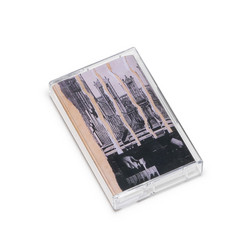
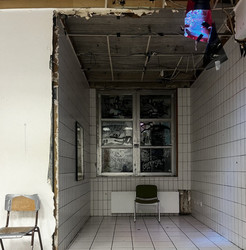
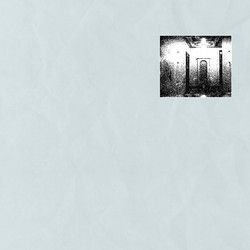
All music, composition and field recordings are by Delphine Dora. Artwork by Juliette Liautaud and layout by Jani Hirvonen extend the album’s sense of poetic geography into the visual field, turning the release into a small, complete world: a map of a journey whose true terrain is the space between ear, memory and imagination.