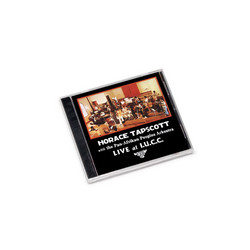
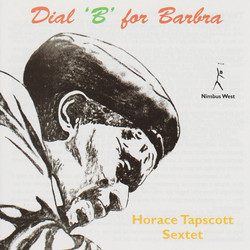
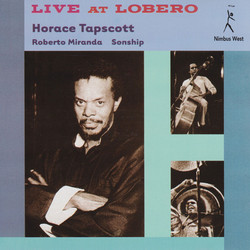
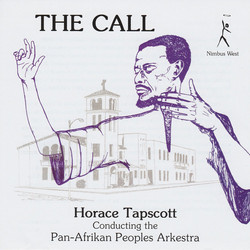
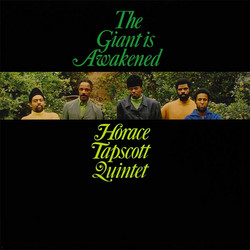
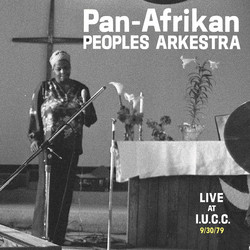
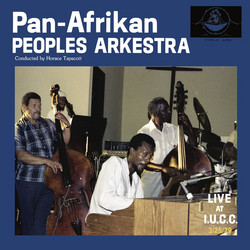
Horace Tapscott, Pan-Afrikan Peoples Arkestra
Flight 17
Tracked express shipping from Italy, no customs or import VAT in the EU. Shipping costs
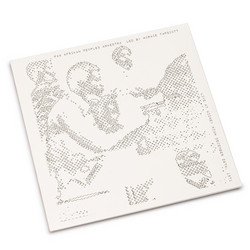
Seventeen years. That's how long it took the Pan-Afrikan Peoples Arkestra to make their first record. Founded in 1961 by Horace Tapscott as the Underground Musicians Association, the orchestra had weathered the Watts uprising, the ferment of the Black Arts Movement, a decade-long residency at the Immanuel United Church of Christ - all without committing a single note to vinyl. Not for lack of industry interest, but by choice: Tapscott wanted to build a community, not a recording career.
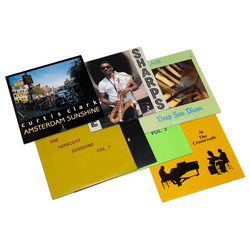
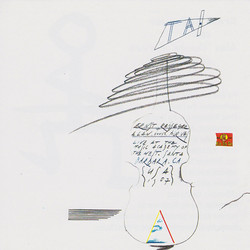
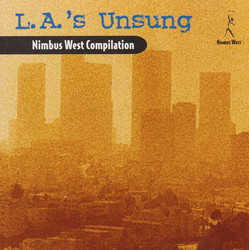
It was Tom Albach, passionate and persistent, who changed things. He founded Nimbus West Records with a single purpose: to document the music Los Angeles had been keeping as its own secret. The first sessions in early 1978 yielded enough material for two albums. Flight 17 was the first. The album opens with Herbie Baker's title track: a three-part takeoff that begins with unaccompanied pianos, lifts into a dense, circular orchestral swirl, and lands on a solitary flute. This is music that sounds like nothing else - neither New York free jazz nor Sun Ra's cosmic Arkestra. It has different roots, planted in the specific soil of South Central.
The assembled forces are formidable: Jesse Sharps on soprano and tenor saxophone, Linda Hill on piano alongside Tapscott, Louis Spears on cello, Kafi Larry Roberts on flute. The compositions come from the Arkestra's own members: Roberto Miranda's "Horacio" is a nervy Latin jam; Kamonta Lawrence Polk's "Maui" stretches into laid-back summer grooves; "Clarisse" swings between blues and bop with near-Eastern flourishes.
The 1997 CD reissue adds two bonus tracks from the same sessions: a Coltrane Medley and "Village Dance," featuring a smaller group with Billy Hinton on drums and Daa'oud Woods on percussion.
Flight 17 is not merely a historical document. It's proof that another path to avant-garde jazz existed - and endures: collective, rooted, ESSENTIAL.
Format
Tracks 6, 7 were recorded in the Immanuel United Church of Christ, 85th & Holmes, Los Angeles
All tune Tapal Music B.M.I. except track Coltrane Medley (Jowcol Music B.M.I.)
In memoriam :: Herbert Baker 1952~1970
Release notes
Tracks 6, 7 were recorded in the Immanuel United Church of Christ, 85th & Holmes, Los Angeles All tune Tapal Music B.M.I. except track Coltrane Medley (Jowcol Music B.M.I.) In memoriam :: Herbert Baker 1952~1970
| 1 | Flight 17 | 15:53 | |
| 2 | Breeze | 3:09 | |
| 3 | Horacio | 6:01 | |
| 4 | Clarisse | 6:27 | |
| 5 | Maui | 7:21 | |
| 6 | Coltrane Medley | 8:00 | |
| 7 | Village Dance Revisited | 10:55 |
- Herbert Callies
- Alto Clarinet (1 to 5)
- Michael Session
- Alto Saxophone (1 to 5)
- John Williams
- Baritone Saxophone (6, 7)
- David Bryant
- Bass
- Kamonta Lawrence Polk
- Bass (1 to 5)
- Roberto Miranda
- Bass (6, 7)
- Alan Hines
- Bass, Soloist (6, 7)
- Louis Spears
- Cello (1 to 5)
- Pan-Afrikan Peoples Arkestra
- Conductor (1 to 5), Piano (6, 7)
- J.B. Bryan
- Design
- Billy Hinton
- Drums (6, 7)
- Everett Brown Jr.
- Drums (1 to 5)
- William Madison
- Drums, Percussion (1 to 5)
- Kafi Larry Roberts
- Flute (1 to 5)
- Jesse Sharps
- Leader, Soprano Saxophone, Tenor Saxophone, Flute [Bamboo] (1 to 5)
- Dr. Samuel R. Browne
- Liner Notes
- Daa'oud Woods
- Percussion (6, 7)
- Linda Hill
- Piano (1 to 5), Vocals (6, 7)
- Tom Albach
- Producer
- Dennis Moody
- Remastered By [CD Remastering]
- Billy Harris
- Soprano Saxophone (6, 7)
- Sabia Matteen
- Tenor Saxophone (6, 7)
- James Andrews
- Tenor Saxophone, Bass Clarinet (1 to 5)
- Archie Johnson
- Trombone (1 to 5)
- Lester Robertson
- Trombone
- Red Callendar
- Tuba (1 to 5)
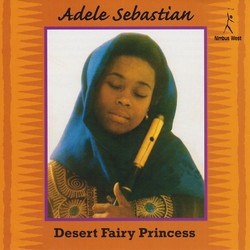
- Adele Sebastian
- Vocals, Flute