Soundohm
“An anarchic and entirely singular gesture of DIY minimalism, falling within previously unexplored zones, somewhere between free improvisation, electroacoustic music, and modern composition”
24 March 2023
Tracked express shipping from Italy, no customs or import VAT in the EU. Shipping costs
David Cunningham was born in Ireland in 1954. His work ranges from pop music to gallery installations including several collaborations with visual artists. His first significant commercial success came with The Flying Lizards' single "Money," an international hit in 1979.
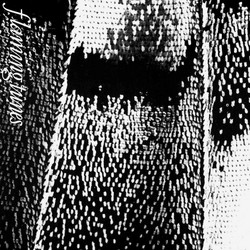
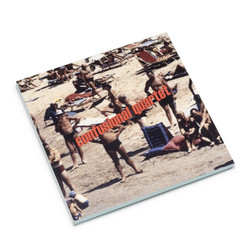
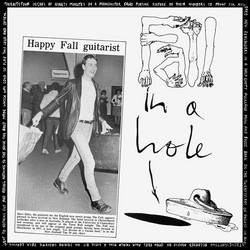
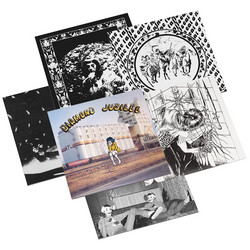
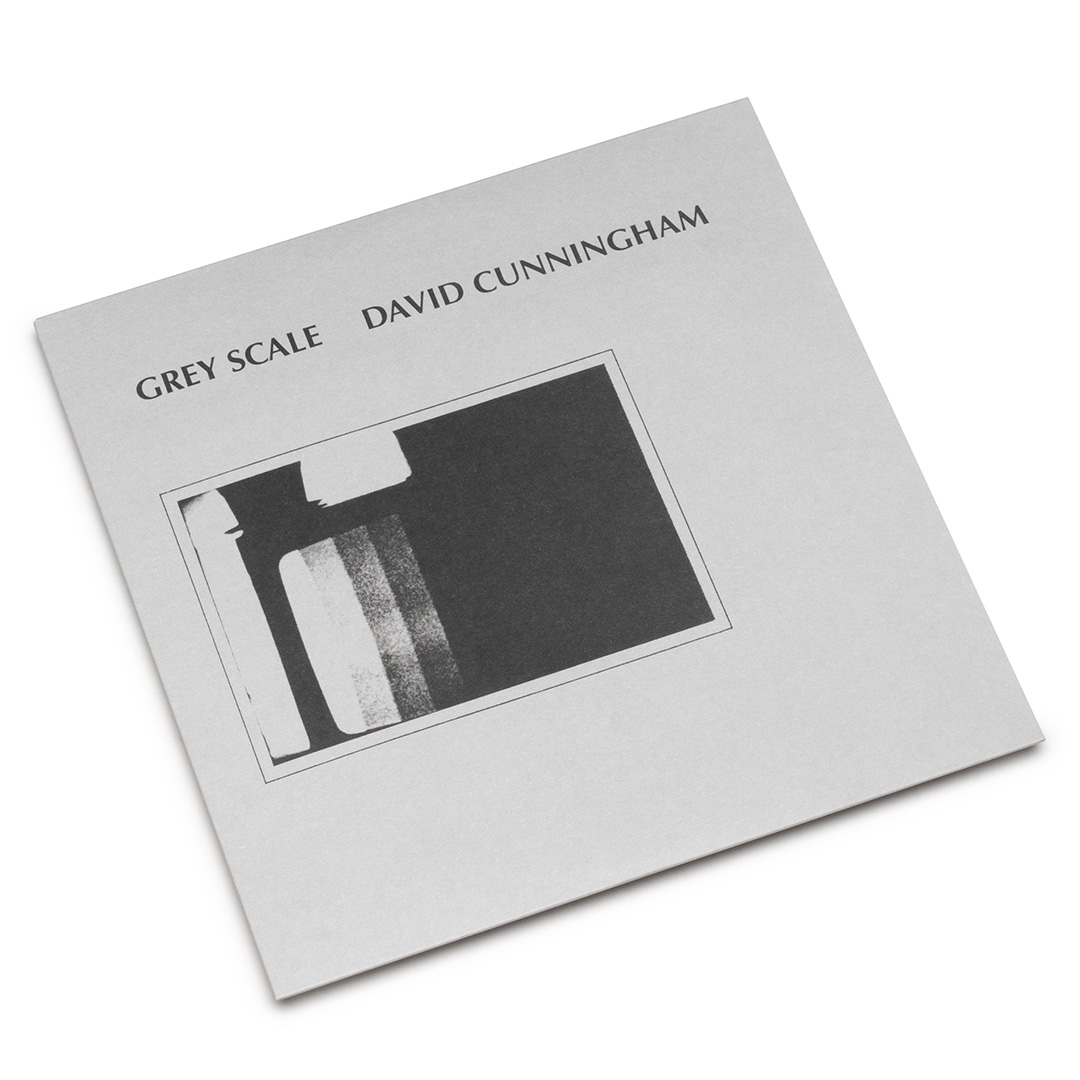
Originally released in 1976, Cunningham's first solo album Grey Scale has become a landmark statement of DIY minimalist composition – continuing in the vein of the wild explosion of arthouse experimentation from the early '70s. Cunningham, then a student at the Maidstone College of Art in Kent, drafted fellow student non-musicians and (using whatever instruments available) crafted an endlessly shifting sonic palette with an improvisor's keen sensitivity to space, texture and tone.
As Cunningham states in the liner notes, his approach was to "pursue something (which may appear trivial or meaningless) so rigorously or relentlessly to the point that it reveals something new." Cunningham was influenced by live performances he was attending at the time by English composers Cornelius Cardew, Gavin Bryars and Michael Nyman as well as free improvisors Evan Parker, Derek Bailey, David Toop and Paul Burwell.
Error System
The players play a repeating phrase. As soon as one player makes a mistake that mistake is made the basis of his repetition unless it is modified by a further mistake. Thus each player proceeds at his own rate to change the sound in an uncontrollable manner. On no account should 'mistakes' be made deliberately to introduce a change into a performance. In short - sustain your errors.
The water piece and the guitar piece are analogous to this process. However the process is automatic here, an inherent quality in the machinery used.
The numerical sequence used in Ecuador and Bolivia is: 11221111223332112222331112332233331122232 repeated three times. The last time an extra 11 is tagged onto the end. Each number refers to a bar, repetitions of a specific number are uniform.
Notated according to the Ecuador system, Venezuela is 11223344556677 etc. for each player except the musician supplying the constant pulse.
All pieces composed by David Cunningham
for copyright, etc. please refer to M.C.P.S.
Superior Viaduct PO Box 193563 San Francisco, CA 94119 USA
Error System The players play a repeating phrase. As soon as one player makes a mistake that mistake is made the basis of his repetition unless it is modified by a further mistake. Thus each player proceeds at his own rate to change the sound in an uncontrollable manner. On no account should 'mistakes' be made deliberately to introduce a change into a performance. In short - sustain your errors. The water piece and the guitar piece are analogous to this process. However the process is…
| A1 | Error System (BAGFGAB) | ||
| A2 | Error System (C Pulse Solo Recording) | ||
| A3 | Error System (C Pulse Group Recording) | ||
| A4 | Error System (E Based Group Recording) | ||
| A5 | Error System (EFGA) | ||
| B1 | Ecuador | ||
| B2 | Water Systemised | ||
| B3 | Venezuela 1 | ||
| B4 | Guitar Systemised | ||
| B5 | Venezuela 2 | ||
| B6 | Bolivia |
“An anarchic and entirely singular gesture of DIY minimalism, falling within previously unexplored zones, somewhere between free improvisation, electroacoustic music, and modern composition”