Gérard Collin-Thiébaut
Œuvres pour Dispositifs Audio-Visuels / Works for Audio-Visual Installations 1981-1985 (LP)
FormatLPLabelTochnit AlephGenreSound Art
Arriving from the supplier: due on/around November 2026 (ships as soon as it reaches us)
Tracked express shipping from Italy, no customs or import VAT in the EU. Shipping costs
"I have always thought that the weakness of painters of the last half-century was their tendency to limit themselves too much to a single category of space: geometry and its relationship to stillness, reducing everything to the same plane, perhaps due to a disillusioned vision resulting from a lack of projection. Thus, even when nothing is lacking in a painting, succession, time, continuity, and memory are no longer perceived; for the habit of sight, by the very nature of the eye, weakens memory. How then to represent differently, in order to move from the domination of the eye, physical sight, to the sight of the mind? Only through a complex system of representation, at once spiritual, theatrical, and perspectival. It was 1981, and I needed to find a method that would exacerbate the idea of representation, both for image and for speech and sound.
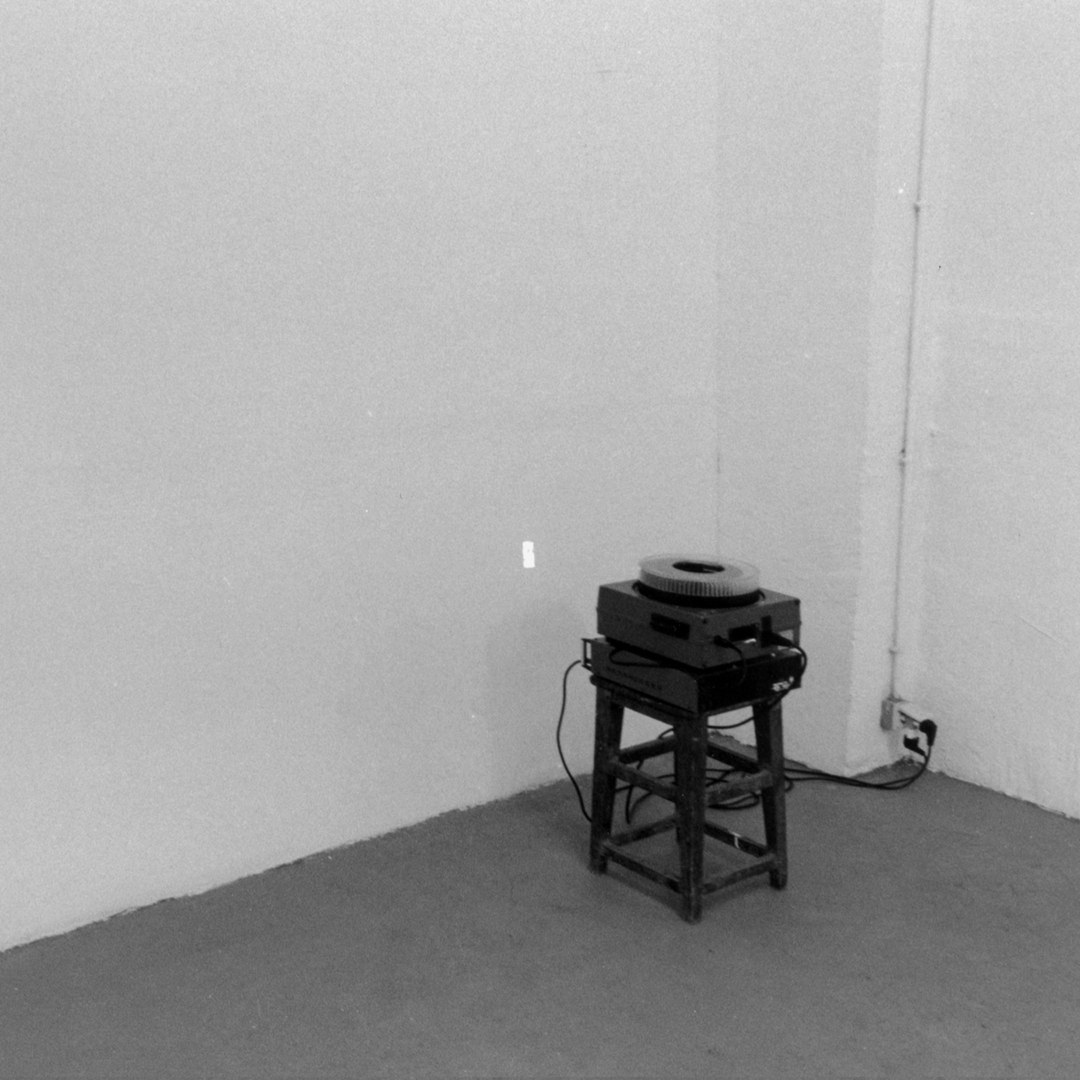
I immediately envisioned an anachronistic audiovisual setup consisting of a slide projector and a sound player, placed on a stool, the whole thing highly visible, projecting a very small image (as small as the one drawn). But first and foremost, the projected image would come from a drawing, neither spontaneous nor invented, but copied from a magazine, some other document, or even from my own photographs. And, in order for the projected image to remain identical in size to the drawn one, I needed a reduced drawing from the outset; I chose a format, not square, but 55x25 mm. Since the projection enlarged the projected image, even though the setup was one meter from the picture rail, I equipped the projector with an 80-125 mm or 3.5-70-120 mm zoom lens. This illustrates the importance of optics as an intermediary, and it wasn't without ulterior motives, as it involved my years as a surveyor's student, practicing with a total station/theodolite daily, and my recognition of Raymond Roussel's "La Vue". There were, of course, other reasons for this focus, such as the expression of my morbid detachment from the world around me; or my ten years of artistic self-indulgence spent naively stripping away, one by one, the layers of paint covering Marcel Duchamp's bed. But to return to the drawing, it will be done with colored pencils, graphite, and gouache, with one or two exceptions.
The sound, for its part, following the principle stated above, will come from recordings taken / copied from various media: radio, television, film, or from recordings made by me; then edited, layered, etc. This "Audio-Visual Device" with its equipment, deliberately full of archaism (like the hyphen deliberately placed between audio and visual, which while connecting puts a distance), thus became contemporary in reverse, because we were in the midst of the blossoming of new audiovisual technologies.
These installations responded to the spaces and the spirit of the exhibitions in which they were featured. Often, I kept the space as I had found it upon arrival, using any available stools or chairs; other times, depending on the context, I emptied the space entirely, bringing my own stools. Occasionally, I created a space specifically for each project, where I installed 24 synchronized projectors in a circular space. The clicking of the slide cart, the whirring of the fan, the heat of the lamp, and so on; likewise, the synchronization of the soundtrack with the projector via cues, all of this evoked the beginnings of cinema. As for the rotating movement of the projector's circular magazine, it represented for me "the circle of life," reminding me of Max Ophuels film based on Arthur Schnitzler's play "Liebesreigen" (The Circle of Love). The sound of this "audiovisual device," as much as its form, attracted the visitor even before they saw the projected image, although the volume was moderate, so skillfully does sound diffuse through space. But the closer the visitor, now an observer, got, the more the sound was disturbed by the very present noise of the projector's fan; and when it came to dialogue, it was easier to understand it from a distance than up close, when observing the image. Where, then, was the viewer's appetite, faced with the small projected image? Certainly not in front of the painting like a window; hence the proportions of my image which inevitably placed it in front of a French window; or, for the connoisseur, facing Marcel Duchamp's "Fresh Widow".
Gérard Collin-Thiébaut, How I created some of my "Audiovisual Devices"
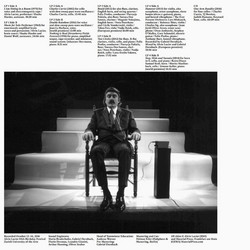
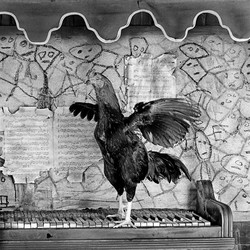
All Photography & Sound © Gérard Collin-Thiébaut. Edited & produced by Daniel Löwenbrück. Photos taken at Centre Pompidou (Exposition Alibis) and Galerie Liliane et Michel Durand-Dessert, Paris. Edition of 250 copies, November 2026. Tochnit Aleph (TA179) 2026.