Miles Davis
Reference: Miles Davis’ 3rd Quintet Bitches Brew Live 1969 in Europe (2CD)
"The shock and awe that Bitches Brew produced within and without the jazz world on its release in March 1970 was largely unexpected, the result of the music’s uncompromising power and what many felt to be its perplexing, eccentric sound and structure. In retrospect, we know how Miles’ unconventional studio methodology and Teo Macero’s subsequent compositional editing of the voluminous taped material innovated the remarkable finished product. But what has only marginally been discussed is the extent to which Davis’ characteristic conceptual choices affected the changes for the future that this album initiated.
Certainly, considering its novel production techniques, the precedent was set on his previous release, In a Silent Way, where separate episodes of predetermined compositions by Miles and recent recruit Joe Zawinul, and not the thematicinduced jams of the Bitches Brew sessions, were collaged into the LP’s two flowing sidelong works. Further, the significant contribution by guitarist John McLaughlin, though another recent addition, was rather a continuation of Miles’ to-this-point unsatisfactory attempt to sweeten the quintet’s studio palette with guitar, dating back to 1967 and including Joe Beck and George Benson, eventually leading to his twin-guitar touring bands post-1971. Finally, the use of simultaneous electric keyboards so prominent here had been initiated in late ’68 sessions, although the tracks were not released
for several years.
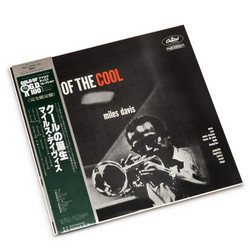
The most striking, indeed, revolutionary metamorphoses that Bitches Brew introduced were in terms of instrumental color and rhythmic complexity. With Wayne Shorter switching his focus to soprano saxophone and the crucial complement of Bennie Maupin’s bass clarinet, as well as the electronic augmentation of Davis’ trumpet, the chiming electric pianos, and the stinging electric guitar, the ensemble’s tonal potential broadened dramatically – a factor that Miles sought to exploit periodically throughout his career in his various collaborations with Gil Evens, dating as far back as the “Birth of the Cool” nonet. This, however, was the first time he took the step of combining two bassists and several drummers/percussionists in order to, as John Cage liked to say in another context, “thicken the plot,” while incorporating shuffle, boogaloo, rock, and funk beats, with polyrhythmic combinations.
Which brings us to the issue at hand, the role of this “third quintet” swept into the maelstrom of musical idiosyncrasies that Bitches Brew prcipitated. Tradition and economics had largelydetermined the post-bop quintet format for Miles from circa 1955 (the first “classic” quintet with John Coltrane – the roughly two years with Cannonball Adderley’s participation notwithstanding) through 1968 (the point where Herbie Hancock, Ron Carter, and Tony Williams left the second “classic” quintet to pursue individual careers) –
and the brilliance of the studio albums produced over this extended period, cultivated with two such distinctive groups of musical talent, only confirms Miles’ genius for concept and detail. There’s no doubt that the second quintet, individually and collectively, embraced a visionary zeal, enlarging Miles’ perspective over time (witness the expansion of group improvisational interaction, and the reliance on the compositions by Shorter, Hancock, and Carter in the albums from E.S.P. to Miles in the Sky).
The third quintet, assembled to fulfill gigs on the East Coast and the Antibes Jazz Festival in the summer of 1969, offered radical changes from the very beginning, with its potent new rhythm section of Chick Corea (on electric piano almost exclusively), Dave Holland, and Jack DeJohnette, and a repertoire all-but devoid of the standard tunes transformed by the prior quintets, now featuring select compositions by Shorter and those Miles had introduced on In a Silent Way and was preparing for Bitches Brew. Following the augmented excursions of the August recording sessions, the quintet toured Scandinavia and Europe – the source of this concert material from Berlin, Stockholm, and Rotterdam. And in order to reclaim the expansive details of the music in their compact format, necessity required they invent a style of their own that balanced intensity and lyricism, abstraction and elaboration, form and freedom.
One of their solutions was to use each individual composition as not as a score but an open outline, spontaneously reinterpreting the phrasing and placement of melodic motives, loosening or altogether abandoning the harmonic sequences to give the soloists additional room to maneuver. Miles sounds inspired – protean and provocative – throughout, and Shorter’s adventures, alternating between tenor and soprano, seem especially insistent in Rotterdam and oddly constructivist in Berlin. To my ear, Corea is the wild card. Exploiting a unique percussive technique on the electric piano, he injects agile countermelodies and bursts of supportive chords and brusque undesignated clusters, alongside jolting circuitous, quixotic
solos. Alas, the so-called “lost” quintet quickly became the last quintet. Within a few months Wayne
Shorter departed, and Miles, desiring to expand the music’s rhythmic parameters, added Airto Moreira to the touring band and replaced the rhythm section again. The tribal concerts of the ‘70s were on the horizon, and another shift was in the wind." - Art Lange