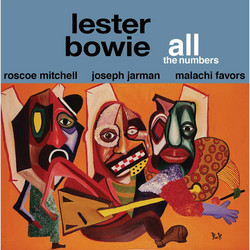
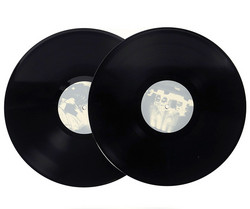
**2026 stock** The 50th‑anniversary edition of Numbers 1 & 2 restores a pivotal moment in avant‑garde history to its original contours: Lester Bowie’s 1967 quartet date that would quietly become ground zero for the Art Ensemble of Chicago. Recorded in August of that year and issued as the inaugural release on Chuck Nessa’s label, the session was never simply a leader’s calling card. With Malachi Favors on bass, Joseph Jarman and Roscoe Mitchell on reeds, it documented a working chemistry already in motion, four AACM musicians testing how far a small‑group format could be stretched without losing focus. Heard now in its faithfully remastered form, the album sounds less like an historical footnote than like a fully realised statement that just happens to come before the name “Art Ensemble” had settled into place.
The lineup is, in all but branding, the classic Art Ensemble core. Bowie’s trumpet, at once ceremonious and sly, moves between burnished long tones, smeared calls and sudden bursts of humour; his lines balance fire and mock‑processional grandeur. Favors anchors and destabilises in the same gesture, his bass tone huge and woody, capable of slipping from walking support to arco howl and back again without breaking the music’s spine. Jarman and Mitchell, both doubling on an array of saxophones and clarinets, approach the frontline as a shifting, three‑headed voice: tight, almost bop‑informed counterpoint one moment, split tones and murmured asides the next. Already, the hallmarks of their shared language are in evidence - the concern with space, the play of tone colour, the willingness to let a single sound hang in the air until its implications are fully heard.
What makes Numbers 1 & 2 feel so alive half a century on is the balance it strikes between structural clarity and exploratory freedom. The pieces (three in total on the original program, grouped into the titular “numbers”) use compact compositional ideas as launchpads rather than strict scripts. Heads are stated with a kind of rough dignity, sometimes almost march‑like, before opening into zones where time loosens and individual voices spiral outwards. Yet even at their most “free,” the improvisations never devolve into undifferentiated density. Instead, you hear a quartet working with a shared sense of dramaturgy: crescendos and drop‑outs, sudden duos or trios, moments where the horns fall silent to leave Favors alone tracing the music’s skeleton. Silence and near‑silence are treated as active elements, key to the group’s ability to turn pacing into tension.
This anniversary edition does an important kind of restorative work. Mastered in 24‑bit from the original half‑inch four‑track session tapes, it returns the album to the sequence and edits of the first LP, a configuration that had been eclipsed in later archival releases. Listeners who encountered the material via the expanded All the Numbers set will recognise the raw substance, but here it is framed with the concision and narrative arc that Nessa originally put into circulation. The newly struck master brings out details that earlier versions sometimes obscured: the grain of Bowie’s mute work, the subtle shadings in Favors’ dynamics, the way Jarman and Mitchell’s overtones bloom and then fold back into the ensemble.