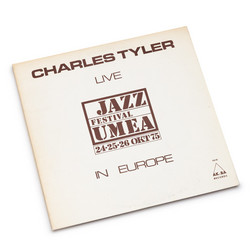
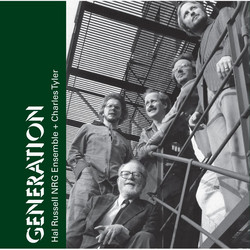
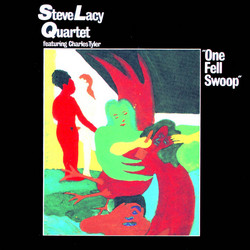
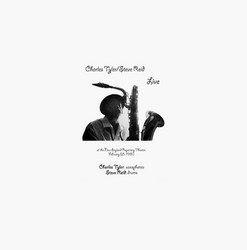
Recorded live at Sam Rivers’ Studio Rivbea on May 20, 1976, Saga of the Outlaws captures Charles Tyler at full stretch, leading one of the most combustible bands of New York’s loft era. Subtitled “Ride of the Marauders: a polyphonic sonic tale of the old & new West,” the piece is conceived as a single extended narrative rather than a tune set, using the iconography of outlaws and open country as a frame for collective improvisation. Alto and baritone saxophonist Tyler had been an early associate of Albert Ayler, appearing on Ayler’s mid‑’60s ESP recordings and cutting two fiercely distinctive albums of his own for ESP in 1966–67. A decade on, Saga shows him with a fully consolidated voice: still steeped in Ayler’s cry, but channeling that energy into a more patient, architecturally minded long form.
The band he assembles for this project is perfectly calibrated for that aim. Trumpeter Earl Cross brings a huge, clarion tone that can cut through dense textures or lock in with Tyler’s horns for scalding unisons. The low end is handled by two bassists - Ronnie Boykins, best known from his tenure with Sun Ra, and John Ore, whose history with Thelonious Monk adds another layer of lineage. Their twin bass configuration gives the music a rolling, multi-layered foundation: one instrument can hold a pedal or walk a heavy line while the other bows, slides or skitters in counterpoint, creating a sense of constant, shifting ground rather than a single fixed root. Steve Reid’s drumming, simultaneously earthy and free, drives the whole structure forward, shifting from marching pulses to fractured swing to thunderous barrages without losing momentum.