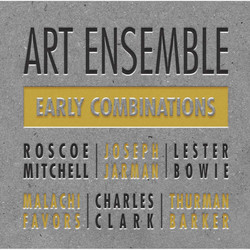
Roscoe MitchellFeaturing: Hugh Ragin
Snurdy McGurdy And Her Dancin' Shoes
**2026 stock** Recorded in December 1980, Snurdy McGur dy and Her Dancin’ Shoes marks the debut of Roscoe Mitchell’s Sound Ensemble, a band that would carry his music into a new decade with a different kind of firepower. Introducing trumpeter Hugh Ragin, guitarist A. Spencer Barefield, bassist Jaribu Shahid and drummer Tani Tabbal to the wider circle of AACM followers, the album feels at once like a fresh chapter and a continuity of long-term concerns: compositional clarity, textural invention, and an insistence that improvisation can be both structurally exacting and exuberantly wild.
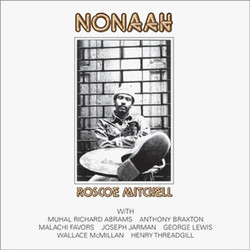
From the outset, you hear Mitchell shifting away from the stark, sometimes confrontational sound worlds of Nonaah and the earlier Art Ensemble records into something more overtly band-oriented. The Sound Ensemble moves as a flexible unit, able to turn on a dime from pointillist abstraction to a deep pocket. Ragin’s trumpet can match Mitchell’s alto and soprano in tart, high-register intensity, but it also opens space for burnished lyricism; Barefield’s guitar slips between clean lines, jagged clusters and subtly warped chords, a crucial connector between horn lines and rhythm section; Shahid and Tabbal lock into grooves that can be earthy, fractured or eerily suspended, often within the same piece.
Mitchell’s compositions here are designed as launchpads rather than closed systems. Themes are sharply etched, often built from angular intervals or asymmetrical phrases, but what happens once the band hits them is deliberately unstable. Some tracks lean into abstraction: odd-meter figures, spiky counterpoint, timbral games that recall the AACM’s most exploratory years. Others move toward something closer to funk - basslines that bite, drum patterns that invite a physical response, melodic hooks that lodge in the ear even as they’re twisted out of shape. A single tune can start as a knotty head arrangement and tumble, several minutes later, into a swaggering, off-kilter vamp.
Part of the album’s fascination lies in how it stages that spectrum without ever collapsing into a simple binary of “inside” and “outside.” The abstract passages are grounded by an underlying sense of pulse and form; the funkier episodes are constantly being unsettled by metric shifts, harmonic sidesteps or sudden textural ruptures. Even the inclusion of a piece by Anthony Braxton feels less like a guest citation than an extension of Mitchell’s own project: a reminder that the AACM’s composers were in dialogue, writing music that could withstand and reward radically different treatments.
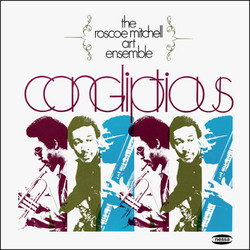
Many listeners have heard Snurdy McGur dy and Her Dancin’ Shoes as Mitchell’s strongest large-ensemble statement since Congliptious and the Old/Quartet recordings of the late ’60s, and it’s not hard to understand why. The album channels a comparable sense of risk and invention, but does so in a language attuned to the early 1980s: electric guitar in the mix, grooves that flirt with dance-floor momentum, an almost song-like concision in the way materials are introduced, developed and transformed. The Sound Ensemble’s debut lays out a template Mitchell would return to repeatedly in the ensuing years - a laboratory where rigor, play, abstraction and funk can coexist, constantly rubbing against each other to spark new directions.
![Solo [3]](https://cdn.soundohm.com/data/products/013/hyperrealism-electroacous.jpg.250.jpg)