Nick Mazzarella, Tomeka Reid
Signaling
Tracked express shipping from Italy, no customs or import VAT in the EU. Shipping costs
Signaling brings together two of Chicago’s most quietly pivotal figures, Nick Mazzarella and Tomeka Reid, in the stripped‑back, high‑risk format of the saxophone–cello duo. For more than a decade both have been central to the city’s overlapping jazz and improvised‑music communities: Mazzarella as an alto saxophonist and composer with a deep feel for melody and form, Reid as a cellist, bandleader and composer whose instrument slips effortlessly between rhythm section, frontline and textural roles. Recorded in 2015 at Fox Hall Studio in Chicago and released by Nessa in 2017, the album is a concise yet expansive statement of what their partnership can do when every note, every scrape of bow hair and breath of air is exposed.
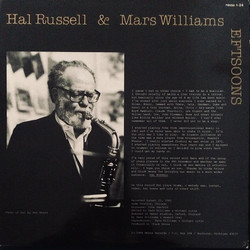
The duo’s instrumentation taps into a specific lineage. The saxophone/cello combination has surfaced at key points in post‑war jazz: in the Chico Hamilton groups of the 1950s, where cello first disrupted the standard small‑group palette; on sessions in the ’60s with Eric Dolphy and Ron Carter, where low strings and reeds opened new harmonic angles; and, most crucially for this album, in the 1970s recordings of Julius Hemphill and Abdul Wadud. Mazzarella and Reid have both spoken about their shared admiration for Hemphill/Wadud, and the opening track’s title, “Blues for Julius and Abdul,” makes that debt explicit without slipping into imitation. Their homage lies less in quoting riffs than in adopting a similar attitude: a commitment to song form and groove even at the outer reaches of abstraction, and to making two voices sound like an entire, self‑sufficient band.
Across nine pieces - all originals by Mazzarella or Reid - Signaling explores a broad emotional and structural range. There are pieces that move with the knotty momentum of post‑bop refracted through the AACM, and others that slow time down to a series of carefully placed gestures: a single held tone, a creak of wood, a plucked chord that resonates into silence. Mazzarella’s alto combines a clear, bright sound with a penchant for long, yearning lines and sharply articulated motifs, alternately riding Reid’s rhythmic figures and cutting across them in oblique counterpoint. Reid’s cello covers a full spectrum, from walking‑bass propulsion and rhythmic ostinati to singing upper‑register melodies and scratchy, near‑noiseless textures, often switching roles within a single piece.
The album’s title points to its deeper concerns. To “signal” here is to send messages across time and affiliation: from the Midwestern avant‑garde of the 1970s to the present; from the duo’s shared heroes to the communities they inhabit now; from composition to improvisation and back. Several tracks use clearly defined themes - concise, memorable melodies or small cells - as starting points, but the music rarely settles into a simple head‑solo‑head arc. Instead, structures tend to evolve organically: motifs are returned to, reframed or abandoned altogether as new ideas prove more urgent. At its most intense, the interplay feels almost conversational, ideas volleyed back and forth with quick uptake; at its most spacious, it resembles a kind of joint listening, both players circling the same sonic object from different angles.
Placed alongside the lineage of sax/cello duets, Signaling feels both like a tribute and a step forward. The echoes of Hemphill/Wadud are clear, but Mazzarella and Reid bring their own Chicago‑honed sensibility: a feel for groove that can surface even in free‑time passages, a concern with architecture learned from years in larger ensembles, and a refusal to separate “inside” from “outside” playing into tidy boxes. The record’s modest length and focused instrumentation belie the density of ideas within it. For listeners, it offers an intimate vantage point on two major improvisers thinking, listening and building in real time; for the broader story of the Chicago scene, it quietly marks out a point where past and future shake hands, two instruments at a time.
This edition
2026 stock
Release notes
Recorded April 17, 2015 Fox Hall Studio, Chicago
| 1 | Blues For Julius And Abdul | 6:37 | |
| 2 | Signaling | 3:51 | |
| 3 | Like So Many Drops Of Water | 3:58 | |
| 4 | Interstices | 2:07 | |
| 5 | The Ancestors Speak | 4:18 | |
| 6 | Topographies | 7:27 | |
| 7 | Rediscovery Of An Age | 4:31 | |
| 8 | Let It Be Known | 5:14 | |
| 9 | Invoking A Spirit | 2:12 |
- Nick Mazzarella
- Alto Saxophone
- Tomeka Reid
- Cello