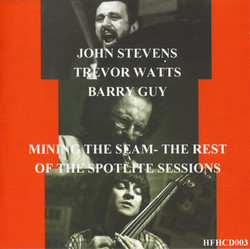
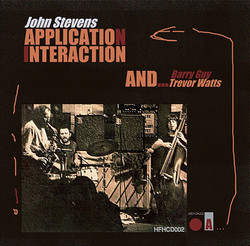
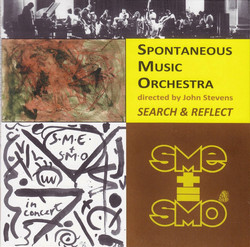
Bobby Bradford, John Stevens, Spontaneous Music EnsembleFeaturing: Trevor Watts, Julie Tippetts
Spontaneous Music Ensemble (2CD)
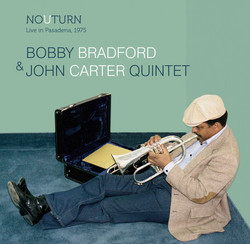
**2026 stock** These recordings capture Bobby Bradford at a crucial juncture, stepping away from his better‑known partnerships with Ornette Coleman and John Carter into the very different, hyper‑concentrated world of John Stevens’ Spontaneous Music Ensemble. Taped in 1971, the session documents Bradford’s first encounter with Stevens and saxophonist Trevor Watts, a meeting that folds his Ornettian sense of line and lyricism into SME’s rigorous, small‑gesture approach to free improvisation. The result is music that feels both combustible and minutely detailed, as if a classic free‑jazz front line had been dropped into a sound‑lab where every breath, scrape and partial is suddenly magnified.
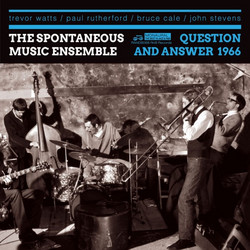
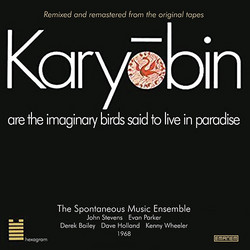
This particular edition of the Spontaneous Music Ensemble is a sextet: Bradford on trumpet, Watts on saxophone, Stevens on drums, Julie Tippetts (Driscoll) on voice and guitar, Bob Norden on trombone and Ron Herman on bass. Across the programme, the instrumentation thins and thickens, moving fluidly from full sextet density to trios and smaller constellations. In the larger group passages, brass and reeds tumble around one another in constantly recombining clusters, while Tippetts’ voice and guitar flicker at the edges - sometimes as pure texture, sometimes as a textless, word‑fragmented commentary. Herman’s bass and Stevens’ percussion act less as a conventional rhythm section than as an ever‑shifting ground, sketching implied pulses or dissolving time altogether into rustle and resonance.
Stevens’ conception of improvisation, distilled through SME, is omnipresent: a focus on close listening, on the “little sounds” that often get buried in more extroverted free jazz. Bradford responds by paring his language down to essentials. Instead of long, heroic solos, he offers sharp bursts, bent notes, half‑phrases that hook into the surrounding texture. His warm yet incisive tone cuts through even the most crowded moments, but he is just as willing to hang back, letting a single held pitch or muted smear tilt the ensemble’s direction. Watts, for his part, brings a raw, vocalised intensity that meshes with Bradford’s phrasing while retaining his own distinctly British edge, more rasp and burr than gleam.