Marion Brown, Gunter Hampel, Barre Phillips, Steve McCall
Live in Europe 1968 & 1972
Live in Europe 1968 & 1972 recovers two essential but long‑unheard moments in Marion Brown's European sojourn, a period when the alto saxophonist moved fluidly between continents, aesthetic camps and collaborators. The first three tracks - "Current Events", "Epiphanie" and "61 to Erie Basin" - were recorded live at Maison de la Radio, Salle 105 in Paris on March 16, 1968, while the final two pieces, "Djinji's Corner" and "Afternoon of a Georgia Faun", come from the Festival de Châteauvallon in Ollioules, France on August 22, 1972. The two sessions are separated by over four years, yet they share a core quartet formation that bridges American and European free‑jazz sensibilities: Brown on alto saxophone, Gunter Hampel on vibraphone, Barre Phillips on bass and Steve McCall on drums.
The 1968 set captures the group in a more compressed, tightly wound mode. Brown's alto is at once lyrical and restless, tracing long, twisting lines that carry echoes of blues and folk melody even when the harmony beneath them has dissolved. Hampel's vibraphone provides shimmering harmonic pools and ringing ostinatos, his mallet work precise yet supple enough to shift from delicate filigree to aggressive, hammered clusters. Phillips, already one of the most inventive bassists in the European free scene, moves between arco sustains and darting pizzicato figures, his lines acting as both harmonic anchor and melodic counterpoint. McCall's drumming is alive with colour: cymbal washes, subtle snare accents and tom‑rolls that push and pull the time without ever settling into straightahead swing. Across "Current Events", "Epiphanie" and "61 to Erie Basin", the quartet balances collective exploration with song‑like clarity, allowing themes to surface and recede organically.
By 1972, the chemistry has deepened and the music stretches out. "Djinji's Corner" runs over twenty‑two minutes, an extended meditation that moves through multiple moods and textures: sparse duo exchanges, dense quartet blowouts, passages where Brown's alto floats alone over a bed of vibes and bowed bass. "Afternoon of a Georgia Faun", clocking in at over seventeen minutes, leans into the pastoral and elegiac, with Brown spinning long, arching melodies that feel less like improvisation and more like composed song, even as they emerge entirely in the moment. Here the quartet's interplay feels less about intensity and more about space, patience and the slow unfolding of musical ideas. Hampel's vibes shimmer like sunlight on water, Phillips bows long, humming drones, and McCall uses brushes and mallets to create an almost orchestral backdrop.
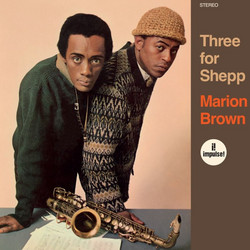
Released by NoBusiness Records and mastered by Arūnas Zujus at MAMAstudios, the album restores these performances with clarity and warmth, preserving the acoustic detail of the original broadcasts while keeping the live atmosphere intact. Design by Jeff DiPerna and production by Danas Mikailionis and Ed Hazell frame the music with the care it deserves, positioning it not as a historical footnote but as a vital addition to the Marion Brown discography. For listeners, Live in Europe 1968 & 1972 offers a rare glimpse of Brown working outside the New York loft scene and away from his better‑documented ESP‑Disk and Impulse! sessions, showing how his music could thrive in partnership with European improviser‑composers who shared his commitment to lyricism, structure and risk in equal measure.