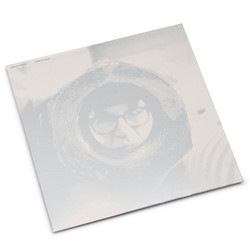
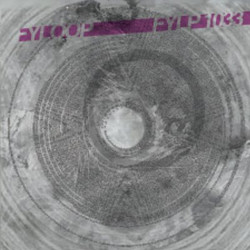
** 2026 Stock. ** Siberia / Sirens presents two major sonic artworks in which Susanne Skog tests how far documentary sound can be bent before it becomes something closer to hallucination. Her practice is rooted in narrative forms - experimental radio, radio drama, documentary - but here the story is never handed over as plot; it emerges obliquely, through texture, pacing, and the slow recomposition of field recordings into abstracted, almost cinematic space. Drawing on her own recordings from around the world, Skog treats microphones as both witnesses and instruments, harvesting raw material that will later be pushed into new shapes, new frictions, new constellations of meaning. Movements through space, shifts of perspective, and the choreography of distance are not secondary parameters but the central grammar of these works.
Siberia is carved from a 205-hour, 9,288-kilometer train journey from Moscow to Vladivostok in September 2015, a continental crossing compressed into a single, immersive arc. What might have remained as travel diary or documentary log becomes, in Skog’s hands, a study in temporal dilation and geographic blur: the clatter of tracks, murmurs of fellow passengers, station announcements, and the changing acoustics of carriages are folded into a slowly evolving sound-mass. The piece does not simply “represent” the journey; it makes the act of moving - of being carried through an enormous landscape at a steady, inhuman pace - the core experiential content. Long, hovering bands of noise and rhythm evoke the sensation of hours passing while the world outside the window keeps sliding away, just out of reach, turning the Trans-Siberian into both real route and metaphor for sustained, uncertain transit.
If Siberia is about horizontal distance and duration, Sirens focuses on vertical spikes of attention: sudden sonic eruptions that slice into everyday life. Built from years of recordings of sirens captured in Tokyo, Naha/Okinawa, Hiroshima, New York, Athens, and Rotterdam between 2013 and 2017, the piece layers and juxtaposes alarms from different cities until they form a strange, global chorus. Each siren is anchored in a specific place and emergency infrastructure, yet in Skog’s montage they begin to blur, dissolving into questions about warning, power, and shared vulnerability. The sounds that usually signal crisis, danger, or state authority become, paradoxically, the raw material for a carefully controlled composition, where pitch contours, Doppler shifts, and reflections off buildings define an evolving polyphony of threat and latency.
Both works were composed, edited, and mixed at VICC (Visby International Center of Composers, Visby, Sweden) and at the Electronic Music Studio (EMS, Stockholm), two hubs of exploratory sound practice that provide the technological and spatial resources Skog requires. The studio becomes an extension of the train carriage, the city street, the harbour, allowing her to replay and reshape those environments under the microscope of multi-channel listening. Spatialisation is treated as a vital compositional axis: sounds approach and recede, cross the stereo field, or loom from indeterminate locations, constantly renegotiating the listener’s sense of where they are and what orientation they inhabit. In Siberia / Sirens, space is never neutral; it is sculpted as meticulously as timbre or rhythm, turning travelogue and urban emergency into vast, resonant architectures of sound where narrative, geography, and memory overlap in dizzying, quietly unsettling ways.