Ed Askew
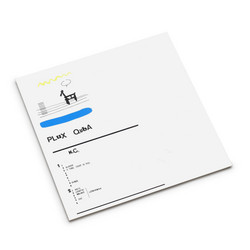
The Final Painting (LP)
Label: Drag City
Format: LP
Genre: Psych
In process of stocking: On backorder: usually ships within a few days.
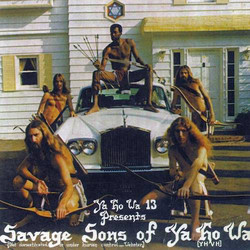
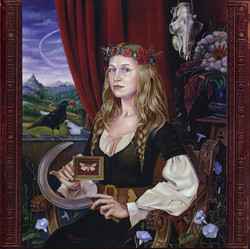
Ed Askew started his singing career in 1968 with a self-titled LP release on NYC’s infamous free-jazz/free-folk ESP-Disk' label. Known today as Ask the Unicorn, this album is wintry psych-folk of the highest order, with Ed’s yearning lyrics and high-strung vocals fully emoting over the bright, mandolin-like strum of his chosen axe, the South American tiple. The record caused a flare of acclaim, but after a second album went unreleased, Ed went back home to Connecticut, where, quietly and locally, he taught art, painted (houses and paintings) and made music. Upon returning to New York in the early ‘80s, he began circulating cassettes of his self-recorded new songs. This was a fascinating and unlikely new chapter in his music, but only a few noticed. It wasn’t until De Stijl’s 2002 release of Little Eyes, his lost second album, that his naïve songs and singing began to receive the respect they deserved.
It was just enough visibility to dream a bit bigger. In 2013, Jerry David DeCicca produced For the World (featuring Sharon Van Etten, Marc Ribot, Mary Lattimore and Eve Searls), augmenting Ed’s performances with minimal instrumental touches and vocal harmonies, presenting his music in a wonderful new light. Released on the UK-based Tin Angel Records, it resulted in several European tours, where Ed shared bills with Destroyer, Trembling Bells and the Incredible String Band’s Mike Heron. In the years following, additional new and archival Askew recordings have been released through Tin Angel, Drag City and Improved Sequence Records.
By the time Ed turned 80 in 2020, his health was declining to the point that touring was impossible and even leaving his place was a challenge. In his Brooklyn apartment, he continued to tape new songs, posting them on his Bandcamp page. In 2022, Jerry called Ed to compliment him on the songs. Their stark and fragile quality was singular, inspiring thoughts of a new production fleshing out Ed's two-track home recordings. Ed was into it; he forwarded nearly three dozen songs in different stages of completion and the two plotted a path forward. For the World featured acoustic piano, banjo and harp; the songs here, played by Ed on keyboards, synth and harmonica suggested trumpet, tenor saxophone and other sonic touches to expand their existentially lonely sound. Health scares for both men delayed things until early 2024, when various musicians recorded their parts either at home or in a Nashville Studio, with Styrofoam Winos’ Trevor Nikrant and Ryan Davis's Roadhouse Band taking their turns almost in response to one another.
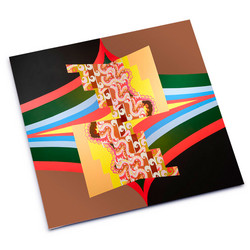
The Final Painting not only defies the curse of sequels and the ten-year gap between the two DeCicca/Askew productions, it’s also a wonderous variation on the intimacy of the self-portrait, an expression from the twilight of one of the most unique artists to emerge in last half of the 20th century. The Final Painting reinvites For the World contributors Sharon Van Etten, Eve Searls, and Canaan Faulkner and new guests Bill Callahan, William Tyler, Ryan Jewell, Dustin Laurenzi, and Fulvio Sigurta. In their last conversation, just days before Ed passed in January 2025, he and Jerry agreed to: a) use the painting left on the easel of Ed's now-empty apartment and b) call the album The Final Painting.
Profoundly resonant in the style of Frank Sinatra’s Watertown and David Bowie’s Blackstar, The Final Painting is faithful to the spirit of Ed Askew his DIY nature and Modernist values, pursued for years and years throughout life, art and music, all the way to the very end.