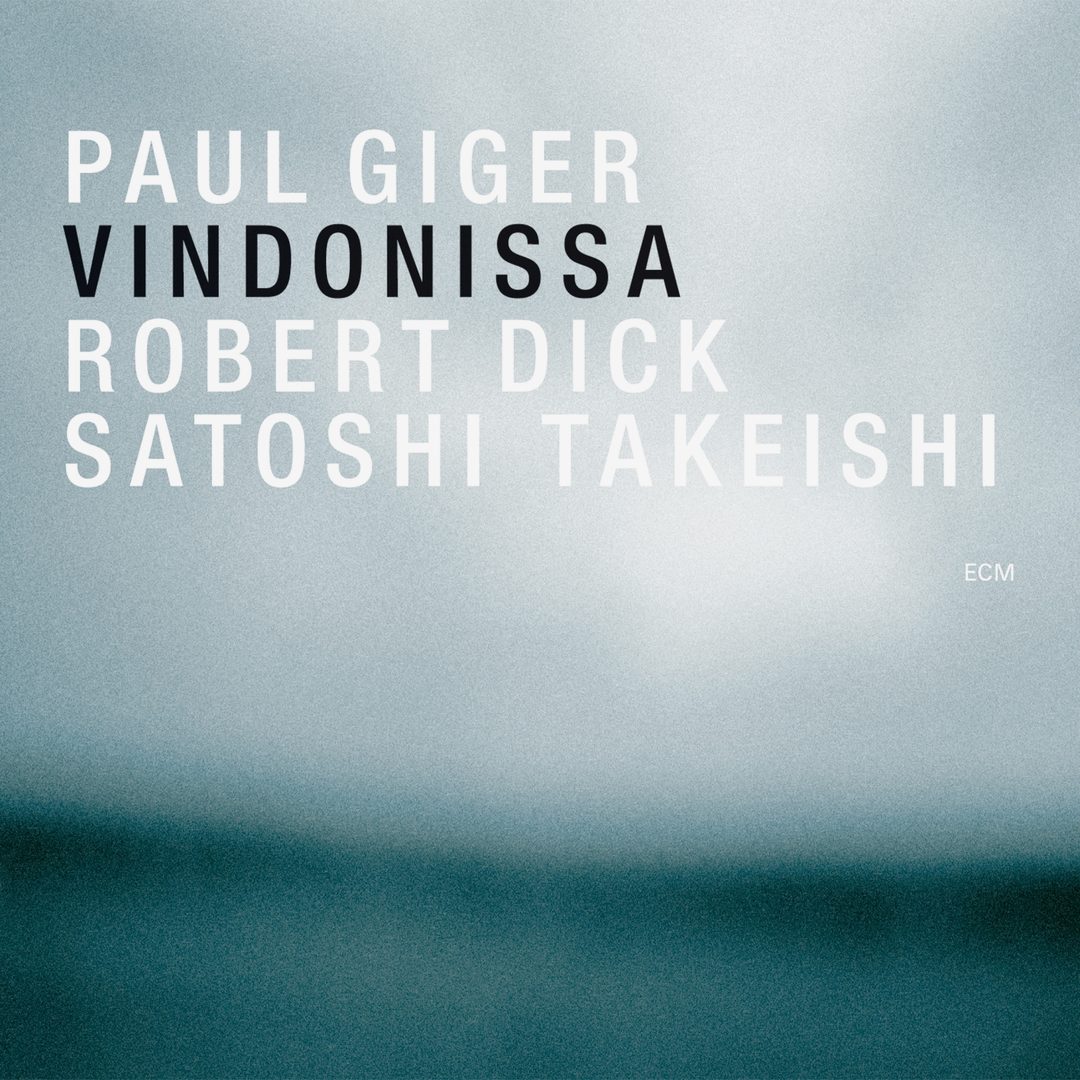
Paul Giger, Robert Dick, Satoshi Takeishi
Vindonissa
FormatCDLabelECM RecordsGenreJazz & Improvisation
Arriving from the supplier (ships as soon as it reaches us)
Tracked express shipping from Italy, no customs or import VAT in the EU. Shipping costs
Vindonissa is the fifth ECM album by Swiss violinist Paul Giger, made with the American flutist Robert Dick and the Japanese percussionist Satoshi Takeishi. Solo pieces for instruments of the violin family alternate with improvised duos and trios. The music draws on Baroque playing, contemporary technique, jazz and folk styles, and the years Giger spent travelling in Asia.
Giger was born in Herisau in 1952. In the early 1980s he was an orchestral musician in St. Gallen, playing everything from Baroque to contemporary music, while also exploring free improvisation. Here he plays violin, violino d'amore and viola d'amore, and adds foot bells on one piece. Dick plays a whole family of flutes, from the concert flute and glissando flute to bass flutes and contrabass flute. The recordings were made between 1995 and 2000, partly in churches that Giger favours, whose reverberation becomes part of the music. According to Classica, Giger first improvised with Dick, and Takeishi later added his percussion in New York. Michel Seigner edited the material at Big Ear Studio in Dübendorf.
Giger's solo pieces take their titles from the liturgy: Introitus, Kyrie, a short Chorale and Gloria et Tarantella. That last one is the longest track at eleven minutes, with Giger on violino d'amore while his foot bells keep the beat. The opening and closing pieces, both called Vindonissa, are for viola d'amore alone. In the group pieces the timbres change constantly. On Oogoogajoo Dick's contrabass flute meets Takeishi's percussion and the violino d'amore, and on Lava Coils he switches to the glissando flute. Pure melody, repetitive trance and brief atonal passages follow one another.
In Classica, David Sanson heard a sacred, mystical light that sometimes brings Giger close to Arvo Pärt, refracted by the work on textures and resonance into Eastern colours. Reiner Kobe wrote in Jazzpodium that this was world music not as an arbitrary mix of styles but as something highly crafted. For Jonathan Scheiner in the Schwäbische Zeitung it was an exceptional and breathtakingly beautiful album, made compelling by its playful finesse and the variety of its material.
CD, ECM 1836, recorded between 1995 and 2000 and first released by ECM Records in April 2003, with a booklet text by Bernhard Wasescha.
Release notes
Recorded 1995-2000 Edited at Big Ear Studio, Dübendorf An ECM Production © 2003 ECM Records GmbH ℗ 2003 ECM Records GmbH Printed in Germany Packaging: O-card with standard jewel case and 16 page booklet
| 1 | Vindonissa – Intro | 2:11 | |
| 2 | Oogoogajoo | 5:27 | |
| 3 | Introitus | 2:07 | |
| 4 | Lava Coils | 5:15 | |
| 5 | Kyrie | 4:46 | |
| 6 | Fractal Joy | 4:53 | |
| 7 | Chorale | 0:27 | |
| 8 | Afterlife Calypso | 5:37 | |
| 9 | Gloria Et Tarantella | 11:03 | |
| 10 | An Ear On Buddha's Belly | 6:06 | |
| 11 | Vindonissa | 7:24 |
- Michel Seigner
- Edited By
- Christian von Arnim
- Liner Notes [English Translation]
- Bernhard Wasescha
- Liner Notes [German]
- Paul Giger
- Music By (1, 3, 5, 7, 9, 11), Music By (2, 4, 6, 8, 10), Recorded By
- Robert Dick
- Music By (2, 4, 6, 8, 10), Recorded By
- Satoshi Takeishi
- Music By (2, 4, 8)
- Sascha Kleis
- Photography By [Cover Photo], Design
- Ramòn Giger
- Photography By [Liner Photos]
- Brian Ales
- Recorded By
- Peter Drefahl
- Recorded By