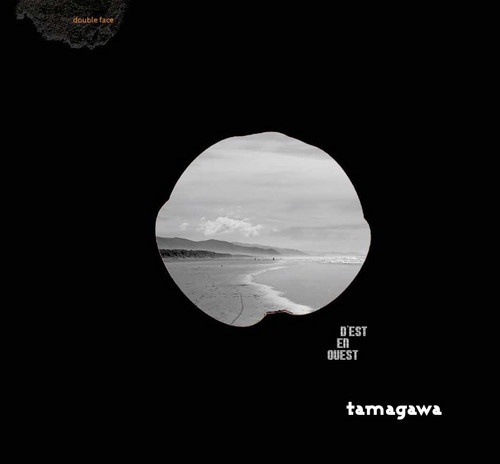
D'Est en Ouest
*250 copies limited edition* Tamagawa is the solo project of Bertrand Gaude, member of Temple Solaire and Le Club des Gens Speciaux, two noise groups released by the label Standard hi fi...but it is with Tamagawa that this almost fifty-year-old, originally from Saint Etienne in France, is the most active, and this, for almost twenty years... Building the mystery around his apartment cell from which he practically never goes out, except to tour a bit everywhere on the planet (more than 300 concer…

Practical
*300 copies limited release* Commissioned in 2019 to bridge two bathing cultures—one Japanese, one American—Practical translates the healing steam of Beppu's legendary Kannawa Mushiyu Onsen into immersive sound for Washington Baths, a neighborhood public sauna and artspace in Portland, Maine. The result is a vapor-bath of sound that hovers somewhere between foley and ambient composition, inspired by the mind-altering fragrance of sekishō (石菖, Japanese sweet flag), an ancient medicinal herb whose…

Is This The Land I Wish Death To Find Me
»Is This The Land I Wish Death To Find Me« was recorded on June 26, 2024 at the Tank Center for Sonic Arts in Rangely, Colorado. The recording is based on a slowly shifting set of ascending just minor thirds: 6:5, 7:6, and 13:11. Magnetic geophones were attached directly to the Tank’s steel exterior, allowing the performance to be captured through the physical resonance of the structure itself. Only a minimal amount of the microphones inside the building were mixed in for clarity. The work draws…
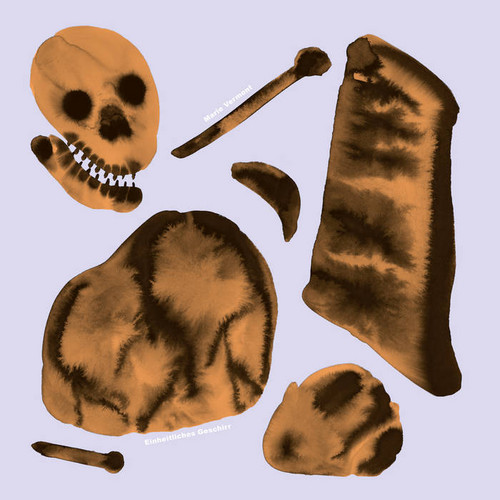
Einheitliches Geschirr
*250 copies limited edition* Einheitliches Geschirr is a new album by Marie Vermont, Vienna based sound artist, musician and visual artist. Sound of Einheitliches Geschirr (Uniform Tableware) springs from techno-creative playfulness in which basic tape manipulation melts together with sounds of found objects, trash or self-made instruments and welcomes listeners to the unique dream cave netherworld of Marie Vermont. Einheitliches Geschirr was recorded between November and December 2024 in Vienna…
Forming - Concentric Rings in Magnetic Levitation
In late fall of 2018, Ryan traveled to Valencia, California to meet with Michael for a weekend of informal conversations at California Institute of the Arts. Before Ryan returned home to Colorado, Michael gifted him a recently released recording of Teodora Stepančić, Assaf Gidron, and Martin Lorenz’s realization of Michael’s Concentric Rings in Magnetic Levitation, a recording that profoundly impacted Ryan and served as the impetus for this recording.
A thrumming monadic field; a constellation o…

When you rub your eyes, you see things you can’t describe
"In the emergence of consonance out of vapor, in shapes slowly forming from static sounds, Szymon Wójcik’s music gestures toward the movement named in its title: the appearing of what cannot be described. We hear it in its porousness: despite the dense mist, the music retains a transparency, recalling Feldman’s image of a full glass that never spills, no matter how many pennies you add. We hear it in the free singing, which does not so much break away from harmonies in Just Intonation as reveal …
Any sense of where we were gone
Any sense of where we were gone is music obsessed with the infinite within the minute, with the mercurial, breakable, with shifting, sifting, cohering, and digressing. It is an improvisational framework in five parts for chamber ensembles, prepared piano, and electronics, written for and played here by my good friends. It steals inspiration from postmodern fiction, obscure geometry textbooks, and poems about time. This is a live recording of the first performance
“To do. To do something, to do g…
Perpetual Guest
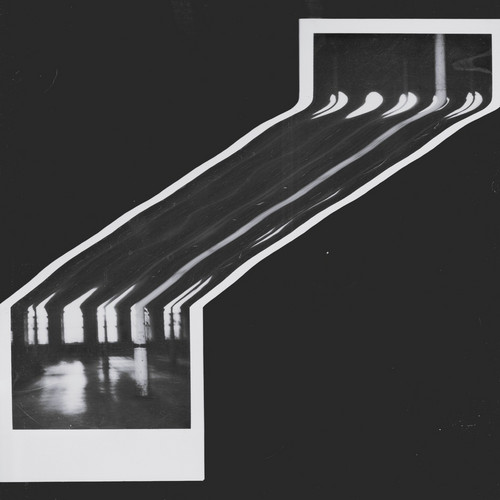
For a few days at the end of July 2023, I curated a series of concerts and recordings in a few spaces in the historic, now-defunct Kreenholm Textile Factory in Narva, Estonia, a stone's throw from the Russian border. In Kreenholm's reverberant rooms, these sessions reflected on the layers of history, labor, conflict, and lives past and present that have shaped the factory and the constantly re-evolv- ing border city. A large and unexpected part of this project involved the restoration of an anti…
SSI Solo 2024
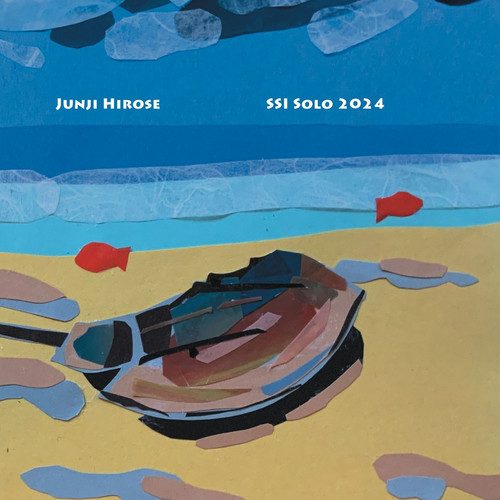
A leading saxophonist on the Japanese improvised music scene, Junji Hirose also gives performances using self-made analog noise instruments. It was in the 1980s that Hirose started presenting noise performances on his SSI (self-made sound instrument), made of various everyday objects. Over the years he continually modified the instrument, for each version attaching a different number to the name SSI. On the Hitorri label, Hirose has released the CDs "SSI-4" (hitorri-997 / 2013), "SSI-5" (hitorri…
Evoke
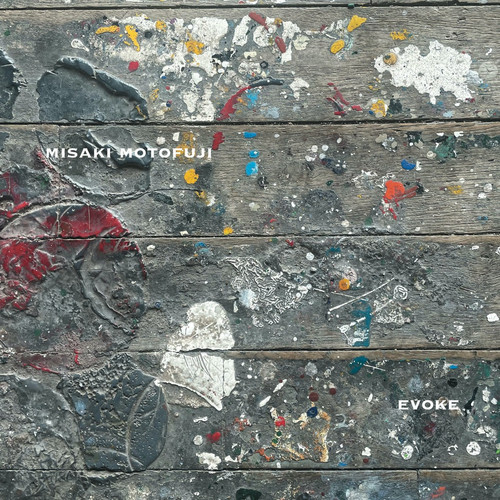
*200 copies limited edition* While her main instrument is baritone sax, Misaki Motofuji is a multi-instrumentalist with an excellent command of other saxophone types including tenor and alto, as well as clarinet and flute. In concerts she additionally makes wide-ranging use of electronics, vocals, field recordings and various effects and objects, spontaneously assembling splendid, amazingly well constructed performances. In May 2022 Motofuji performed a concert of this type at Ftarri, Tokyo, whi…
Biosphere
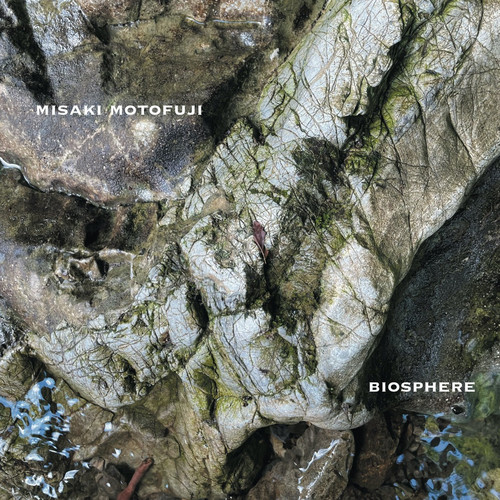
*200 copies limited edition* While her main instrument is baritone sax, Misaki Motofuji is a multi-instrumentalist with an excellent command of other saxophone types including tenor and alto, as well as clarinet and flute. In concerts she additionally makes wide-ranging use of electronics, vocals, field recordings and various effects and objects, spontaneously assembling splendid, amazingly well constructed performances. In May 2022 Motofuji performed a concert of this type at Ftarri, Tokyo, whi…
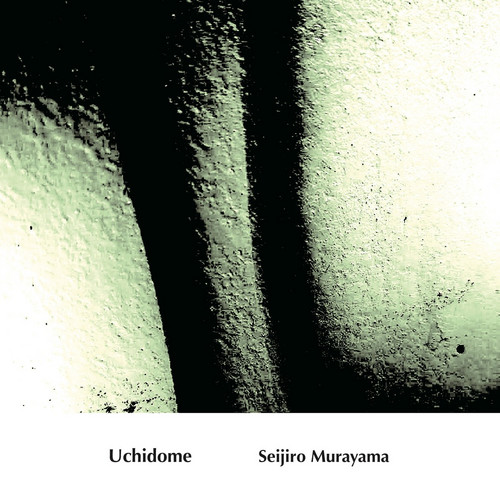
Uchidome
Seijiro Murayama is a Paris-based drummer, percussionist, improviser and composer. It was in 2009 that he first released CDs on the Ftarri labels Hitorri, Ftarri and Meena. He has since released over ten CDs of performances in solo, duo, trio and quartet formations.
"Uchidome," Murayama’s fifth solo album from the Hitorri label, consists of three tracks recorded in France in January 2025. All his drum solo albums are outstanding, and this CD, with its unique and inimitable performances, is no ex…
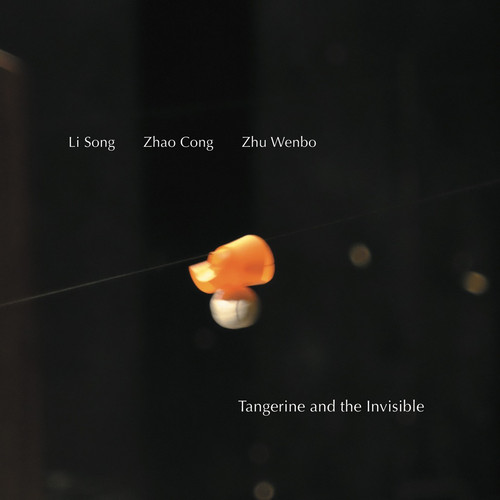
Tangerine And The Invisible
*250 copies limited edition* Three Chinese musicians performed at Ftarri, Tokyo, on January 2, 2024. Li Song is a computer programmer and musician who lives in London. Zhao Cong and Zhu Wenbo are experimental/improvisational musicians based in Beijing. This album is made up of two performances (each over 30 minutes): "The Invisible Tangerine," a duo by Zhao Cong and Li Song, and "Three Lines," a trio by Li Song, Zhao Cong and Zhu Wenbo.
The compelling feature of "The Invisible Tangerine" is the …
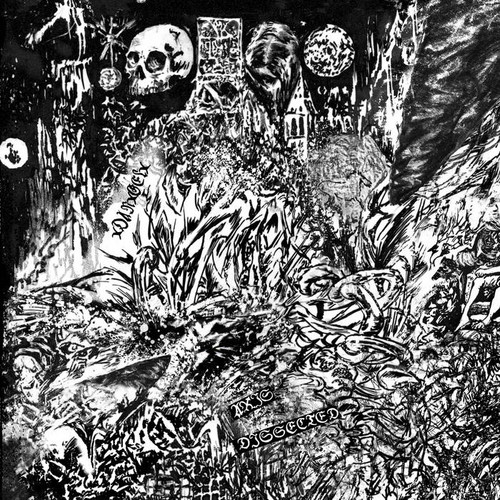
Axis Dissected
We are thrilled to introduce Axis Dissected, the debut release of escéptica, and a bold statement from Dangel. A sonic excavation of found sound, field recordings and musique concrète abstraction. Recorded between Berlin and Chile from 2022 to 2024, this album assembles fragments of reality and reconfigures them into a haunting sound experience.
Dangel works with intuitive precision, sculpting scenes of acoustic memory and spatial debris. There is a tension here between control and chance, betwe…
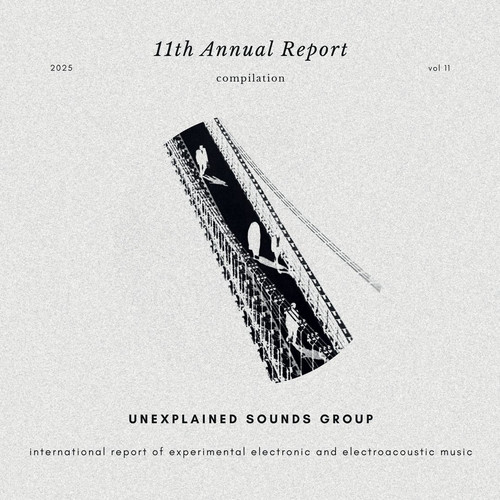
11th Annual Report
*100 copies limited edition* Now in its eleventh edition, the Unexplained Sounds Group Annual Report brings together 15 outstanding tracks broadcast during The Recognition Test radio program. A sonic map of today’s electronic and electroacoustic music, documenting the many directions of current experimentation: from digital architectures to electroacoustic textures, from minimal abstractions to immersive soundscapes. A unique overview of a constantly evolving global scene.
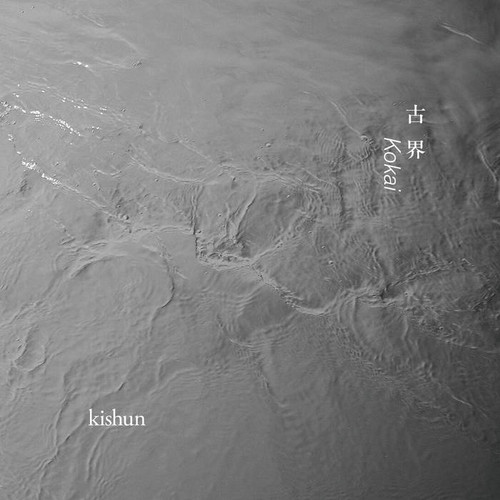
Kokai
Kishun is a duo: Ishikawa Ko, player of the shō (mouth-organ), and Nakamura Kahoru, player of the gaku-biwa (Japanese court lute). Since 2015 they have used only shō and biwa. Their idea is to bring out the hidden sound in what they call “gagaku without melody.”. Gagaku is the ancient court music of Japan. It is more than a thousand years old. In the Heian period, nobles gathered old songs and dances from Japan and pieces that had come from Korea and China between the 5th and 9th centuries, and …
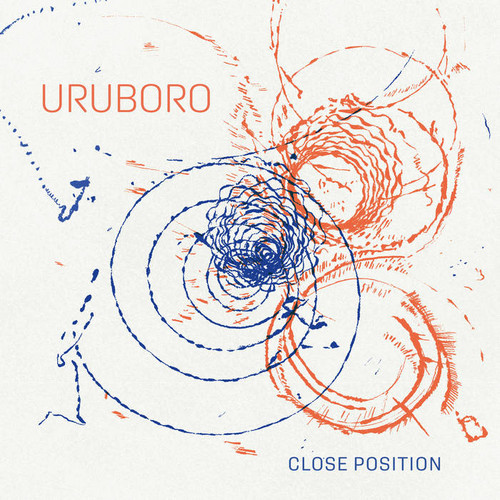
Close Position
The concept is therefore to propose an immersive type of listening, in which the rather extended durations of sustained and seemingly static sounds create a certain tension generated by the anticipation of variation.
The live performance involves the use of samples, as the composed balances require multiple timbral layers to be active simultaneously. The closeness in pitch and the mimicry between instruments highlight the psychoacoustic phenomenon of beating: in fact, our auditory sy…
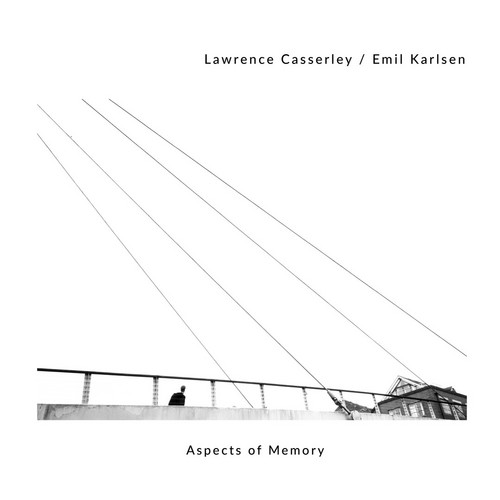
Aspects Of Memory
Aspects of Memory is the first meeting between Lawrence Casserley (signal-processing instrument) and Emil Karlsen (percussion). Casserley has devoted his professional career to the creation and performance of real-time electroacoustic music, culminating in the development of his own unique device—The Signal Processing Instrument. This instrument allows him to use physical gestures to control the processing and to direct the morphology of the sounds.
Casserley writes: “A key element of the Signal…

Foil Void Join Avoid
Thank you : floors, walls, ceilings, corridors, chairs, tables, air-conditioners, heaters, alarms, plastic, paper, foil, tins, boxes, containers, microphones, speakers, shellac, tape, magnets, dust, data, hollows, surfaces, bodies, actions, weather, vibration, Jennifer Callaway, Carly Fischer, Eric la Casa, David Prescott-steed, Martin Kay, Matthew Davis, Francisco Meirino, Justas Pipinis, Ursss, everyone from C3, Simon Whetham, Edwina Eves, Yvan Etienne, Chisato Ishiyama, Pierre Judon, Aposiopè…

Fata Morgana
Fata Morgana is a work in two parts; The first part, took place and was recorded in a a forest close to Niels Lyhne Løkkegaards childhood home in the western part of Jutland, and is a recording from 2021 of Løkkegaard playing the alto recorder.
The second part is thought as a replacing of the first part, and was made in 2024 by Michael Pisaro-Liu in California.