Back in stock
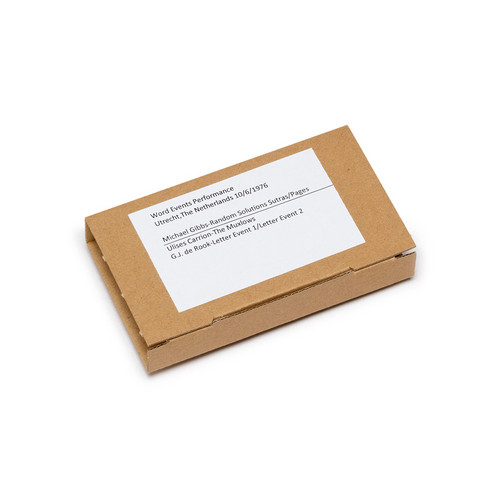
Word Events Performance, Utrecht 10/6/1976
Word Events Performance, Utrecht 10/6/1976. With Michael Gibbs, GJ de Rook and Ulises Carrion. An edition of 26 copies made for a soundpoetry event in The Hague.
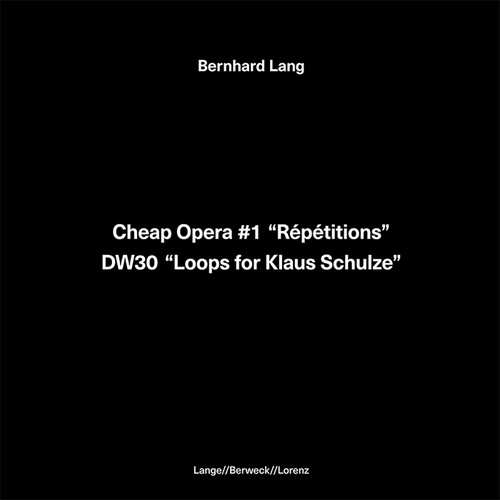
Cheap Opera #1 "Répétitions" DW30 "Loops for Klaus Schulze"
In 2015 Bernhard Lang was approached by Sebastian Berweck, to compose a piece for his Berlin-based Synthesizer-trio Lange // Berweck // Lorenz.Considering his musical background and his roots, Lang saw this offer as double opportunity, one of them being a chance to compose an ultimate tribute to one of his musical heroes, electronic pioneer, Klaus Schulze. On the other side, Cheap Opera #1 „répétitions“ turned out as Lang's most political piece to day: his mercilles comment on fake patriotism...…
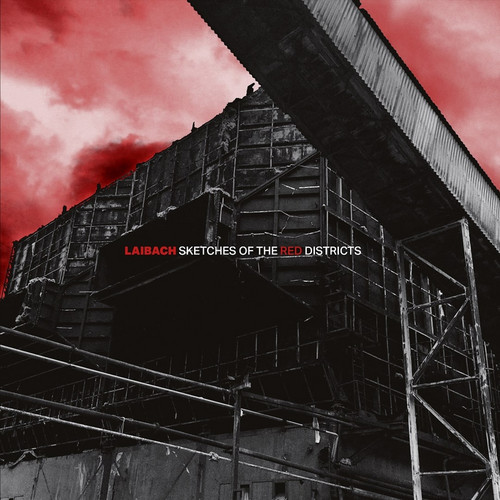
Sketches Of The Red Districts
** Deluxe LP. Comes in a gatefold sleeve with 16 page LP sized booklet & download card** This new Laibach album, through a new/fresh interpretation, examines the conflict-ridden genesis of the band's formation in the industrial town of Trbovlje in 1980 and questions the band's aesthetic, sonic and ideological roots from the distance of time. The group Laibach was established, in fact, in the year 1980 in Trbovlje, an industrial coal mining town in the centre of Slovenia (YU). Upon its founding …
Sold Out
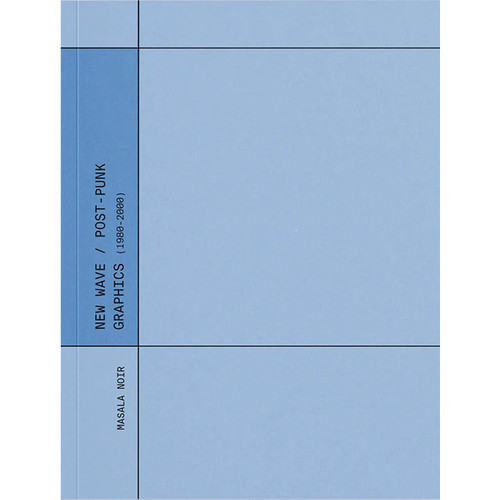
New Wave / Post-Punk Graphics 1980-2000 (Book)
New Wave & Post-Punk tape and vinyl graphics from 1980 to 2000 compiled by Masala Noir.
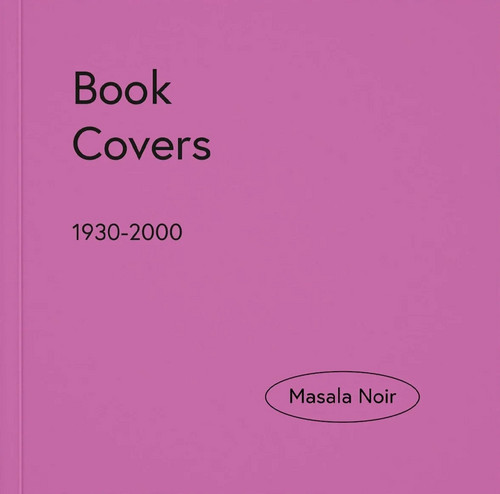
Book Covers 1930-2000 (Book)
A collection of 400+ minimal book covers compiled by Charles Deroyan (1930-2000).
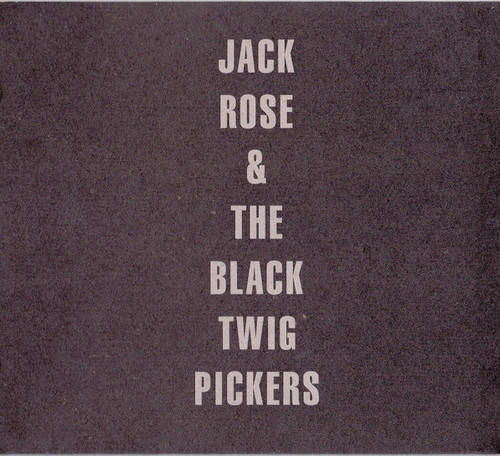
Jack Rose & The Black Twig Pickers
2009 release ** "Raw and rocking collaboration between Jack Rose and the Black Twigs with some of the most swinging, hard-hitting string music waxed in many a decade. Rose’s solo playing has always had a tough edge, with his prodigious technique often employed in the service of dropping right-hand bombs – his use of a thumbpick originates from his years of duets with Twig Mike Gangloff, struggling to make his guitar heard over Gangloff’s crashing banjo. The front line of Rose and Gangloff’s stri…
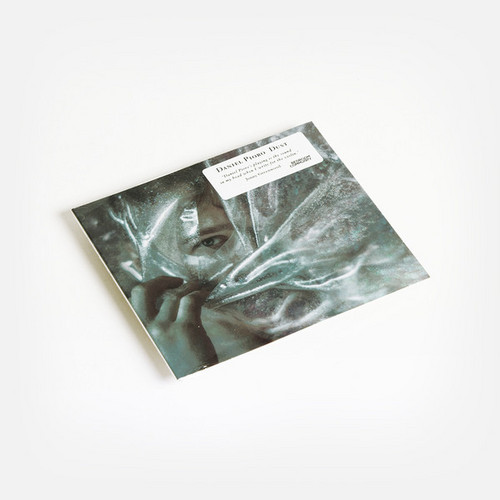
Dust
2019 release ** "Dust is a collection of music for solo violin and electronics. Daniel describes the record as 'a full exploration of the sound world a violin allows. The electronics meld with, lift, surpass and dance around the organic rawness of the strings. The piece is all my years of not conceding or diluting myself to the needs of others, compressed into one long musical expression. It is hope and birth and death and melancholy'. Music by: Valgeir Sigurðsson, Edmund Finnis, Heinrich Ignaz …
Frijoles Canyon
1992 release ** "A long work in the style of hörspiel (radio art) by this important Fluxus artist, mixing spoken text gleaned from a variety of sources with field recordings collected in New Mexico and Canada, tracing the range of the Ponderosa pine."
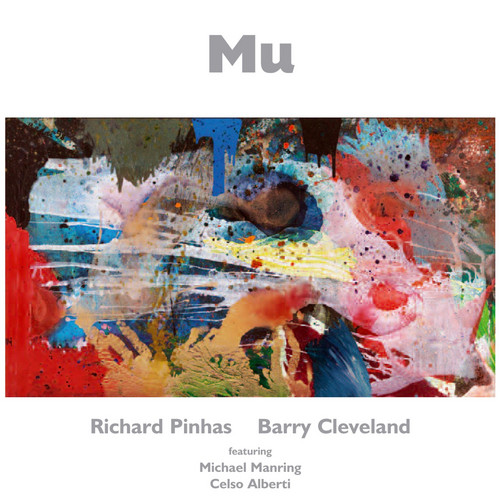
Mu
2016 release ** "The music created by French guitar iconoclast and electronic music pioneer Richard Pinhas and insistently inventive San Francisco Bay Area guitarist Barry Cleveland on Mu originated in just such a way, arising seemingly from "nothingness." The two had contemplated performing as well as recording together for several years before their stars finally aligned, and they played several Bay Area shows during the same period that Mu was recorded. Unfettered by genre conventions, Mu is …
![Ephemeros [Ante 'Te Deum']](https://cdn.soundohm.com/data/products/2026-09/66270_bisclaveret-ephemeros-ante-te-deum_1080-jpg.jpg.500.jpg)
Ephemeros [Ante 'Te Deum']
2010 release ** "The newest Bisclaveret release is a concept album , touching up a subject of human existance hidden in the symbolic of seven angel names.On this album you will find 7 songs - pieces showing various aspects of human’s nature and his cosmic dimension in the world. This album is the trip into the human’s mind through the word and sound. Ephermeros [ante ‘Te Deum’] shows a little bit different face of Bisclaveret by using new form expression which the musicians used in the alchemic …
Balanced
2008 release ** Featuring: Chris Tenz, Kshatriy, Cyclofillydea, Places, Jukeen, Arexx, Places, Lunar Abyss Deus Organum vs. Kadegu, I/DEX, Harmash, Alexander Daf.

Agenesis
The sharp staccato of a cicada, stuck in a tropical stairwell, throwing its body against a fluorescent light – it keeps trying to force a solution despite it clearly not working. The submerged melodies of an 84 year old acetate echo the reflection in the play-of-light which inspired its name. A Benedictine monastery’s pipe organ in Ireland’s west sounds with and against those of a Cathedral organ pipes’ contrasting intonation at St Fin Barre’s in Ireland’s south. Voices laugh in backstreets disc…
Electric Rag Live
Maxed out and burning hot nasty, Electric Rag brings together the electric organs, electronics and alto sax of Jean-Luc Guionnet, with the closely amplified drums and percussion of Will Guthrie. After years of playing together in the minimalist pointillist free jazz noise core trio ‘The Ames Room’ (with Clayton Thomas on bass) Electric Rag offers up another point of view on a musical history of nearly 15 years of playing together. The 8 titles of Electric Rag draw on their various experience in…
String Quartet II
* 2021 Stock ** During the decades following the Second World War, all eyes shifted toward New York, a city which, at that moment, played host to some of brightest creative minds of the century. Innovations were abound. Visual artists, writers, thinkers, musicians, and composers continuously pushed into previously unthinking ground. While the United States had been previously known to give birth to a wild and distinct breed of composer, from Charles Ives to Nancarrow, Harry Partch, Cowell, and b…
Sold Out
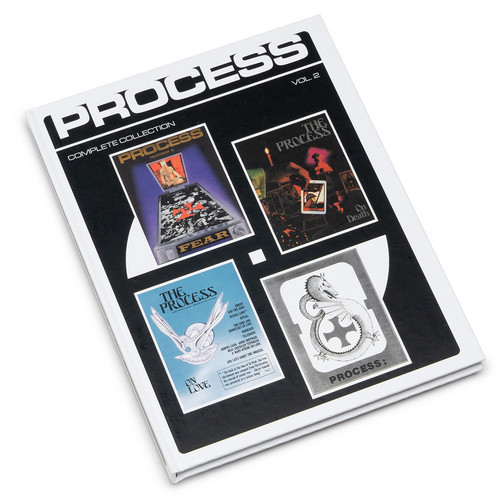
Process - Complete Collection, vol 2
** Limited edition of 140 numbered copies ** Oversize (cm. 32x25) heavy hardcover book collecting the last four issues of Process magazine. The Process Church of the Final Judgment was the apocalyptic shadow side of the flower-powered ’60s and perhaps the most notorious cult of modern times. Hundreds of black-cloaked devotees, often wearing a satanic “Goat of Mendes” and a swastika-like mandala, swept the streets of London, New York, Boston, Chicago, New Orleans, and Toronto, selling magazines a…
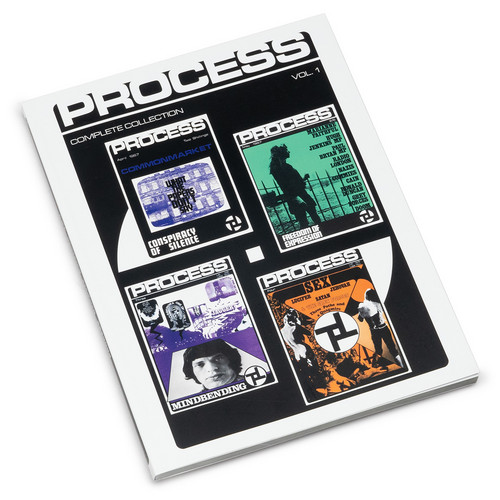
Process - Complete Collection, vol 1
** Limited edition of 140 numbered copies ** Oversize softcover book collecting the first four issues of Process magazine. The Process Church of the Final Judgment was the apocalyptic shadow side of the flower-powered ’60s and perhaps the most notorious cult of modern times. Hundreds of black-cloaked devotees, often wearing a satanic “Goat of Mendes” and a swastika-like mandala, swept the streets of London, New York, Boston, Chicago, New Orleans, and Toronto, selling magazines and books with tit…
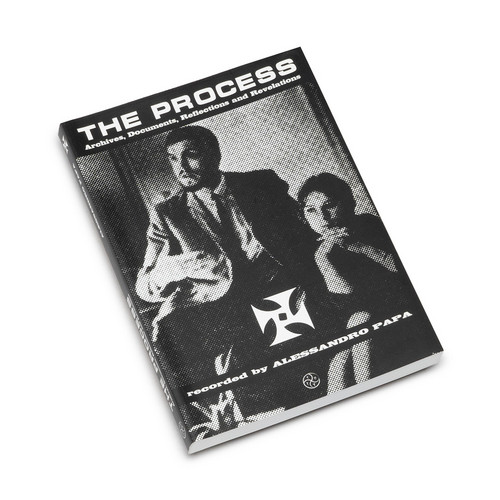
The Process: Archives, Documents, Reflections, and Revelations (Book)
2024 Stock. 208 pages, Paperback. Profusely illustrated book about The Process - Church of the Final Judgement, based on The Process Archives. 18 Chapters, illustrated with 140 rare photos and documents. "Papa’s book makes good use of his extensive collection of Process memorabilia. As the shadowy cult’s narrative history unfolds, he is able to refer to, quote from extensively and even reproduce from the vast amount of literature they produced. In doing so, Papa is able to give his readers an a…
Blood Stretched Out
Anthony Pateras, piano. 21st century piano music! The first solo piano album by Anthony Pateras in 10 years, marking the mid-point of the Immediata series. Blood Stretched Out explores sound phenomena, generating swirling overtones through polymorphic repetitions, gradually spanning the entire range of the keyboard. The piece was commissioned by Lampo, premiering in Chicago and since performed all over Europe and Australia, including an infamous concert opening for Faith No More at Zitadelle Spa…
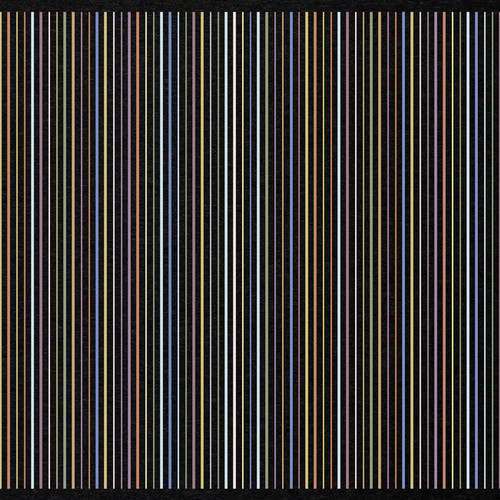
15 Coruscations
*300 copies limited edition* Far from the extended still lifes and mises en abîmes of their acclaimed Penultimate Press debut A Sunset for Walter (PP43, 2019), Noetinger & Pateras’ 15 Coruscations weaves frequencies & stirs data into an agitated series of deft psychoacoustic miniatures. Employing electronics as a deformed mirror reflecting joyous lacerations & interweavings, 15 Coruscations borrows from both brut & skilled musical practises, emerging from the current despair to blister light ac…
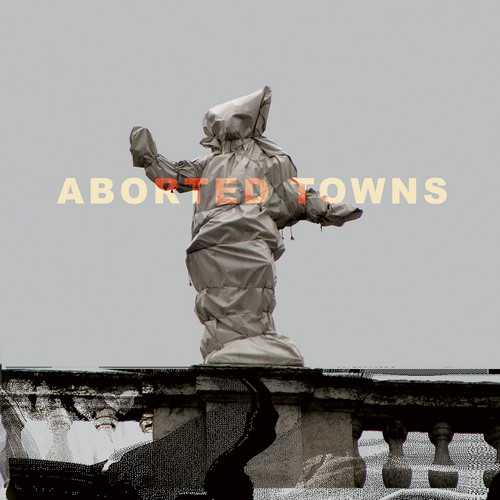
Aborted Towns, The Deadly Silence Before Utopia
Sigillum S have been exploring unknown territories among extreme electronics, fringe acoustics and occultist noise since 1985. With an original line-up of Italian experimental electronic composers Eraldo Bernocchi, Paolo L. Bandera and Luca Di Giorgio, throughout their 40-year gestation, the noise merchants have worked with musicians including Ain Soph, The Sodality, Gerstein,Iugula-Thor, Out Of Body Experience, Bill Laswell, Zu, Crisis, Thomas Felhmann, Gudrun Gut, Toshinori Kondo, SH Fernando …