Music from United States
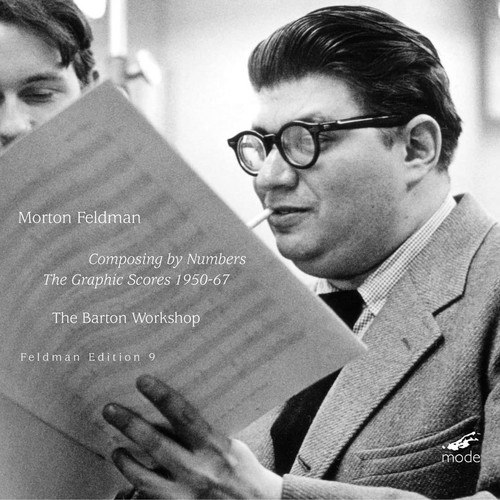
Composing By Numbers: The Graphic Scores 1950-67
Thirteen of Morton Feldman's graphic scores, 1950-67, played by the Barton Workshop and soloists including Frank Denyer and Taco Kooistra, with first recordings of several ensemble works. Volume 9 of Mode's Feldman Edition.
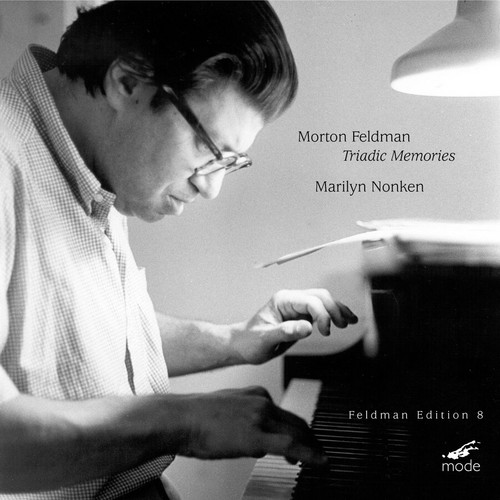
Triadic Memories
Marilyn Nonken plays Morton Feldman's Triadic Memories, a single-movement solo piano work of almost 90 minutes, recorded in 2003 and available on two CDs and on DVD-Audio.
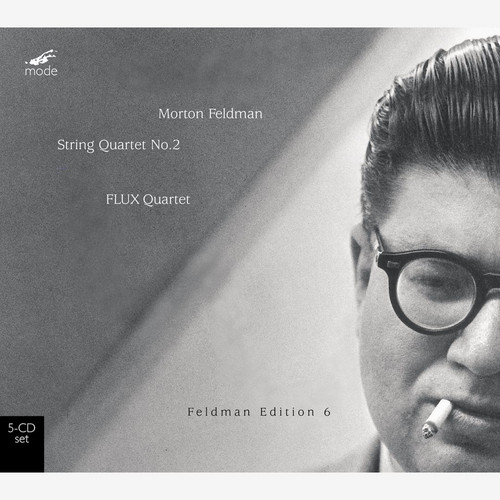
String quartet N°2
Morton Feldman's String Quartet No. 2, a continuous work of more than six hours, played by the Flux Quartet, in a deluxe DVD-audio edition with liner notes by Christian Wolff and Flux founder Tom Chiu.
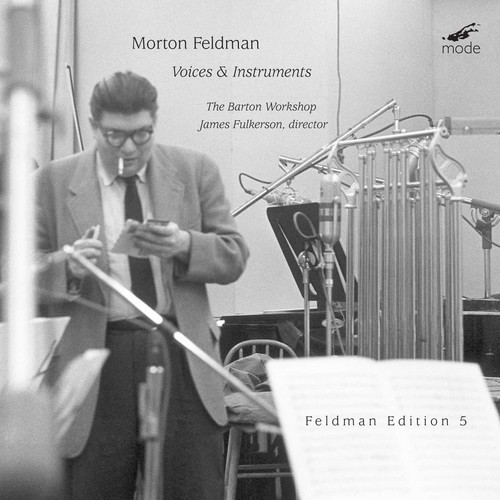
Voices and instruments
Feldman works for voices and instruments from 1949 to 1971, three of them first recordings, including Journey to the End of Night, The O’Hara Songs and Four Instruments, played by The Barton Workshop.
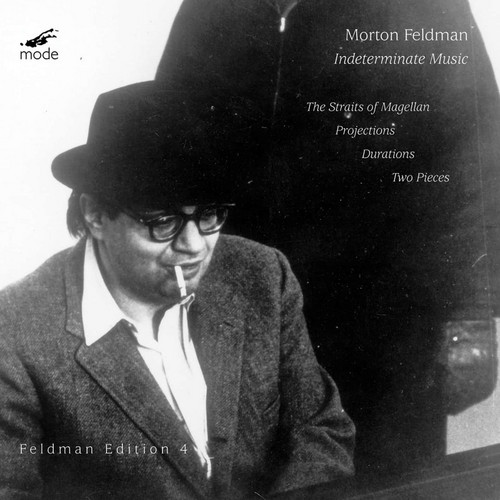
Indeterminate music
Feldman's indeterminate works: the complete Projections and Durations series on one disc, the first recording of Two Pieces for Six Instruments, and The Straits of Magellan, played by pianist Philipp Vandré and the Turfan Ensemble.
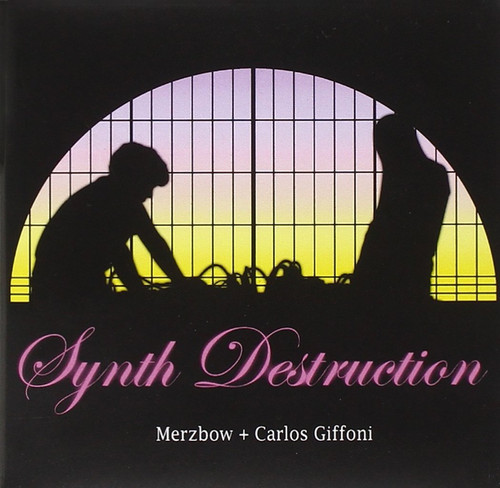
Synth destruction
Over 60 minutes of total analog destruction by noise king Merzbow and Brooklyn noise boss Carlos Giffoni, this live collaboration was recorded during Giffoni's Synth Destruction Japan tour in September of 2006. This is Sound Totalism and is as heavy as it comes: totally brutal, totally ugly, totally beautiful, totally intense, totally classic, totally analog, total synth and total destruction. Intense artwork by Jenny Akita. Author, activist, painter and sound artist Masami Akita had been at the…
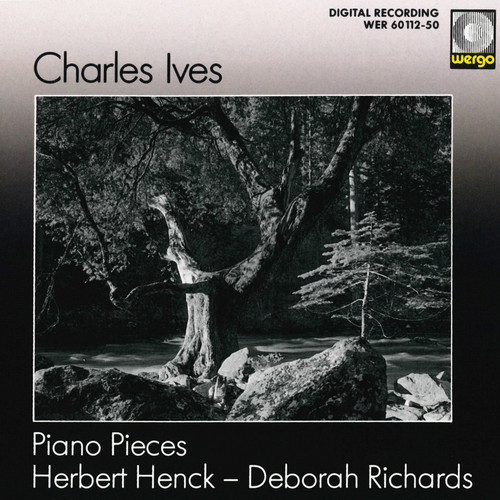
Piano Pieces
Charles Ives's shorter piano pieces, from Study No. 20 to the Three Quarter-tone Pieces for Two Pianos, played by Herbert Henck with Deborah Richards. Recorded July 1984 at the Bayerischer Rundfunk, Munich.
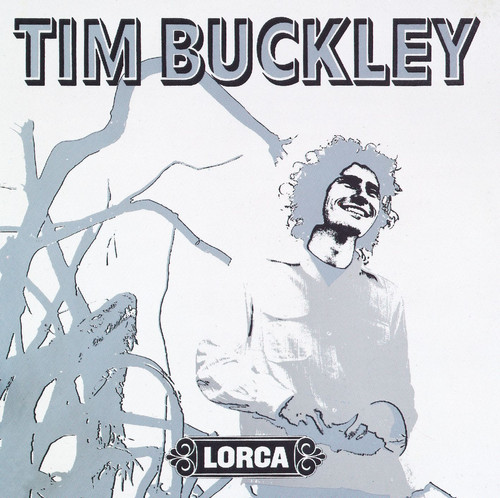
Lorca
a five stars masterpiece - continuing his jazz explorations, Buckley created the most 'out' album of his career. The 5/4 time signature title track is strikingly weird with haunted house pipe organ and two faster-paced numbers, the mellow contemplative love song 'I Had A Talk With My Woman' and the slightly funky blues-based 'Nobody Walkin',' are even fun. The band is Lee Underwood, John Balkin (bass, haunted house pipe organ on 'Lorca'), and Carter Collins (congas)
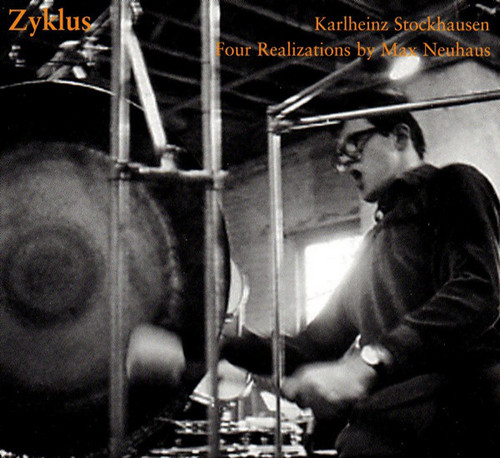
Zyklus - Four Realizations By Max Neuhaus
2004 release. Four previously unreleased realizations of Karlheinz Stockhausen's "Zylus" (different recordings than the one featured on the Columbia LP Electronics and Percussion -- Five Realizations. Recorded 1959-68. The term "New York School" refers to a circle of composers. "Zyklus" was written in 1959 and is one of the first solo pieces to utilize such a large number of percussion instruments (twenty-one). When Max Neuhaus first started to play this piece there were only three percussi…

The New York school. Nine realizations of Cage, Feldman, Brown
2004 release. Previously-unreleased recordings, made 1964-1968. Different realizations than those featured on the Columbia LP Electronics and Percussion -- Five Realizations from '68. The term "New York School" refers to a circle of composers in the 1950s who orbited around John Cage: Morton Feldman, Earle Brown, Christian Wolff and David Tudor, above all. Their music paralleled the music and events of the Fluxus group, and drew its name from the New York School of mostly Abstract Expressioni…
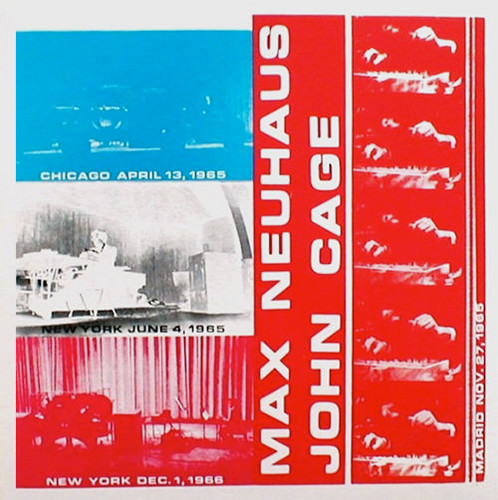
Fontana mix-feed
Rare and now long out of print LP, originally released on Mass Art, performed and realized by Max Neuhaus. Technically, this LP consists of four realizations of John Cage’s 1958 Fontana Mix, an indeterminate graphic score originally intended to be used for a tape piece, with or without additional instruments. To say that, though, is not really to capture the unique nature of this music, or the unique nature of percussionist and electronic music pioneer Max Neuhaus’ take on Cage’s material.…
Celestial Fires
The works of Mary Jane Leach explore the physicality of sound, working very carefully with the timbres of instruments, creating combination, difference, and interference tones. Space is also an important concern: how sound changes when it is moved around a room. Celestial Fires features the New York Treble Singers, (Virginia Davidson, conductor) performing four 8-part pieces for a capella women's voices; Shannon Peet performing Feu de Joie for 7 bassoons; and Barbara Held and Ms. Leach performin…
The Open Air Meeting
Muhal Richard Abrams: piano; Marty Ehrlich: alto saxophone, clarinet.
This disc is taken from a live recording of an open air concert
which took place August 11, 1996 at the Brooklyn Museum in New York.
This duet concert was, on one level, a meeting between two of the
seminal jazz innovators of their respective generations. The nuanced and
subtle interchange of ideas between these two great musicians-as they
challenge and provoke each other to explore new musical ground-is
enthralling thr…
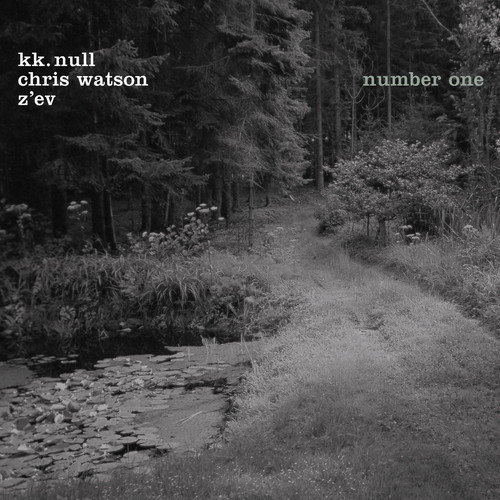
Number one
American performance/noise/percussion artist Z'ev, Japanese composer/performer K.K. Null, and field-recording artist Chris Watson (formerly of Cabaret Voltaire and the Hafler Trio) conjoin in a first collaboration for Touch. The idea for this recording, generated by Z'ev, has three elements: 1) to use the structure of the Noh Theatre cycle as the basis for the composition; 2) to consider the initial sound development in terms of developing "characters" which would then interact with one another …

Artificial Life
5 tracks 46 minutes 43 seconds performed & produced 2005. Packaged in a full-color cardboard sleeve.

Our telluric conversation
'23five Incorporated proudly presents Our Telluric Conversation - the second collaborative album from John Duncan and Carl Michael von Hausswolff. This is an album which Duncan describes as having been galvanized by magnetism. In a semantic sleight of hand, Duncan and Hausswolff reveal magnetism through a duality of meanings. One on hand, they speak of the physical phenomenon of charged objects that exert an attraction or repulsion upon other objects; yet on the other, magnetism can be defined t…

Home, unspeakable
Home, Unspeakable is a collaboration between Duncan and Günter based on Samuel Beckett's last work, an opera libretto entitled Neither that he wrote on the back of a card for Morton Feldman. Although Günter and Duncan both claim Feldman as strong influences, this work sounds little like Feldman, but is instead a "series of musical 'places,' which in their entirety form the topography of a 'landscape' we feel might be described by the final words of Beckett's text: unspeakable home" (from the lin…

Early recordings 1978-1985
This is the limited friends edition of 33 numbered copies in a red Box Set with silver or golden imprints instead of the black Box Set with black imprints, especially for the artist and a few other people in relation to VOD - a gorgeous box covering john duncan’s early sound/film work - of the vod releases in the last year, this is the nicest on a presentation-scale (the included medias are of course lovely as well.)

Tap internal
Have you ever asked yourself 'What is the sound of energy?' John duncan has been trying for years to explain the composition of matter through sound, and not everyone can understand this -- but once the door is opened everything suddenly becomes easy. tap Internal is beautiful and, in classic duncan style, cruel -- in that it puts you in contact with our deepest psyche and lays it bare, turning the auricular membrane inside out, leaving an indelible mark of new frequencies that are beautiful to …

Works: 1975 to 2005
An unstoppable attraction for extreme sounds, in line with the passions that emerged from the international underground at the end of the Seventies, carried John Duncan through complex paths and artistic practices (from Los Angeles to Amsterdam, then Tokyo, then Italy, in Scrutto San Leonardo, Tuscany). More and more contaminated territories, close to a certain kind of performing art which, in the Viennese actionism and body art, the transgre…