★Mode
Asking
First recording of Maria de Alvear's Asking (2001), a 53-minute open-structure work for solo piano composed for and performed by Eve Egoyan.
Atlas Eclipticalis With Winter Music
Two live 1983 performances of John Cage conducting Atlas Eclipticalis with Winter Music at Seattle's Cornish Institute, first issued on LP in 1986, with a bonus disc of the 86-part Atlas Eclipticalis and Winter Music for 20 pianos.
Sold Out
The Piano Works 7 - Chess Serenade
First recording of John Cage's Chess Pieces (1944), rediscovered in a painting and transcribed by Margaret Leng Tan, with her recording of Sonatas and Interludes and the first recording of Vittorio Rieti's Chess Serenade.
The Orchestral Works 2
Three orchestral works by Giacinto Scelsi recorded in Vienna in 2005: Quattro Pezzi (su una nota sola), Uaxuctum, and the first recording of La Nascita del Verbo, with the Vienna Radio Symphony Orchestra and choirs.
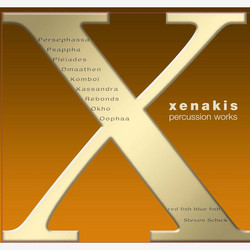
Percussion Works
First complete set of Iannis Xenakis's percussion works on three CDs: sextets, duos and solos, including Persephassa, Pléïades, Psappha, Kassandra and Rebonds, played by Steven Schick and the ensemble red fish blue fish.
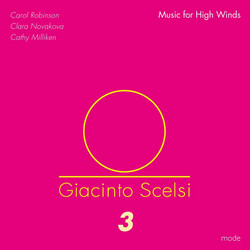
Music For High Winds
Giacinto Scelsi's music for woodwinds, mostly from the 1950s, for solo clarinet, flute and duos with oboe and piccolo, played by Carol Robinson, who worked with the composer, with Clara Novakova and Cathy Milliken.
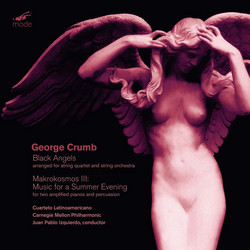
Black Angels and Makrokosmos III
Two George Crumb works of the 1970s: Black Angels in an arrangement for string quartet and string orchestra, with Cuarteto Latinoamericano, and Makrokosmos III for two amplified pianos and percussion, conducted by Juan Pablo Izquierdo.
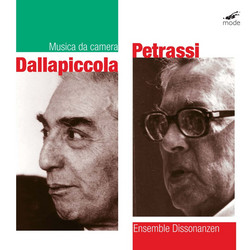
Musica Da Camera
Chamber works by Luigi Dallapiccola and Goffredo Petrassi, alternated for comparison, played by Naples-based Ensemble Dissonanzen: Quaderno musicale di Annalibera, Tartiniana seconda, Parole di S. Paolo, Sestina d'autunno and Seconda serenata-Trio.

Mexico: New Music For Strings
Six works by Mexican composers born between 1957 and 1977, for string quartet and solo violin, recorded in 2002 at the first Radar festival in Mexico City by the Arditti Quartet and Irvine Arditti.
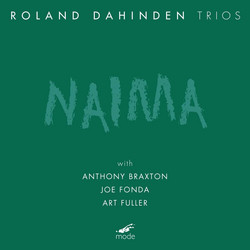
Naima
Roland Dahinden's first release of his own compositions, the two parts of Free Lines, with his readings of Coltrane's Naima and Braxton's Composition 136, joined by Anthony Braxton, bassist Joe Fonda and drummer Art Fuller.
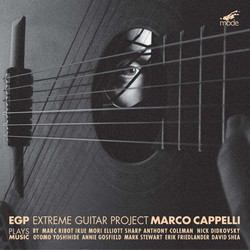
Extreme Guitar Project
First recordings of ten guitar pieces commissioned by Marco Cappelli from New York Downtown composers including Marc Ribot, Ikue Mori, Elliott Sharp and Otomo Yoshihide, played on an amplified classical guitar with sympathetic strings and MIDI control.
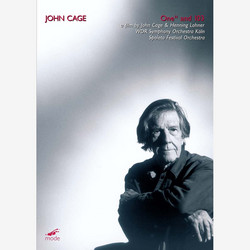
One11 And 103
First commercial release of John Cage's only major film, One11 (1992), directed by Henning Lohner, with the orchestral work 103 as soundtrack in two performances (WDR Sinfonieorchester Köln, Spoleto Festival Orchestra), plus a documentary and an interview.
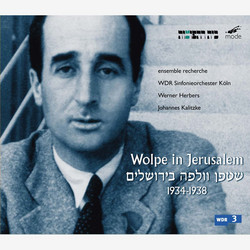
Wolpe in Jerusalem
Stefan Wolpe's music from his Jerusalem years, 1934-38, including three world premiere recordings, played by ensemble recherche and the WDR Symphony Orchestra under Werner Herbers and Johannes Kalitzke.
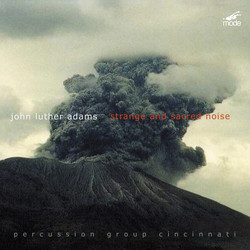
Strange and Sacred Noise
John Luther Adams's Strange and Sacred Noise, a nine-movement work for percussion quartet, in the composer-supervised first recording by Percussion Group Cincinnati, with a 60-minute interview with the composer.
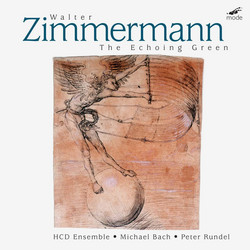
The Echoing Green
Chamber works by Walter Zimmermann from 1986-89 for piano, cello and piano, bass flute and piano, and violin and piano, played by the HCD Ensemble with cellist Michael Bach and violinist Peter Rundel.
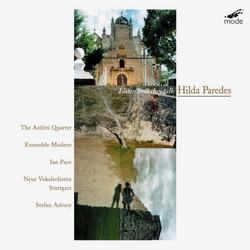
Listen How They Talk
Chamber music by Mexican composer Hilda Paredes, 1998-2001, drawing on Mayan language and culture: works for string quartet, piano quintet, 21 musicians and vocal quartet, with the Arditti Quartet and Ensemble Modern.
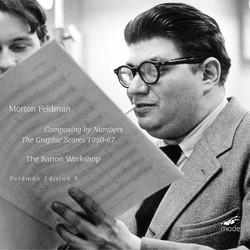
Composing By Numbers: The Graphic Scores 1950-67
Thirteen of Morton Feldman's graphic scores, 1950-67, played by the Barton Workshop and soloists including Frank Denyer and Taco Kooistra, with first recordings of several ensemble works. Volume 9 of Mode's Feldman Edition.
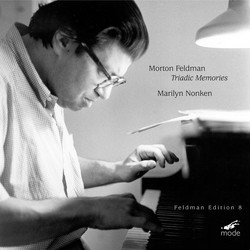
Triadic Memories
Marilyn Nonken plays Morton Feldman's Triadic Memories, a single-movement solo piano work of almost 90 minutes, recorded in 2003 and available on two CDs and on DVD-Audio.
Sold Out
Volume 2: Electronics Works
Two classic analog electronic works by Morton Subotnick, Sidewinder and Until Spring, in multi-channel surround sound, previously available only on LP, in the second volume of his electronic works.
The Number Pieces 3: One⁸
John Cage's One⁸ (1991), a 43-minute solo for cello with curved bow, in the first recording with the BACH.Bow, played by Michael Bach, for whom it was written. Number Pieces 3, Cage Edition 32.

Por Gitaro: Suites for Tuned Guitars
First complete recording of Lou Harrison's reconstructed suites for just-intonation guitar and of the Ditone Set, played by John Schneider, with the first recording of Harrison's Handel homage for guitar and gamelan.
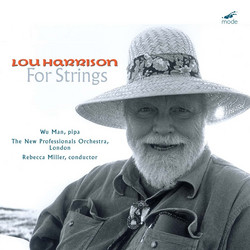
Music for Strings
Lou Harrison's Suite No. 2 for Strings, Suite for Symphonic Strings and Concerto for Pipa with String Orchestra, three first recordings in their categories, played by Wu Man and The New Professionals Orchestra, London, conducted by Rebecca Miller.
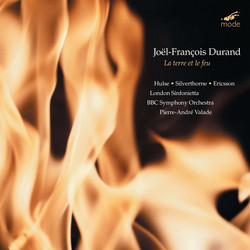
La Terre et le Feu
Composer-supervised first recordings of Joël-François Durand's music on the four elements: La terre et le feu for oboe and ensemble, Les raisons des forces mouvantes for organ, La mesure des choses III and Athanor for orchestra.
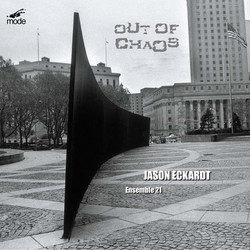
Out of Chaos
The first complete CD of music by New York composer Jason Eckardt: four first recordings, After Serra, Tangled Loops, A Glimpse Retraced and Polarities, played by Ensemble 21, saxophonist Taimur Sullivan and pianist Marilyn Nonken.
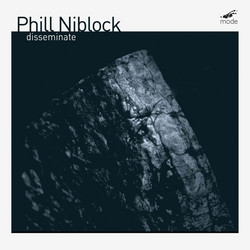
Disseminate
Three 22-minute drone works by Phill Niblock: Disseminate Ostrava for orchestra, Kontradictionaries for the Kontra-Trio of contrabass flute, saxophone and tuba, and Disseminate Q-O2 for the Q-O2 Ensemble.
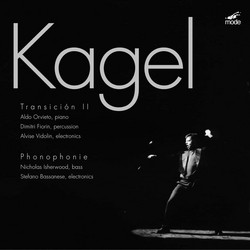
Transición II. Phonophonie
First recordings, supervised by the composer, of two early works by Mauricio Kagel: Transición II (1958-59) for piano, percussion and tapes with live electronics, and Phonophonie (1963-64), four melodramas for two voices and other sound sources.
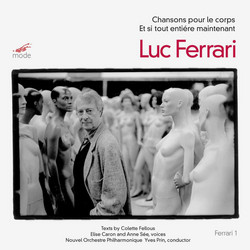
Volume 1: Chansons Pour Le Corps
First volume of Mode's Luc Ferrari series: Chansons pour le corps, built on interviews with women recorded in the Jardin du Luxembourg, and the symphonic tale Et si tout entière maintenant for actress, tapes and orchestra.
Chansons Pour Le Corps / Et Si Tout Entière Maintenant (CD)
Two works by Luc Ferrari: Chansons pour le corps, for voice and ensemble, built on interviews with women, and the symphonic tale Et si tout entière maintenant for actress, tapes and orchestra. First release in Mode's Ferrari series.
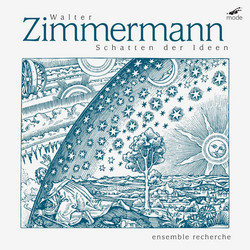
Shadow of an Idea
Four chamber works by Walter Zimmermann, Schatten der Ideen, Ursache und Vorwitz, Distentio and Shadows of Cold Mountain 3, played by Ensemble Recherche. The music reflects the influence of John Cage and Morton Feldman.
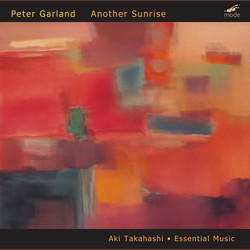
Another Sunrise
Three works by Peter Garland, Another Sunrise, Dreaming of Immortality in a Thatched Cottage and I Have Had to Learn the Simplest Things Last, for pianos, harpsichord, voices and percussion, with Aki Takahashi and Essential Music.
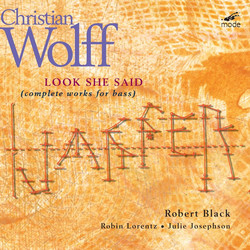
Look She Said (Complete Works For Bass)
Christian Wolff's complete works for bass, played by Robert Black under the composer's supervision: Look She Said, Jasper (with violin), String Bass Exercise out of Bandiera Rossa, Dark as a Dungeon (with trombone) and Untitled for electric bass-guitar.

A Cage of saxophones 1
Cage's late works for saxophones, Four5, Five4 and Hymnkus, with Ulrich Krieger's arrangements of Ryoanji and Five, played by Krieger and German new music performers. Volume 24 of the Complete John Cage Edition.
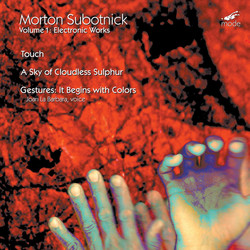
Volume 1: Electronic Works
Electronic works by Morton Subotnick: Touch and A Sky of Cloudless Sulphur, remastered from the analogue tapes with new stereo mixes, and Gestures with vocalist Joan La Barbara. Includes the complete 28-minute version of A Sky of Cloudless Sulphur.
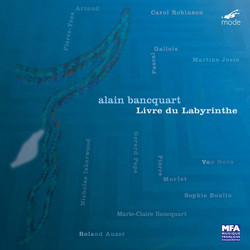
Labyrinthe de Minotaur
Alain Bancquart's large-scale microtonal cycle on the myth of the Minotaur, on texts by Marie-Claire Bancquart, recorded at its world premiere of the complete version at Radio France on 27 May 2000.
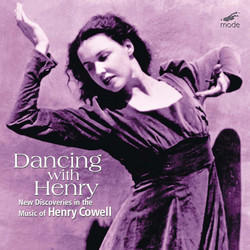
Dancing With Henry
Mostly first recordings of Henry Cowell's music written for dance, many from unpublished manuscripts, including Atlantis, the Ritournelles from Marriage at the Eiffel Tower, Sound Form No. 1 and the Suite for Woodwind Quintet.
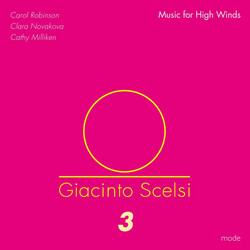
Music For High Winds
Giacinto Scelsi's music for high winds, solo and duo pieces for clarinet, flute, piccolo and oboe written between 1953 and 1970, played by Carol Robinson, Clara Novakova and Cathy Milliken. Volume 3 of Mode's Scelsi Edition.
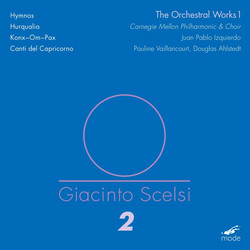
The Orchestral Works 1: Hymnos, Hurqualia, Konx-Om-Pax
Volume 2 of Mode's Scelsi Edition: the orchestral works Hymnos, Hurqualia and Konx-Om-Pax, played by the Carnegie Mellon Philharmonic and Concert Choir under Juan Pablo Izquierdo, interspersed with Canti del Capricorno sung by Pauline Vaillancourt and Douglas Ahlstedt.
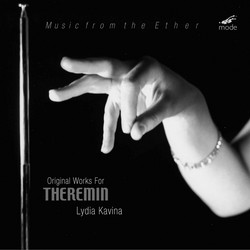
Music from the Ether
Original works for theremin from the 1920s "golden age" to the 1990s, all first recordings, by Schillinger, Grainger, Martinu, Achron, Antunes, Komarov and Lydia Kavina, played by Kavina with piano, string quartet and soprano.
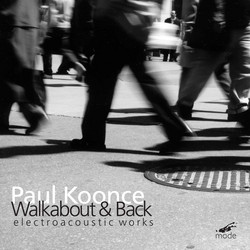
Walkabout & Back: Electroacoustic Works
Four electroacoustic works by Paul Koonce, Walkabout, Hothouse, Pins and The Flywheel Dream, composed between 1992 and 1998 from recorded materials using collage and computer manipulation.
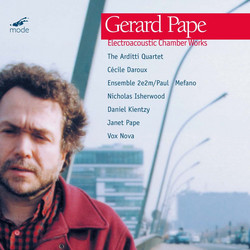
Electroacoustic Chamber Works
Five chamber works with tape and electronics composed by Gerard Pape between 1993 and 1997, performed by soprano Janet Pape, the Arditti Quartet, bassist Nicholas Isherwood, Vox Nova, saxophonist Daniel Kientzy and Ensemble 2e2m.