Composed between 2020 and 2024, Alea Iacta Est (The Die is Cast) stands out even within John Zorn’s fearsome catalogue as a particularly high‑stakes creation, a piano‑driven concerto that treats form as both ritual and battleground. Rather than simply updating the 19th‑century concerto model, Zorn uses it as a pressure chamber for everything that has animated his work: knotty counterpoint, block‑like montage, cartoon jump‑cuts, ecstatic melody and abrupt drop‑outs into silence. Across its movements the music hurtles through extremes of mood, style and tempo - from needle‑point staccato to volcanic clusters, from Webern‑sharp gestures to almost cinematic lyricism, from locked‑in grooves to passages where rhythm dissolves into hovering, weightless sound. The “die” of the title has already been thrown in the writing; what we hear is the consequences unfolding in real time.
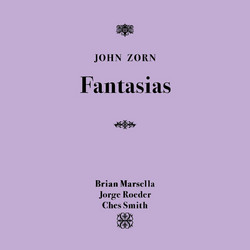
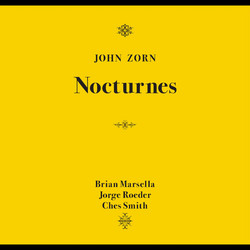
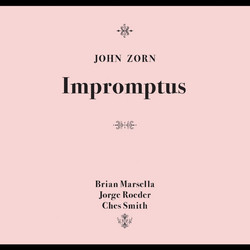
At the centre of this controlled chaos is pianist Brian Marsella, one of Zorn’s most agile and fearless interpreters. He’s asked to inhabit several musical personalities at once: modernist technician, jazz improviser, colourist, noise‑maker and songful melodist. Lines fracture and recombine under his hands; huge leaps across the keyboard are followed by single notes left to glow in the air. Anchoring and provoking him is the rhythm team of Jorge Roeder on bass and Ches Smith on drums, a trio already tempered in other Zorn projects. They are not reduced to a subservient “orchestra” role; instead they function as a band with its own instincts, sometimes supporting, sometimes challenging the piano, sometimes seizing the foreground entirely. On one pivotal track, vibraphonist Sae Hashimoto enters like a second, spectral keyboard, doubling, blurring and refracting Marsella’s figures so that attacks harden into glittering edges and sustains bloom into luminous halos.
What makes Alea Iacta Est feel like an “essential piece of the Zorn puzzle” is the way it compresses decades of his languages into a single, coherently unruly object. You can hear the rigorous voice‑leading and structural discipline of his so‑called classical works; the razor‑edged volatility of the downtown bands; the chant‑like ritual intensity of his more occult‑tinged compositions; the bittersweet, modal twist of the Masada songbooks. Yet the concerto never lapses into quotation. Those histories act like geological layers, occasionally exposed on the surface but more often shaping the terrain from underneath. A jagged, atonal burst may suddenly pivot into a line that sounds like a shattered standard; a brief stretch of swing might be chopped up by asymmetrical accents; a moment of almost disarming calm may be sliced away by a brutal unison figure.
For Marsella, Roeder, Smith and Hashimoto, the piece is as much a physical and mental trial as it is a score to be “interpreted.” The notation demands hairpin dynamic shifts, extreme registral jumps, complex polyrhythms and ensemble precision at high speed, but the real test lies in making this complexity feel inevitable rather than merely clever. The performers meet that challenge with a combination of discipline and abandon. The piano slams and whispers, the bass alternates between bedrock and counter‑melody, the drums move from microscopic cymbal work to explosive salvos, the vibraphone melts attacks into a ringing afterimage. Their playing emphasises the sense of risk built into the music: you are always aware that it could fly apart, and always exhilarated when it doesn’t.
In the end, Alea Iacta Est reads like a late‑period manifesto in disguise. It shows an older composer who has nothing left to prove still willing to set himself and his closest collaborators nearly impossible tasks, trusting them to turn difficulty into drama and rigor into raw sensation. For listeners already immersed in Zorn’s world, it locks another crucial tile into place, revealing how his concert works, band pieces and game‑like strategies interpenetrate. For those encountering him through this recording, it offers a baptism by fire: a piano concerto that explodes the category from the inside, then reassembles it into something bracingly contemporary. In both cases, the verdict embedded in the original note holds: this is challenging, vital work - and yes, quietly, audibly astonishing.