The Bagatelles Vol. 7 zooms in on a single, highly focused angle of John Zorn’s sprawling Bagatelles project: one pianist, one instrument, thirteen pieces, no safety net. Written as part of Zorn’s vast book of short, hook‑like compositions, these Bagatelles are typically used as springboards for bands, clashing ensembles and genre collisions. Here they’re entrusted entirely to Brian Marsella, whose solo interpretations strip them down to their essence while revealing how much detail they contain. Recorded and mixed in a single October 2020 session at Oktaven in Mount Vernon, NY and mastered by Scott Hull at Masterdisk, the album spans about 46 minutes, presenting Bagatelles #263, #290, #151, #292, #72, #96, #112, #110, #289, #238, #111, #121 and #176 as a continuous listening experience rather than isolated études.
Marsella approaches these scores as both rigorous compositions and open questions. Described in the notes as a “solo piano interpretation” and “virtuosic blend of classical and jazz language,” his playing keeps one foot in each world. On one piece he might lean into sharp‑edged counterpoint and crystalline touch, channelling a lineage that runs from Bartók and Stravinsky back to the Romantic repertoire; on the next he lets time stretch and swing, teasing out off‑beat accents, blues inflections and elastic phrasing that point to the jazz tradition. The Bagatelles themselves encourage this instability. Designed as concise, tightly written themes, they can flip from knotty atonality to sly melody in a few bars. Marsella doesn’t try to smooth out those contrasts; instead, he highlights them, turning each miniature into a small drama of tension and release, explosion and pause.
Sequenced together, the thirteen tracks feel like a set of variations on the very idea of a “bagatelle”: what can a short piece hold? Some, like the 23‑second Bagatelle #96, are genuine lightning flashes - dense, pointillist bursts that barely have time to register before they’re gone. Others, such as #176 or #238, stretch toward five minutes, allowing motives to be developed, reharmonised and re‑rhythmed until they resemble compact sonatas or suites in miniature. Throughout, Marsella plays with touch and colour: brittle staccatos, singing legato lines, hammered clusters, pedal‑blurred resonances that let Zorn’s harmonies ring against each other in unexpected ways. It’s a record that rewards close listening but also works as an unbroken arc, with recurring intervals, gestures and moods binding the Bagatelles into a slyly coherent whole.
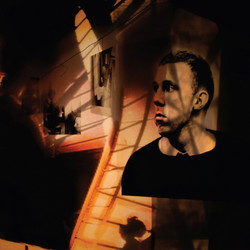
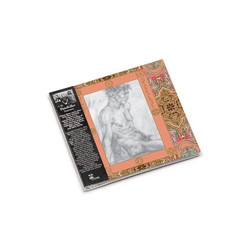
Production details underline the care behind the apparent austerity. All compositions and executive production are by Zorn, with Kazunori Sugiyama as co‑executive producer; Marsella handles arrangements and production from the pianist’s bench, ensuring the music’s internal logic is reflected in pacing and dynamics. The clean, detailed sound of Oktaven’s recording captures every nuance of attack and decay, while Scott Hull’s mastering preserves both the sharp transients of the more aggressive passages and the long, singing tails of the quieter ones. Visually, the volume fits snugly into the Bagatelles series: photography by Sae Hashimoto and design by Chippy (Heung‑Heung Chin) give it the same crisp, modernist frame as its sister releases.