York Holler, Brian FerneyhoughFeaturing: Pierre Boulez
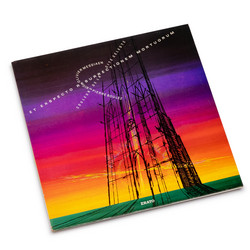
Arcus / Funérailles Versions I & II (LP)
condition (record/cover): NM / NM Insert included. | Two uncompromising works from the late 1970s, performed by the Ensemble InterContemporain under Pierre Boulez and Peter Eötvös - a disc that documents the moment when IRCAM's technology and Boulez's ensemble converged to produce some of the most committed performances of the European avant-garde's next generation. Neither composer makes concessions, and that is precisely the point. Anyone who draws sustenance from the fifties avant-garde classics - Le marteau, Kontakte - but finds the widespread retreat into accessibility dispiriting, will find this record essential.
York Höller's Arcus (1978), for fifteen instruments, percussion and four-channel tape, was composed for the Ensemble InterContemporain and premiered at the opening of IRCAM's Espace de projection in October 1978. Höller - a student of Bernd Alois Zimmermann in Cologne, later Stockhausen's successor as director of the WDR Electronic Music Studio - spent two months at IRCAM that year, having the ensemble's musicians record instrumental motifs directly into the computer. These sounds were then transformed through ring modulation, frequency modulation, amplitude modulation, phase shifting and delay, all governed by a single compositional code that also generates the instrumental writing. This is the principle Höller calls "Gestalt composition": a single arch-shaped musical figure - Arcus, Latin for bow or arc - from which melody, harmony, rhythm, density and large-scale form all derive. The programming was realized by Stanley Haynes and David Wessel using IRCAM's Music V software. The result is music in which acoustic and electronic sound exist not as separate layers but as a continuum - the tape's first entry is a genuinely dramatic event, and by the time the instruments have moved into more active territory the two domains have become inseparable. Eötvös conducts with the clarity this intricate score demands.
Brian Ferneyhough's Funérailles, in both its versions - Version I (completed 1977) and Version II (1980) - fills the second side. The scoring is identical for both: two violins, two violas, two cellos, double bass and harp. Ferneyhough has described the work's emotional setting as "a ceremony taking place behind a curtain or far away" - music that is not funereal in any programmatic sense but that unfolds with the gravity and density of ritual observed from a distance. Version I was premiered by the Ensemble 2e2m under Daniel Méfano at Saintes in 1977; Version II, composed three years later, is not a revision but what Ferneyhough calls a "commentary" on the first - the same forces, the same basic material, but the gestures magnified, the tensions amplified. The relationship between the two versions is unlike Berio's Chemins series: rather than elaborating a core, Ferneyhough interrogates how a composer's own aesthetic evolves, how volatile interpretation itself becomes when turned inward. When the score marks risoluto, esitando, irato, even verginale, the Ensemble InterContemporain under Boulez makes you hear it that way - character deployed as structural punctuation, giving the listener points of orientation within writing of extreme density. The harp cuts through the string mass with almost physical force. This is endlessly rewarding music that places extreme demands on performer and listener alike, but the rewards deepen with every hearing.
Funérailles occupies a pivotal position in Ferneyhough's output - a transitional work between the radical performance-situation pieces of the mid-1970s (Time and Motion Studies, Unity Capsule, the orchestral La terre est un homme) and the third-period masterworks beginning with the Second String Quartet (1980) and the Carceri d'Invenzione cycle. The Boulez recording, made just a year after the completion of Version II, captures the work at the moment of its emergence.
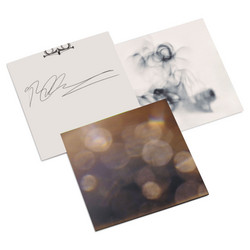
LP with 4-page 12" insert, sleeve notes in French. Erato STU 71556. Arcus recorded 7 February 1984, Funérailles recorded 12-13 May 1981, both at IRCAM, Espace de projection du Centre national d'art et de culture Georges Pompidou, Paris.