Jean-Claude Eloy
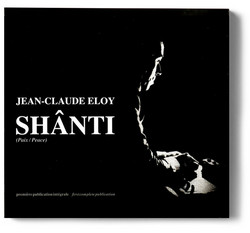
Shānti (2LP)
Tracked express shipping from Italy, no customs or import VAT in the EU. Shipping costs
condition (record/cover): NM / EX- (light foxing) - Gatefold sleeve. Jean-Claude Eloy pushed duration beyond every concert convention. Shānti on Erato occupies two LPs, though the complete version extends even further: hours of music designed to alter consciousness, to induce the peace (shānti in Sanskrit) that the title promises. Eloy studied with Pierre Boulez and Karlheinz Stockhausen, but surpassed both masters in the radicality of temporal dilation.
The market wasn't ready for such durations. Now that Éliane Radigue and ambient drones have retrained ears, Shānti sounds prophetic. Eloy understood that transformation requires time, that ecstasy cannot be reached in three minutes. The double LP becomes ritual object, demanding commitment before it yields its secrets.
Format
Dedicated to Karlheinz Stockhausen.
Subtitled: "Shānti", musique de Meditation pour sons électroniques et concrets.
Recorded in 1972/3 in the Electronic Studio of the Westdeutscher Rundfunk (West German Radio), Cologne, Germany.
The two track reduction from the original four track tape is a special version made in the Cologne Studios, the mixing of the original tracks being varied from one reel to another onto the two tracks. For the best results we suggest four loudspeakers, track one coming from the two on the left (front and back) and track two from the right (front and back). It is best to listen at a high volume, and with a balance between the four speakers to create the best "illusion" of quadraphonic sound.
Ⓟ Editions Costallat 1979 ©
Made in France
Gatefold cover with texts.
Release notes
Dedicated to Karlheinz Stockhausen. Subtitled: "Shānti", musique de Meditation pour sons électroniques et concrets. Recorded in 1972/3 in the Electronic Studio of the Westdeutscher Rundfunk (West German Radio), Cologne, Germany. The two track reduction from the original four track tape is a special version made in the Cologne Studios, the mixing of the original tracks being varied from one reel to another onto the two tracks. For the best results we suggest four loudspeakers, track one…
| A | Shānti | 28:50 | |
| B | Shānti | 23:06 | |
| C | Shānti | 19:08 | |
| D | Shānti | 25:20 |
- Luz Estella Santos
- Engineer [Assistant At The Studio]
- Peter Eötvös
- Engineer [Assistant At The Studio]
- Volker Müller
- Engineer [Chief]
- Jean-Claude Eloy
- Liner Notes
- Andrew Mc Intyre
- Liner Notes [Translation]
- Françoise Campo
- Voice [Shrî Aurobindo]