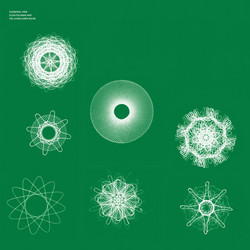
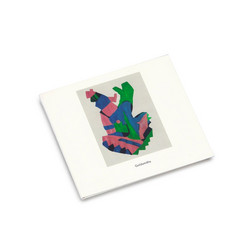
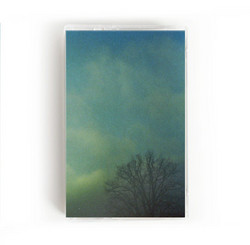
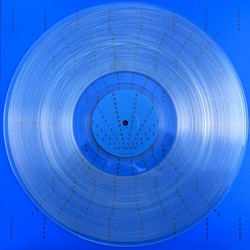
Tip! *100 copies limited edition* Flung is proud to present Sound as a Bell: collages of piano, percussion, electronics, and found sound stemming from the correspondence between sound artist Fergus Kelly and pianist John Tilbury. Through Kelly’s studio transformations of Tilbury’s recordings – where sounds are stretched, reversed, layered and refracted – the listener is left to drift in a tumbling kaleidoscope that inspires listening at once ambient, improvisatory, surreal, electroacoustic, and environmental.
Beginning in 2025, the two worked remotely from their respective home towns of Dublin and Deal, with Tilbury sending Kelly recordings of home improvisations on piano and percussion. Kelly reshaped this material through studio processing while adding his own layers of percussion, electronic sound, and field recordings, creating eight interconnected tracks in which acoustic and electronic sounds roam in a shifting labyrinth of warped reflections and resonances.
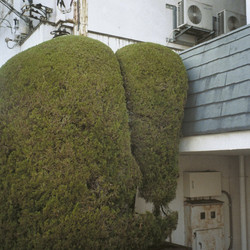
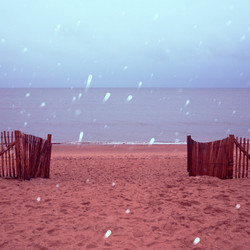
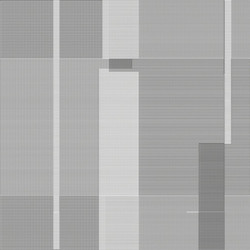
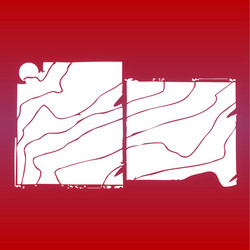
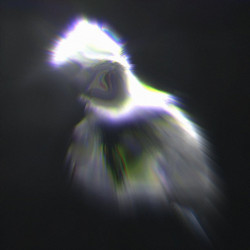
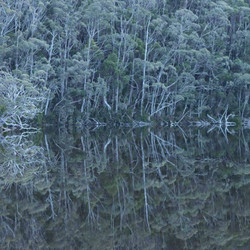
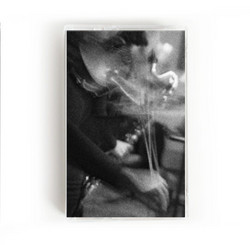
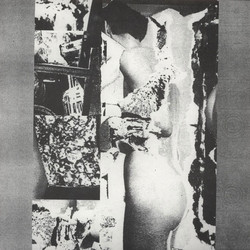
The album evolves approaches to memory, where fragments surface, only to dissolve again, or fold back on one another, intimate though strangely distant. There is a lingering sense that the music is taking place somewhere just beyond the limits of perception, or as if viewed through a spinning prism; time moves, bends, and breaks in cycles, echoes, and flashes, where there are no straight lines forward. The Lynchian sense of uncertain orientation is reinforced by Kelly's accompanying photography, whose ambiguous perspectives and unstable relationships between objects, surfaces and spaces mirror the music's own shifting architecture.
Sound as a Bell may initially register as ambient music (in Eno’s original meaning), yet its intricate detail continually rewards closer attention, revealing evolving environments that unfold differently with each return. The resulting sense of time is fluid and sometimes uncanny, extending something of the expansive, knotted temporality associated with Tilbury's work with Morton Feldman into the realm of studio collage. The dreamlike sensibility of Jon Hassell, the unstable sample-based worlds of Oval and Microstoria, and the memory-haunted atmospheres of William Basinski and Graham Lambkin provide distant reference points.