Topu Lyo
Quiet scenes from Tokyo (LP)
LabelFaitiche
FormatLP
GenreExperimental
Preorder: Releases November 6th, 2026 (ships as soon as it is released)
Tracked express shipping from Italy, no customs or import VAT in the EU. Shipping costs
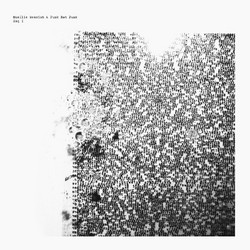
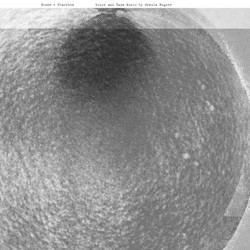
*300 copies limited edition* Sixteen miniatures for solo cello and tape echo, recorded in a Tokyo apartment directly across from an elevated freeway. Quiet Scenes From Tokyo is the first album to appear under Topu Lyo's own name, and the first record in the catalogue of Faitiche - the Berlin imprint run by Jan Jelinek - that isn't electronic in origin. It doesn't play as a break with the label's history. The preoccupations are the same ones, worked out with wood, gut and horsehair.
Lyo is a Korean-American cellist and composer who spent years in Brooklyn as one half of Live Footage, the duo he formed with drummer Mike Thies in 2006, known for film and documentary scoring and for a Sunday residency at Apotheke in Chinatown that ran well over a decade. That work was built on live looping, pedals and synthesisers. Moving to Tokyo, he cut the setup down to almost nothing: a cello, and a Roland Space Echo run over everything at the mixing stage, tape only.
What remains is a study in getting an acoustic instrument to behave like a studio. Slow portamento standing in for pitch drift, bow pressure for filter sweeps, rapid finger work for granular texture, detuning and noise arrived at by hand. The bowed passages settle into something close to tape feedback. The pizzicato pieces have the dry, patient step of Moondog's percussion recordings. Nothing here is longer than four minutes and most of it is under two, which leaves the album its sketchbook quality - sixteen ideas set down and left alone.
The freeway is the other instrument. Lyo had been listening to a cassette of ocean sounds for years before the move, and eventually the traffic began to sound like the same thing. He started with the balcony door shut, then opened it by degrees, using the gap as a level control. Individual cars pass through Old Trees In Lonely Spring, Yuyake Koyake and The Moon. On A Street Car With Announcement a vehicle with a loudspeaker drifts past mid-take. The title track of that Japanese children's song plays across the city every day at five, telling children to go home; it turns up here as a bed the cello can lean on rather than compete with.
The titles read like a wall of East Asian painting. Hokusai appears twice, in Fine Wind, Clear Morning and The Dream Of The Fisherman's Wife. Irises points to Ogata Korin, Grass And Insects to the sixteenth-century Korean painter Shin Saimdang, and Sun Mu (The Faceless Painter) to the North Korean defector who works under a pseudonym and keeps his own face out of view. A record made by a Korean-American in Japan, filing its miniatures under images made on both sides of that history.
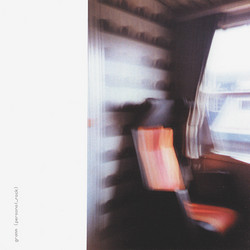
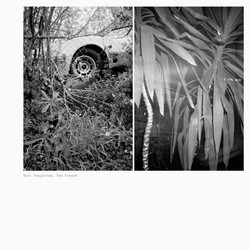
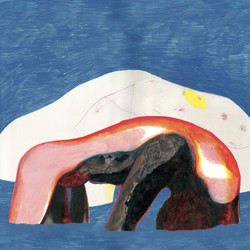
Mastered by Rashad Becker, with photographs by Riona Yamashita and design by Dmytro Nikolaienko.




![Σ [sigma]](https://cdn.soundohm.com/data/products/2026-10/a0550686140_10-jpg.jpg.250.jpg)