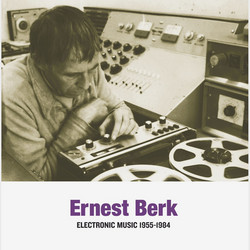
Ernest Berk
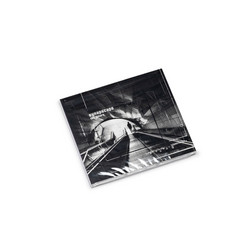
Electronic Music 1955-1984 (2CD)
2CD version. Ernest Berk was a singular figure and a 1950s pathfinder in electronic music in Britain. With a background as a dancer and choreographer, he devoted much of his attention to electronic music for dance. The music collected here spans almost twenty years and was created across his three North London studios at Camden Road, Dorset Street, and the Diorama in Peto Place. In this particular combination of electronic composition and contemporary dance, Berk had no direct counterpart in Britain, with the American composer and choreographer Alwin Nikolais providing the closest parallel.
Berk’s musical language evolved from early tape manipulation, microphone recordings and radio interference towards electronically generated sounds produced with tone, pulse and white-noise generators. Throughout these technological changes, he maintained a strict economy of means, often limiting himself to only a few carefully selected sound sources. Rhythm, pulse and percussive tape loops remained central to his compositions, reflecting his experience as both a dancer and percussionist. Gemini (Les Amies), Op. 52, in which recordings of a kettle lid grinding and spinning on various surfaces are juxtaposed with percussion loops, offers a striking example of this approach.
Berk also regularly returned to completed works, altering them, extracting sections and reusing recognisable motifs in new compositions. In Your Image, Op. 43 and No Fish (or Oh Mr. Bard), Op. 29 reveal this practice of self-quotation particularly clearly. The latter is presented here in an eleven-minute version preserved on one of a group of tapes that had disappeared from Berk’s collection after his death and were thought lost, until Berk’s friend and colleague Andreas Wirth revealed in 2024 that he held a number of them.
Dance remained central to Berk’s work. He composed fourteen works for dancer and choreographer Rebecca Wilson, their collaboration continuing until 1976, and in 1971 established the Dance Theatre Commune with his third wife, Ailsa Berk. Nocturne (While I was asleep), Op. 163, with its repeating looped sequences suggestive of breathing, also existed in an hour-long version created for the DTC’s semi-dark, all-night “Liberation” dance sessions.
One of his later works, Osterglocken, Op. 221 (1980), distils Berk’s enduring interest in restricted sound materials through subtle variations of timbre, gesture and pulse. For decades, Berk’s position as a 1950s pathfinder remained largely unrecognised, while his remarkable body of electronic music - comprising more than 280 compositions - lay dormant and neglected. This anthology forms part of the ongoing process of rediscovering this distinctive body of work.