We use cookies on our website to provide you with the best experience. Most of these are essential and already present.
We do require your explicit consent to save your cart and browsing history between visits. Read about cookies we use here.
Your cart and preferences will not be saved if you leave the site.
play
1
2
File under: Field Recordings

Stéphane Roy

L’Inaudible

Label: empreintes DIGITALes

Format: CD

Genre: Experimental

In process of stocking

€11.80
VAT exempt
+
-
Five acousmatic works by Stéphane Roy from 2008 to 2019, from the hurtling machine pulse of Train d’enfer to Les aurores pourpres, shaped with an infrared hand sensor from sound banks he made at Stanford in the early 1990s.

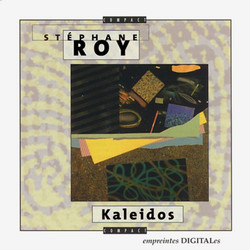
L’Inaudible collects five stereo acousmatic works that Stéphane Roy composed in his studio in Montréal between 2008 and 2019, his third album on empreintes DIGITALes after Kaleidos (1996) and Migrations (2003). The title comes from a line by Jean-François Lyotard, “The audible part of the work is musical only if it evokes the inaudible.” Roy never fixes form in advance: he works the material like a sculptor, through what he calls “transcendent listening”, until images emerge that sketch the piece. The album won the Prix Opus for album of the year in 2019-20.

Maelström (2014-16) is built on rough, sharp-edged motifs that gather into walls of sound at its beginning, middle and end, with a leitmotif that keeps being cut short. Train d’enfer (2010-11), at 21 minutes the longest piece, moves in three sections from obsessive semitones to a screaming machine of metal on metal. For Les aurores pourpres (2017-19) Roy returned to sound banks gathered during a year at Stanford University in the early 1990s, shaping old and new material with an infrared motion sensor that controls up to five synthesis parameters with one hand. Les territoires secrets, premiered in Cagliari in 2008 and revised in 2019, draws on travel writing, in particular Nicolas Bouvier’s L’usage du monde, and favours slow layered strata. Voies crépusculaires (2013-14) uses pulsed units as its axis and looks back to his early Crystal Music.

Born in Saint-Jean-sur-Richelieu, Québec, in 1959, Roy holds a doctorate in electroacoustic composition and a PhD in musicology from the Université de Montréal. His book on the analysis of electroacoustic music (L’Harmattan, 2003) won the Prix Opus for book of the year.

CD in OGpak, empreintes DIGITALes IMED 19162, 2019.
Details
File under: Field Recordings
Cat. number: IMED 19162
Year: 2019
… a well meandering, varied and close to indescribable journey into one of the most experimental spheres of the electronic music scene in terms of compositional approach.Read more

Released only recently via the 1990-established imprint Empreintes Digitales is L’inaudible, the third full lenght album effort by Montréal-based composer Stéphane Roy. Working on the acousmatic side of things we see Roy presenting a selection of seven pieces on this longplayer, all created within the past twelve years with some being finished in multiple sessions spread over several years. Opening with Maelström the first step of the musical journey is a twisted, whirling and grinding piece built from cold digital Noize eruptions regularly, yet irregularly bending, twisting and interrupting tender, and partly dramatic, Ambient atmospheres in a collage’esque manner whereas the Train d’enfer brings tension in form of dark, brooding atmospheres and various scraping, clanging metal pieces before the subsequent triplet of “Section 1 — 3” provides a perfectly intense, nerve-wrecking score of sorts for your favorite underground psycho horror flic out of the 60s or 70s. Les aurores pourpres first sees Stéphane Roy on a fragile, ethereal Deep Listening Music tip, slowly progressing from a minimalist approach into large scale drama with hefty sonic masses grinding and shifting within the stereo field before making way for spatial sparseness once again, Les territoires secrets caters cold, quivering and somewhat retrofuturist Ambient pulses which are evoking echoes of memories of very early Oval works and other intense, experimental Deep Listening adventures of the late 90s alongside various background rumblings, sounds of pouring liquids and short percussive eruptions before the final cut named Voies crépusculaires ventures off into solemn Dark Ambient territories with a certain cut-up twist paired with (Neo)Classical influences to provide a closing for a well meandering, varied and close to indescribable journey into one of the most experimental spheres of the electronic music scene in terms of compositional approach.

This is great music, really!Read more

Il cercare l’inaudibile dalla musica è la conseguenza di uno sforzo sperimentale, che si costruisce su prove continue di determinazione dei suoni, della loro manipolazione profonda come processo per arrivare ad una sorta di trascendentalità dell’ascolto, che vada oltre l’astrazione evidente; in tal senso, Stéphane Roy richiama le corrispondenze filosofiche di Lyotard, che poneva il riconoscimento non effimero di un prodotto musicale proprio dalle sensazioni inaudite che riusciva a provocare. Come si manifesta l’inaudito nei cinque brani presentati? Dal punto di vista del suono, Roy cerca di sondarlo oltremisura attraverso una ricerca di strutture astratte e complesse con creazioni che richiedono anche una dose di spazialità ed avventura, elementi che guardano in faccia (e non so con quanta causalità) persino ceppi umorali dell’elettronica degli anni settanta: in un vespaio di sonorità minuziosamente ricercate e di sensazioni da decifrare, l’insinuazione di suoni sintetizzati nelle trame manda nel circolo aurale dell’ascoltatore anche estensioni di esperienze sonore che si agganciano al Mike Oldfield strumentale, alle apprensioni delle polveri cosmiche nei viaggi Tangerine Dream o Steve Roach. Sono naturalmente rimandi forse involontari in mezzo ad un’intelaiatura sistemica, poiché c’è di fatto una ricerca sul suono notevolmente più ampia rispetto a quelle fonti, tipica degli scultori: in Maelström, si assiste ad una pioggia di suoni-situazioni, sventolate di suoni sintetizzati bardati con granulazioni, rumori interstiziali, possenti trafile del suono che rendono l’idea di vortici aggressivi, ma talvolta anche solo apprensivi; Train d’enfer è in 3 sezioni, un’idea di mescolamento nella prima, una tensione espressa in molti modi nella seconda (forme dronistiche irreversibili, quasi litanie, costruzioni astratte incatalogabili, con più livelli di percezioni e tanti dettagli), un’emersione apparente di “motivi”, ripetizioni che si arricchiscono di pathos, nella terza. L’introduzione di Les aurores pourpres potrebbe essere confusa con le fasi sonore iniziali di Blade Runner, mentre una tavolozza di bit si estende nella spazialità, anticipando ambienti inusuali come segnali di avvertimento, polveri che sembrano radioattive, venti forti e sabbiosi e tanta saturazione funzionale; questo pezzo si avvale di un lavoro speciale di formazione dei materiali, dovuto al fatto che Roy ha utilizzato un sensore di movimento ad infrarossi per controllare cinque parametri audio contemporaneamente, attraverso il gesto della mano. In Les territoires secrets, una raggiera sonora ripetuta compatta un terreno sonoro morfologicamente vicino alle produzioni ambient, lambendo forse anche il terreno della IDM: lo scopo è chiaro, un minimale ed impressivo set di rappresentazione che è un’altra forma di esprimere creatività; nella finale Voies crépusculaires si formano opposizioni, un vento ovattato contro pulsazioni, sempre sostenute, con filtri, analisi additiva, plasticità dei suoni; la parte centrale presenta un ventaglio di tagli ed incollature che reindirizzano costantemente l’orientamento musicale, che resta potente come un tam-tam subdolo e sotterraneo che vuole scuotere l’immaginazione.

Avvicinarsi senza dubbi a L’inaudible. Questa è grande musica, davvero!

Le son est un matériau que les musiciens traitent et maltraitent, pour en extraire des substances aux variations multi-directionnelles, en fonction de là où ils veulent l’entrainer.Read more

Le son est un matériau que les musiciens traitent et maltraitent, pour en extraire des substances aux variations multi-directionnelles, en fonction de là où ils veulent l’entrainer.

C’est sur les territoires des l’expérimental et de l’électroacoustique que Stéphane Roy opère, regroupant les sources sonores et les field recordings, pour les coller et offrir des géographies accidentées, éprises de science-fiction et d’aridité spatiale.

L’inaudible rassemble des œuvres composées entre 2008 et 2014, le tout formant un ensemble à la cohérence forte, de par les atmosphères développées tournant définitivement le dos à la détermination et la délimitation, pour se laisser porter par le seul flux créatif.

L’artiste offre des œuvres aux contours sculptés dans l’énergie de notre époque, grossissant l’infiniment petit, pour le mettre en exergue aux cotés d’un quotidien harassant, devenu sourd à nos oreilles. Un concentré de textures ordinaires pour une plongée dans l’extraordinaire.