We use cookies on our website to provide you with the best experience. Most of these are essential and already present.
We do require your explicit consent to save your cart and browsing history between visits. Read about cookies we use here.
Your cart and preferences will not be saved if you leave the site.
play

Åke Parmerud

Grains

Label: empreintes DIGITALes

Format: CD

Genre: Electronic

In process of stocking

€11.80
VAT exempt
+
-
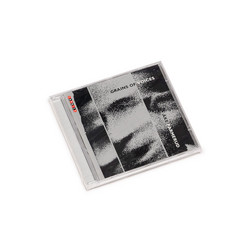
Four stereo works by Åke Parmerud from 1990 to 1995, led by Grains of Voices, a 31-minute piece built from voices he recorded while travelling around the world and premiered at the United Nations in 1997.

Grains is a reissue gathering four stereo works that Åke Parmerud composed between 1990 and 1995, three of them commissioned by radio and studio institutions and several awarded at Bourges, Arras and Stockholm.

Grains of Voices, commissioned by Sveriges Radio, began as a project on the human voice as a symbol of a scattered but shared world. Between February and May 1994 Parmerud travelled to Venezuela, Fiji, Australia, India and Bali and came back with close to 20 hours of recordings: people said or sang whatever they wanted, monks of the Namgyal monastery in Dharamsala among them. The piece moves through “islands” of childhood songs, prayers, the voices of dead poets, opera meeting Balinese shadow plays and Tibetan singing, and ends with a roar that proclaims silence. It premiered at the United Nations headquarters in New York in October 1997.

Jeux imaginaires, made at the GMEB in Bourges, takes the 22nd game of the 1992 match between Anatoli Karpov and Garry Kasparov as a nightly ritual; its middle section derives drum rhythms from the thinking times of the first 19 moves. Les objets obscurs, composed in Studio 116 of the Ina-GRM in 1991, is a set of spoken riddles in French, each followed by a movement built from a single object: a lock, a chair, twenty-two stone marbles, the voice. Alias, which won first prize at Bourges in 1991, starts from the life of Carlo Gesualdo and reworks John Dowland’s song A Shepherd in a Shade and fragments of Gesualdo’s late motets.

Born in Lidköping in 1953, Parmerud trained as a photographer before studying music in Gothenburg. Since Närheter won first prize at Bourges in 1978 he has received 17 international prizes, and he has been a member of the Royal Swedish Academy of Music since 1998.

CD in OGpak, empreintes DIGITALes IMED 18150, 2018.

Details
Fascinating.Read more

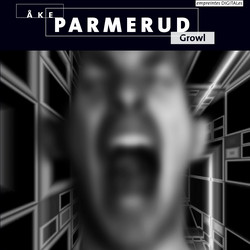
We have enjoyed previous releases Growl and Necropolis by Åke Parmerud, the Swedish electroacoustic composer, and now we have Grains (empreintes DIGITALes IMED 18150), the latest collection for this label. As before, we have the monochrome high-contrast sleeve art which appealingly plays with digital “textures” and explores its own imaginary spaces. This time we’re hearing some earlier gems form his 1990s catalogue. The main event might be Grains of Voices, a 1994-95 composition that was commissioned by Swedish radio as a dramatic form of sound-art; we might consider it radiophonic almost, were it not for the lack of a clear linear narrative. Instead, Parmerud is making a generalised statement about the diversity of the human race, by using sampled, found and recorded voices from around the world. He intends thereby to present as much information as he can about the human spirit in a deep / wide sweep; I like the idea it might be seen as “vocal graffiti”. It’s all about different languages and cultures, yet the basic idea is to reveal some commonality, something about our shared humanity. On paper, this may sound a bit “worthy”, like some committee-designed UNESCO statement about mankind, but sonically speaking it’s a compelling jumble with plenty of rich detail; and it refuses to draw any conclusions about what these artificial patterns in sound might mean. As ever with this composer, the craft of assemblage is pretty immaculate; not a wasted moment, lots of concrete events; it’s as much a vocal mosaic as a wall of audio graffiti.
More human voices on Les objets obscurs taking us even further back to 1991. This is intended as an “audio riddle” in four parts; at one level, we’re invited to guess what we might be hearing as we work through these four short works, plus there’s a friendly French-speaking woman adding some context at the start, with a further textual riddle (I think she’s pretty much asking “what am I?”, but it sounds so much better in French). All of this was done to pay homage to the INA-GRM foundation, which Parmerud respectfully regards as a “very honourable institution”, and which prompted him to try and emulate the historical traditions of musique concrète. Duly noted, but I would say he’s also emulating the surrealist René Magritte at his most playful; I’d say it’s legitimate to “read” a Magritte painting as a visual riddle, of sorts, and everyday objects were massively important to his visual lexicon. Parmerud’s suite contains the “solutions” in the final part, but the answers conceal more than they reveal, and are also intended to set us a new riddle, one without an answer. How metaphysical!

Still more voices on Alias, a 1990 work which, in a very oblique manner, is attempting to say something about the life and music of Carlo Gesualdo. This Renaissance composer of madrigals is the gift that just keeps on giving, not just to lovers of that genre but also to composers and conceptualists. In 2017, for instance, we noted Alessandro Bosetti with his Gesualdo Translations work, a very bold statement using amateur singers that really challenged our received wisdom about the “chromatics” that have made Gesualdo so famous. Parmerud’s take on the subject is a bit more elusive; the first part remakes a John Dowland song, in order to raise questions about that most fraught of subjects, the relationship between the creator and the work of art. The second half samples some Gesualdo motets, fragments and processes them in an electroacoustic way and blends in music from the first half, thereby attempting to x-ray the inside of Carlo Gesualdo’s brain. Highly effective; even if you have no interest in the subject matter listed above, the musical process here does indeed create convincing impressions of the way the human brain might operate. Fascinating.

Sweden’s Åke Parmerud has assembled four acousmatic works dating between 1990 and 1995 on a must-have collection of out-of-print recordings.Read more

Sweden’s Åke Parmerud has assembled four acousmatic works dating between 1990 and 1995 on a must-have collection of out-of-print recordings. (Acousmatic is an electroacoustic subgenre composed for presentation with speakers rather than live instruments.)

These powerful, sometimes disturbing recordings all date back to the mid-1990s. Thematically and artistically, each has maintained extraordinary relevance.

Grains of Voices came out of an invitation to produce a piece of music drama for Swedish Radio. “I decided to make a composition concerning the human voice, its symbolic implications and its musical applications,” writes Parmerud in the album’s notes. “The sound of the voice is a striking symbol of the unity of mankind.”

He recorded the voices in-person, inviting speakers and singers to share anything they wished. “This way I did not (with a few exceptions) control what went into the composition, only what came out.” Parmerud describes the 31-minute work as “a multilayered, cross-cultural hybrid piece of sonic art.”

Jeux imaginaires (or Imaginary Games) was inspired by the 1992 World Chess Championship match between Anatoli Karpov and Garry Kasparov. Aside from a middle section that sounds like a frenetic game of park chess, the work is a study of the parallels between the game and composing music.

“Every night after ending my composing session in the studio I played the game (or maybe only a few moves) on my portable chessboard. Apart from it being a nice way to turn my attention away from pure musical problems for a while, I found that playing the game made me more and more aware of the likeness between chess playing and composing. … [P]laying the game as a small ritual every night released new musical ideas and composing energy without necessarily creating detectable parallels between the music and the game itself.”

Les objets obscurs (Hidden Objects) is a musique concrète piece in four parts. Or more precisely, a meta-musique concrète piece.

We’re presented with riddles (in French) having to do with the source of the sounds used. The answers are offered musically. “In the end of the last movement the ‘solution’ of all the riddles is presented. These answers, however, set up a new ‘inner’ riddle, to which no answer is given.”

Finally, Alias explores “the duality of outer and inner existence, here interpreted through the life, music and destiny of the Renaissance composer Carlo Gesualdo da Venosa (1560-1613).”

Gesualdo is a controversial 16th/17th century figure. As a composer, he’s considered to have been hundreds of years ahead of his time. As a human being on the other hand, he’s remembered for the gruesome double murder of his wife and her lover.

“ Alias is not, however, an attempt to illustrate the shifting identities of Gesualdo,” writes Parmerud, “but is rather, in a wider sense, inspired by thoughts on the relationship between the artist and the work of art.”

That being said, it’s difficult not to let the mind wander over the course of these two dramatic movements. Like the others on this important new compilation, it is a powerful work.

Sweden’s Åke Parmerud has assembled four acousmatic works dating between 1990 and 1995 on a must-have collection of out-of-print recordings.Read more

Sweden’s Åke Parmerud has assembled four acousmatic works dating between 1990 and 1995 on a must-have collection of out-of-print recordings. (Acousmatic is an electroacoustic subgenre composed for presentation with speakers rather than live instruments.)

These powerful, sometimes disturbing recordings all date back to the mid-1990s. Thematically and artistically, each has maintained extraordinary relevance.

Grains of Voices came out of an invitation to produce a piece of music drama for Swedish Radio. “I decided to make a composition concerning the human voice, its symbolic implications and its musical applications,” writes Parmerud in the album’s notes. “The sound of the voice is a striking symbol of the unity of mankind.”

He recorded the voices in-person, inviting speakers and singers to share anything they wished. “This way I did not (with a few exceptions) control what went into the composition, only what came out.” Parmerud describes the 31-minute work as “a multilayered, cross-cultural hybrid piece of sonic art.”

Jeux imaginaires (or Imaginary Games) was inspired by the 1992 World Chess Championship match between Anatoli Karpov and Garry Kasparov. Aside from a middle section that sounds like a frenetic game of park chess, the work is a study of the parallels between the game and composing music.

“Every night after ending my composing session in the studio I played the game (or maybe only a few moves) on my portable chessboard. Apart from it being a nice way to turn my attention away from pure musical problems for a while, I found that playing the game made me more and more aware of the likeness between chess playing and composing. … [P]laying the game as a small ritual every night released new musical ideas and composing energy without necessarily creating detectable parallels between the music and the game itself.”

Les objets obscurs (Hidden Objects) is a musique concrète piece in four parts. Or more precisely, a meta-musique concrète piece.

We’re presented with riddles (in French) having to do with the source of the sounds used. The answers are offered musically. “In the end of the last movement the ‘solution’ of all the riddles is presented. These answers, however, set up a new ‘inner’ riddle, to which no answer is given.”

Finally, Alias explores “the duality of outer and inner existence, here interpreted through the life, music and destiny of the Renaissance composer Carlo Gesualdo da Venosa (1560-1613).”

Gesualdo is a controversial 16th/17th century figure. As a composer, he’s considered to have been hundreds of years ahead of his time. As a human being on the other hand, he’s remembered for the gruesome double murder of his wife and her lover.

“ Alias is not, however, an attempt to illustrate the shifting identities of Gesualdo,” writes Parmerud, “but is rather, in a wider sense, inspired by thoughts on the relationship between the artist and the work of art.”

That being said, it’s difficult not to let the mind wander over the course of these two dramatic movements. Like the others on this important new compilation, it is a powerful work.

L’artiste multi-primé Åke Parmerud fait partie de ces personnes pour qui la musique est un outil de pensée, un vecteur de conscience et de réactivité.Read more

L’artiste multi-primé Åke Parmerud fait partie de ces personnes pour qui la musique est un outil de pensée, un vecteur de conscience et de réactivité. Depuis plus de 30 ans, il s’efforce de créer un univers qui allie tensions et beauté futuriste.

C’est une mini-anthologie que nous propose l’excellent label empreintes DIGITALes, véritable défricheur de pépites électroacoustiques surgies du passé. Grains tente, en quelques titres, d’offrir un aperçu du travail phénoménal d’Åke Parmerud, avec le regroupement les œuvres suivantes: Grains Of Voices, Jeux imaginaires, Les objets obscurs et Alias.

Ces titres survolent avec justesse la diversité de son travail, mais aussi de sa personnalité, très portée par les nouvelles technologies et l’emploi de vocaux samplés, créant des ambiances cinématographiques aux balancements étranges et déviants.

L’œuvre d’Åke Parmerud bien qu’abstraite et cérébrale, n’oublie pas de titiller les sens, bousculant sans cesse l’espace sonore dans lequel il se déploie, défiant constamment l’auditeur à prendre de la distance pour mieux se précipiter à l’intérieur de sa musique, aller-retour dans l’espace et le temps, les oreilles vissées du coté des artistes du GRM. Très fortement recommandé.

Grains of Voice, originally released more than two decades ago, is still one of the most powerful and conceptually interesting pieces of this entire selection of music.Read more

Grains of Voice, originally released more than two decades ago, is still one of the most powerful and conceptually interesting pieces of this entire selection of music. Parmerud’s own written summary of the work is fascinating, detailing his efforts to record different human voices from all over the world (the total duration of recordings Parmerud made during his journey approaches 20 hours!) and create a piece that ventures into several ideas, or ‘islands,’ amidst a continuous flow of sound. The composer’s treatment of the voices results in dark, sonorous waves, grounded by recognizable elements — for me, the most notable of these was an appearance of Ginsberg’s Howl. The other concepts are no less enthralling, what with the auditory riddles of Les objet obscurs and the philosophical musings of Alias.

Der 1953 geborene Åke Parmerud, einer der Großen der schwedischen Elektroakustik, hat zuletzt bei Growl (2015) und bei Nécropolis (2016) seine Faszination für Organic Machines und Electric Birds gezeigt.Read more

Der 1953 geborene Åke Parmerud, einer der Großen der schwedischen Elektroakustik, hat zuletzt bei Growl (2015) und bei Nécropolis (2016) seine Faszination für Organic Machines und Electric Birds gezeigt. Zwischen Metal-Growlern und den Untoten im Walhalla der Klassischen Musik tauchte er auch in proust’sche Kindheitserinnerungen oder knüpfte mit ReVoiced, einem Potpourri verhuschter Ethnostim an das Titelstück seiner Caprice-CD von 1997 an. Dieses halbstündige Grains of Voices (1994-95), ein zentrales Stück des Schweden, erschaffen aus dem Elementarklang Stimme, aus Stimmen aus der ganzen Welt, kehrt nun auf Grains (IMED 18150) wieder. Let there be sound! Sprecher spielen Reiseleiter durch eine vokale Schöp für ein ‘Roaratorio’ à la John Cage, eine globalisierte ‘Europera’, collagiert aus whitman’schen und ginsberg’schen Sermone, Straßenszenen in Caracas und New Dehli, volkstümlichen Zeremonien auf den Fidjis und in Thailand, Stimmen australischer Aborigines, einem Ketcak-Ensemble in Bali, singenden Bettlern und Mönchen in Dharamsala, untermischt mit improvisatorisch vokalisierenden und mit Opernstimmen. Ein wiederkehrendes “Holy Holy Holy” kontrastiert mit Anklängen an ‘Writing for the 2nd time through Finnegans Wake’, Artistik gibt dem einfachen Leben feierlichen Drall, pfingstliche Sprachverwirrung reibt sich an babylonischer. In the end sound covers the face of the earth. Der metallisch klitzernde Klingund Dröhnklang von Jeux imaginaires (1993) ist danach angeregt durch das Schachweltmeisterduell Karpov-Kasparov. Bei Les objets obscurs (1991) spielt Parmerud mit INA-GRM’scher Musique concrète kleine französische Rätsel, von einer Frau gesphinxt, werden aufgelöst in verklanglichten Alltagsgegenständen, die umeinander odradeken. Für Alias (1990) mischte er Gesualdo mit John Dowlands ‘A Shepherd in a Shade’, Liebe bricht sich an Mord, das Kunstwerk am Künstler. Und, zuckend und flirrend, vice versa.