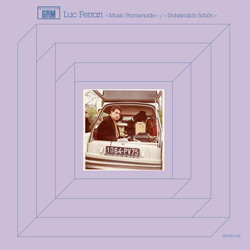
L’Ombre du Pont spans more than twenty-five years of work by Elsa Justel, from a 1995-96 miniature made in Paris to pieces realized in her studio in Mar del Plata between 2011 and 2021. Several are in eight channels, heard here in stereo. A thread runs through the album: six of the eleven pieces are tributes to other composers, each made with sounds borrowed from the dedicatee’s own music.
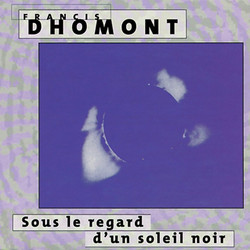
Casi nada uses sounds of Luc Ferrari supplied by the Association Presque rien and received a mention at the 2011 Prix biennal Presque rien. P-corde alludes to the strings of Bernard Parmegiani’s Violostries, a work Justel says shaped her calling as a composer. L’expérience caustique plays on the title of François Bayle’s L’expérience acoustique, C’est lui borrows images from Francis Dhomont’s Sous le regard d’un soleil noir, Wessen is a birthday gift made of fragments by Beatriz Ferreyra, and L’espace re-figuré 2 reworks material from Annette Vande Gorne’s Figures d’espace.
The other pieces go elsewhere. Déjà vu was written in COVID isolation, playing with objects and the old rebound effect. Ce monde et ailleurs, commissioned by the French State and dedicated to Roger Cochini, who recorded the voices, moves from humanity’s first babblings to a crowded, numbing media soundscape. Diálogo con Ana trades improvisations with the pianist Ana Foutel, and Pieza en forma de té, made at the Métamorphoses d’Orphée studio in Ohain in 1999, was her first eight-channel composition.
Born in Mar del Plata in 1944, Elsa Justel studied electroacoustic music in Buenos Aires with José Maranzano and Francisco Kröpfl, moved to France in 1988 and took a doctorate at Paris VIII under Horacio Vaggione. Her music has won prizes at Bourges, Ars Electronica and the Prix Ton-Bruynèl, and she also works in videomusic.
CD-R edition in OGpak, empreintes DIGITALes IMED 24193, 2024.
Third collection of music on this label from this Argentinean composer, following on from 2019’s Yegl, and this one surveys her works from 1995 up to 2020. Although she began her studies in Rosario and Buenos Aires, she also served her time in France with Horacio Vaggione in 1988, and had a teaching role there (as well as academies in her home country and in Spain).
Many of these eleven compositions are tributes or “hommages” to some of the big Kahunas in this field — perhaps they are personal friends, or have acted as mentors to Justel — including Bayle, Parmegiani, Ferreyra, Ferrari, and other names such as Gonzalo Biffarella and Annette Vande Gorne. It’s good to see this personal and friendly dimension, reaching out to her fellow composers instead of seeing them as competitors, and the listener will be glad to hear she’s not producing pastiches or slavish copies of their techniques. Indeed one of the pieces Dialogo con Ana is explicitly structured as a musical conversation, produced by swapping tape recordings with the improvising pianist Ana Foutel. Elsewhere, we see evidence of more familiar concerns that thrive in this genre, such as taking the listener into “virtual and imaginary worlds”, and reworking tapes from the archives of GMEB and GES Vierzon in France.
Elsa Justel may, for me, lean a little too heavily on the formal practices and techniques of tape composition, but who can resist a composer who describes one of her earliest pieces as “brown and liquid like tea,” a 10-minute piece full of “blurry” and “dripping” textures. Such phrases have an immediacy and idiosyncrasy that is just priceless.
In den kommenden Tagen erscheint das dritte Soloalbum der argentinischen Komponistin, Dirigentin und Musikpädagogin Elsa Justel auf empreintes DIGITALes. L’ombre du pont — dt. “Der Schatten der Brücke” — enthält vier längere Arbeiten sowie eine Reihe an sieben kürzeren musikalischem Hommages an die Komponistinnen und Komponisten François Bayle, Roger Cochini, Francis Dhomont, Luc Ferrari, Beatriz Ferreyra, Bernard Parmegiani und Annette Vande Gorne, die in ihrem vielgestaltigen Ideenreichtum einen nicht selten humorvoll-verspielten Zug offenbaren.
On this new collection of work spanning 1995-2021 veteran Argentine electroacoustic composer Elsa Justel reveals a deep engagement with that sonic medium. Most of these detail-rich works either salute or draw from the work of some of the most important figures from the sprawling world of musique concrète. Opening piece Déjà vu was composed in isolation during the pandemic, which led Justel to revisit some vintage techniques. As she writes in her liner notes, “nothing new, just some wilted materials that keep on reappearing, entwined in a vicious cobweb.” Casi nada repurposes sounds from Luc Ferrari, and L’espace re-figuré 2 does something similar with materials from Annette Vande Gorne. Wessen appropriates elements of work by fellow Argentine composer Beatriz Ferreyra. Other works invoke Bernard Parmegiani, Francis Dhomont, and François Bayle. Despite these allusions and tributes, Justel makes these gestures using her own structural ideas, abstracting previous work into sonic raw material without losing a sense of its origin. On the other hand, Diálogo con Ana is a direct collaboration with pianist Ana Foutel, developed in a back-and-forth process of improvisation, where brittle, prepared piano splatters mesh with crystalline electronic simulations and refractions. All of the works are marked by a hazy narrative thread, as each deeply tactile, evocative section unfolds into some new environment with transitions both unexpected and logical.
Deze maand kwamen er weer twee nieuwe albums uit bij Empreites DIGITALes. De Engelse componiste Manuella Blackburn bracht een vijftal opvallend gevarieerde, vrij recente stukken bij elkaar op Interruptions, dicht blijvend bij het aloude musique concrète en de Argentijnse Elsa Justel, die verder studeerde in Frankrijk en Spanje, bracht een Cd uit, L’ombre du pont, met een aantal vrij korte stukken, ontstaan tussen 1999 en 2021 en zo dus ook een mooi overzicht biedend van haar œuvre. Beide componisten kozen voor acousmatische composities.
Over het eerste stuk Home Truths zegt Blackburn: “Interruptions dominate this composition, acting as pauses, abruptstops, moments cut short and held breaths. These moments represent the many interruptions experienced in my daily life, in work, activities and composing. Interruptions are temporal states where continuity is ceased but then resumed or returned to after the interrupting event is over”. Gezien de titel van dit album en na beluisteren van de overige stukken, zou ik willen stellen dat deze opmerking eigenlijk geldt voor alle vijf de stukken. We horen eenzelfde wijze van werken dus ook in Microplastics, dat volledig is opgebouwd uit geluiden die zijn gemaakt met plastic producten en waarmee Blackburn ons ook bewust wil maken van het afvalprobleem als het om plastic gaat. Voor Farewell Fairlight gebruikte Blackburn geluiden van de Fairlight CMI, een vroege digitale synthesizer van half jaren ’70. Het is even zoeken, maar wie goed luistert hoort klanken die we ook kennen van de popmuziek uit die jaren. Zeer origineel vind ik Cupboard Love. Het stuk “explores the memories found in cupboards, drawers and cabinets. Scraps of paper, photographs and mementos come to life through sonic snapshots of earlier times. Opening and closing cupboards offers an inviting gesture to enter new sonic worlds”.
De opener van L’ombre du pont is getiteld Déjà vu. Justel schreef het tijdens Covid-19: “I decided to have some fun and use various objects to play around with old clichés, especially the classic rebound effect.” Met Ce monde et ailleurs laat Justel haar maatschappelijk bewustzijn spreken door stil te staan bij niet minder dan de geschiedenis van de mensheid: “I attempted to illustrate the sonic diversity and density we live in with, for good measure, a few referential notes (call it sarcastichumour) thrown in and a blank moment to picture an uncertain future”. Dat levert een spannend klankcollage op, met stemopnames, ruis en een grote diversiteit aan onverwachte geluiden. Soms lenen deze componisten ook van elkaar, zo gebruikte Justel voor Casi nada geluiden van Luc Ferrari. De gebruikte geluiden bij dit soort componisten wekken soms ronduit verbazing of toveren een glimlach tevoorschijn. Ik had dat bijvoorbeeld sterk bij het beluisteren van Haricots et petits bâtons. Ook in Wessen leent Justel geluiden, nu van haar vakgenote Beatriz Ferreyra, ook hier levert het weer een wonderlijk klankcollage op. Justel brengt meer hommages aan belangrijke componisten in dit genre. L’expérience caustique, uit 2012, droeg ze op aan François Bayle, C’est lui, uit 2006, aan Francis Dhomont en P-corde, van een jaar later, aan Bernard Parmegiani. Over dat laatste stuk zegt ze: “I wanted, with this piece, to pay tribute to a composer who managed to weave an incredibly subtle sonic fabric at a time when no one could imagine that the computer would one day become a musical instrument”. Mooi hoe ze hier het pizzicato geluid van een viool op allerlei manieren hergebruikt. Iets soortgelijks doet Justel in Diálogo con Ana, maar nu met de piano, we horen zowel de toetsen als de snaren.
Der 80. Geburtstag von Elsa Justel, der argentinischen Veteranin neuer Klangtechniken und Klangformen, wird markiert mit L’ombre du pont. Die Party gestaltet sie mit ihren Hommagen an Roger Cochini, Luc Ferrari, Beatriz Ferreyra, refigurativ an Annette Vande Gorne, mit P-corde an Bernard Parmegiani s Violostries, mit L’expérience caustique an François Bayle s L’expérience acoustique und mit C’est lui an Francis Dhomont s Sous le regard d’un soleil noir. Elektroakustische Olympier und ihre Hinkelsteine. Diálogo con Ana ist ein Zwiegespräch mit der Pianistin Ana Foutel, Pieza en forma de té klingt, als wäre Tee ein Ersatzbegriff, u. a. für etwas, das man zu Didgeridoo schnüffelt. All das in der Spannung virtueller, abstrakter, imaginärer Welten mit so manchem Déjà vu, mit Anekdoten und alten Klischees — Kaskaden von hoppelnden Pingpongbällen, eiernden Münzen, Paukenschlägen, Cut-up von Stimmen, Kriegslärm aus dem Kino, Musik aus Konzert, Oper, Film, Stripsodies aus Klangsplittern und Noise-bröseln. Was ist da — mit böser Bassal-Zunge gelästert — Selbstgefälligkeit in Form von lauwarmen Scherzen, was abgedroschene Inzucht? Was kindsköpfische — aber eigentlich doch beneidenswerte — Verspieltheit bis ins hohe Alter? Justels Faible für Wortspielerei und sarkastischen Humor macht jedenfalls nicht vor der Klangebene Halt.
Elsa Justel’s L’ombre du pont (“The Shadow of the Bridge”) is a bridge in its own right — a sonorous structure linking past to present, abstraction to homage, and chaos to crystalline clarity. In her third solo album, the Argentine-born, France-based composer masterfully merges acousmatic abstraction with heartfelt tributes to some of the most revered figures in the world of electroacoustic music.
Opening with the aptly titled Déjà vu, Justel seems to tease the listener with the sensation of having been here before, only to pull the rug out with unpredictable sonic twists. It’s a journey through shadowy terrains, where familiar echoes transform into alien whispers, a reminder that nothing under this bridge is quite as it seems.
The four “abstract” pieces in the album are anything but opaque — they are luminous fragments of sound, meticulously arranged. Ce monde et ailleurs (“This World and Elsewhere”) feels like an existential question posed in frequencies and textures, while Casi nada (“Almost Nothing”), a tribute to Luc Ferrari, revels in its understated brilliance, creating an expansive universe from a seemingly minimal palette.
Then comes L’ombre du pont’s heart: a series of seven short tributes to giants of the electroacoustic genre. These aren’t mere imitations or pastiches; they are love letters penned in Justel’s unique voice. Haricots et petits bâtons (“Beans and Little Sticks”) is playful and whimsical, like a child’s drawing turned into sound. Wessen (“Whose”) honoring Beatriz Ferreyra, feels like a spirited conversation between the past and the present, where Justel’s voice harmonizes beautifully with Ferreyra’s legacy.
Pieza en forma de té (“Piece in the Shape of Tea”) is steeped in quiet reflection, as if savoring an aromatic cup while contemplating life’s fleeting moments. In contrast, L’expérience caustique (“The Caustic Experience”) channels François Bayle with sharp, sizzling bursts of sound that crackle like an electrical storm.
Justel’s deep roots in both Argentina and France shine through the album’s textures. Her profound academic background — studying under luminaries such as Horacio Vaggione — blends seamlessly with her knack for transforming the everyday into the extraordinary. These tracks are not merely compositions but sensory experiences, each one as tactile as it is audible.
The album’s closer, C’est lui (“It’s Him”) — an hommage to Francis Dhomont —, feels like a final tip of the hat — a playful yet poignant punctuation to a collection that oscillates between reverence and innovation.
L’ombre du pont sounds like an auditory memoir. Justel captures both her own voice and the echoes of the composers who have inspired her. It’s a sonic kaleidoscope — each twist revealing new patterns, all held together by the steady hand of a composer who knows how to make the invisible bridge between sound and meaning tangible.
In the shadow of this bridge, you’ll find beauty, wit, and a generous dash of mystery. Whether you’re a seasoned aficionado of acousmatic music or a curious newcomer, L’ombre du pont invites you to pause, listen, and marvel at what lies beneath and beyond.
Join us by becoming a Soundohm member. Members receive a 10% discount and Free Shipping Worldwide, periodic special promotions and free items.
Apply hereSoundohm is an international online mailorder that maintains a large inventory of several thousands of titles, specialized in Electronic/Avantgarde music and Sound Art. In our easy-to-navigate website it is possible to find the latest editions and the reissues, highly collectible original items, and in addition rare, out-of-print and sometime impossible-to-find artists’ records, multiples and limited gallery editions. The website is designed to offer cross references and additional information on each title, as well as sound clips to appreciate the music before buying it.
Soundohm is a trademark of Nube S.r.l.