Séquences et Tropes collects four works of between 14 and 22 minutes that Adrian Moore composed between 2012 and 2014, partly during residencies at the Visby International Centre for Composers on Gotland and partly in his studio in Sheffield. Three were conceived for 5.1 or 7.1 surround and are heard here in stereo. They also extend ideas from his textbook Sonic Art: an introduction to electroacoustic music, in particular how gesture and texture shape structure.
The Battle, dedicated to his mother “and her fighting spirit”, began as abstract material and only later suggested its title: attacks, feints, phalanx movements and close combat in a misty medieval field. It received a mention at Métamorphoses 2014. Counterattack follows it in 7.1, using the multichannel space to give different sounds their own loudspeakers and build a polyphony of sources; Moore read Sun Tzu and Clausewitz while composing, and the piece won the prize at Música Viva in Lisbon in 2015.
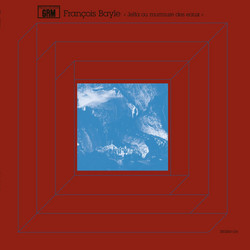
Nebula Sequence started on 30 November 2011, the first day Moore went on strike, when he took his recorder along. Its secondary sources pay homage to composers he admires: stones and bricks after Jonty Harrison and Alistair MacDonald, ball bearings after François Bayle’s Tremblement de terre très doux, a closing dissolve that recalls Andrew Lewis’s Scherzo. Strings and Tropes studies plucked and scraped strings through time stretching first used at Wet Sounds in Glasgow, with pitch centres taken from samples by the zheng player Sun Zhuo of a melody by Qu Yun.
Born in Nottingham in 1969, Adrian Moore discovered electroacoustic music at a concert by Denis Smalley, studied at City University in London and with Harrison in Birmingham, composing for BEAST. He directs the University of Sheffield Sound Studios.
CD in OGpak, empreintes DIGITALes IMED 15135, 2015.