Mistpouffers gathers three works that eRikm realized in his studio in Marseille between 2013 and 2016, two of them for eight channels, all mastered with Giuseppe Ielasi in Vimercate at the end of 2016. Each starts from a real place: an Icelandic landscape, a Berlin street, a hillside near Marseille. The booklet adds a long essay by the psychiatrist Georges Yoram Federmann, who hears in these pieces volcanos, burning forests and fireworks, and links them to the Malgré-nous, men forcibly drafted into the German army whom he examined for twenty-five years.
Draugalimur (Phantom Limb) was commissioned by the French State and the Ina-GRM and premiered in the Multiphonies series in Paris in 2015. It grew from a trip to Iceland that began at the Dettifoss falls, with ice breaking, the interiors of ruined cod liver oil tanks and old whaling quays, and an Icelandic tale, Móðir mín, í kví, kví, told to the composer by the visual artist Haraldur Jónsson, who also lends his voice with Dominique Poulain.
Poudre, commissioned by L’audible festival in 2013, comes from New Year’s Eve on the Eberswalder Straße in Berlin, where everyone sets off fireworks outside their building, a noise the composer reads as half carnival, half insurrection. L’aire de la Moure 2, revised in 2015-16 from a 2013 piece for Marseille-Provence 2013, portrays a patch of the massif repeatedly bombed with red fire retardant by Canadair planes, with a text by Paul Éluard read by Natacha Muslera and eRikm. It is dedicated to Jean Paul Barde.
Born in Mulhouse in 1970 and based in Marseille, eRikm is an improviser, composer and visual artist who began as a guitarist and was recognised as a turntablist and sound artist from 1996. He has worked with Luc Ferrari, Christian Marclay, Mathilde Monnier, FM Einheit and Les Percussions de Strasbourg.
CD in OGpak, empreintes DIGITALes IMED 18151, 2018.
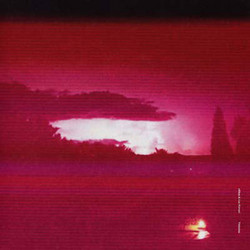
Nell’esperienza elettroacustica strettamente legata alle commissioni trattate all’INA-GRM o di quelle ricevute da festivals specializzati del settore, eRikm mette in risalto in maniera spettacolare quel sottile filo subliminale che lega l’argomento alla musica, come veicolo perfetto della trasmissione sensoria. In Mistpouffers, cd pubblicato dall’empreintes DIGITALes, si raggruppano tre composizioni dichiaratamente schierate a favore della riflessione umana e civile: è un condensato di storie, natura e problematica sociali infuse che hanno un collegamento nell’esperienza di suoni articolati e variamente intesi, recuperati nel cervello dell’autore; in Draugalimur è la storia di La géante dans la barque de pierre, un racconto tradizionale islandese dedicato alla leggenda di un troll marino, che prende banco sotto forma di suoni estratti dalla natura; gli effetti sonori dei rompighiaccio, dell’acustica potente dei serbatoi di stoccaggio del pesce che sembrano riprodurre temporali, i sottili e perturbati campionamenti di suoni o voci ansiose, sono tutti elementi utilizzati per sostenere un tessuto mitico e drammatico allo stesso tempo, che riflette il carattere della storia raccontata, dove il troll insidia una regina in viaggio di ritorno a casa con la sua famiglia, in una barca che presto diventerà sede del suo incantesimo (vedi qui la storia); questa psicologica qualità dei suoni si ripresenta in Poudre, che effettua una riflessione implicita scandita dai botti di fine anno registrati nella Alexanderplatz: l’architettura sonora è perfettamente calibrata in un ristagno della memoria aurale che da una parte ci invita all’insofferenza verso suoni eccessivi nel loro timbro e nella loro successione (specie se alziamo il volume a decibel sostenuti), dall’altra può essere indicatori di sintesi di un fenomeno biologico presente nella natura umana, stanca di frustrazioni e vessazioni dirette o indirette, un modo di immaginare l’animo sotto una pioggia di spari e di polvere coordinata; in L’aire de la Moure 2 ci si sposta invece sulle rappresentazioni di quell’immagine di roccia rossastra che appare in copertina: la Moure è sostanzialmente una zona montagnosa inaccessibile che è stata presa in considerazione dallo stato francese per le esercitazioni dei vigili del fuoco durante gli incendi e prende quel colore dal fatto che regolarmente vengono lanciati dall’alto sostanze chimiche che favoriscono lo spegnimento dei fuochi; musicalmente è una sequela premonitrice, ancora con duplice narrazione su testo di Paul Eluard, rivelato da eRikm in À la flamme des fouets: la mancanza di amore che attanagliava il poeta francese è la similitudine trovata nel pezzo per esprimere la stessa mancanza nei confronti della Moure e del bisogno, certamente eludibile, di dover istruire campi di esercitazione per eventi che purtroppo vengono spesso originati proprio dalla mano umana; l’artificio sonoro qui consiste in un campo sonoro che tiene dentro plurimi richiami, dall’ambiente che si confronta nei dintorni della montagna (uccelli, amplificazione dell’emissione sonora della natura così come si presenta alla registrazione, organizzate, pesanti granulazioni e suoni campali).
In Mistpouffers c’è una straordinaria sensazione che si avverte allo scadere dell’ultimo suono udito, dell’ultima esortazione vocale, qualcosa che sa di liberazione da un assedio ma che è allo stesso tempo un potente filtro di giudizio dell’attualità. Posso garantire che le orecchie fini saranno molto attratte, poiché senza capir perché, si ritorna spesso sui percorsi di Mistpouffers.
Mistpouffers is a selection of three compositions completed between 2014-16, composed by French artist and improviser eRikm. Each piece runs approximately 17-18 minutes in length with two based on 8-channel fixed medium and one in stereo. Opening with Draugalimur where, poof like smoke, the setting is a quiet distant storm, some electronic squiggles and free-floating static. This is eRikm working in an atmosphere where a pin could be heard dropping, that is until a narrator like a public radio host, in French, reads from a text. The wind howls and electro-waves are emitted. While listening I gaze upon the cover image of a cliffside that starts to resemble a human skull. No you are not seeing things, like a mirage — it’s an in-situ illusion, only emphasized by a military jet flying past, from ear to ear as someone gasps for air. This dichotomy between air space and breathlessness is likely key to the narrative. The eerie unexpectedness here is quite palpable.
Sonic boom? By occupying the space with layered field recordings, simple thing like chewing, and rummaging — with a silky drone and changing percussive parameters eRikm has developed a psycho-social space that is as inventive as it is cinematic. The whispers, the hive drone, the bouncing punctuation, all make his acoustic theatrics rife for live presentation, and perfect for visual listeners. Moving on to Poudre, which opens in darkness to creaking of chairs, or perhaps thunderclap or is it fireworks, or gunfire? The question mark here is the tension. With even the slight laughter heard int he mostly engaged crowd scene it would be menacing one way, and exhilarating another. But it seems to walk that fine line. The title translates to powder (and in gun powder) and this work does seem to float on air with the spirit of a nighttime curfew. It’s singular shots are disarming so to speak — “the bombs bursting in air” and so on. In wartime these echoes have a cerebral resonance that is unmistakable.
Just after midpoint this layered field recording sounds like either a grande finale or a full-on battle. It’s actually quite disturbing, it’s chaotic imprint, relentless. At one point it’s literally just a wash of savage white noise. But the reverie switches up its candor on L’aire de la Moure 2. There are shadows of a dark kingdom interrupted by a happily chirping winged beast. The intermittent grey drone casts and draws as these treated bird samples are deployed like abstract illusions. eRikm has concocted a blend of granular electronics, a female narrator and low flying planes that zoom from air shot. The tingling microsound invades as though it’s evaporating over the spoken word.
It’s an atonal radio play that seems to be collecting data in a laboratory. Small actions like pulling a topper from a cask, as well as elongated high tones create a focused format for deep listening — all ears on the speaker, and though I do not speak much français my ears can translate this as a scanner of the mind. Static like fire, and a series of slingshot thwapping are a peculiar combination alongside a deep bird caw. With so many constant variables you’d think this recording would be a schizo delusion but it’s not at all, it keeps your minds ear constantly pricked within this composer’s cosmic adventure.
[…] Of course eRikm, as he loves to spell his name, is someone who is no stranger to these pages, ever since he first surfaced as a turntablist in the mid 90s. He works as an improviser, expanded to using vinyl, CD, mini discs and finds his own narrative, which is not unlike that of say Luc Ferrari. A particular highlight was his LP L’Art de la fuite (Vital Weekly 1000), even when that was an earlier work. The three pieces here deal with the past, his own past, in Switzerland, which he calls ‘his other homeland’, but also using a traditional Icelandic text in the first piece Draugalimur, meaning ‘phantom limb’. In that piece eRikm combines field recordings with text and with some instrumental sounds, while in Poudre he uses many recordings of new year’s fireworks in Berlin, with it’s many reflections of the buildings and perhaps also from history. In the third piece, L’aire de la Moure 2 there is also a text, by Paul Eluard and I must admit reading the description didn’t make things clearer for me. Here there are quite a few field recordings, mainly birds I believe, along with insects and wind, with what seems to me a minimum of processing here and there, but not a lot, or at least: not throughout the entirety of the piece. eRikm doesn’t follow Ferrari’s more linear approach to the use of field recordings but it seems to me it is all bit more of an anarchist approach; see where sounds fit and then use them accordingly, which I would think is the best approach. This too is not really the sort of things one expected from Empreintes Digitales, and for instance more at home on Gruenrekorder, but here too I thought the label does a smart move and venture into something new. In the past I may have been a bit (too) sceptical, but with these two the label is back on track. For eRikm I would say this is another highlight.
Musicien et plasticien originaire de Marseille, eRikm propose trois titres qui nous entrainent dans des espaces où la plasticité de l’espace, puise ses ressources dans le field recording et l’imaginaire, dans l’enfance et la géographie, la pensée et la sensibilité, l’urbanisme et la science-fiction.
Mistpouffers circule entre nos oreilles avec une fluidité qui nous fait presque oublié que nous sommes les auditeurs de cette œuvre, captivé que l’on est par ces enchainements de sons enregistrés et assemblés, qui prennent le temps de nous transporter sur des sillons bousculés par le vent et secoués par les feux d’artifices, réchauffés par les voix et oubliés dans l’immensité du monde.
eRikm alterne les ambiances tout en respectant une certaine ligne directrice, qui voit les objets prendre des allures poétiques, enfantant d’instants de suspension troublés par les mots et les bruissements d’existences multiples, aux formes mutantes. Voyageur.
Die Mistpouffers (empreintes DIGITALes) des Franzosen eRikm stammen aus der gleichen Gegend, spezifisch aus Island. Der englische Begriff „Mistpouffer“ bezeichnet physikalisch nicht vollständig erklärbare Klangereignisse, die an manchen Meeresküsten beobachtet werden, etwa Donnergrollen bei Sonnenschein. Die drei Soundscapes des gleichnamigen Albums geben sich ähnlich wettergegerbt, geheimnisvoll und verschlossen, obwohl ihre Quellen komplett offengelegt werden.
Mistpouffers, appena uscita per Empreintes Digitales, è la raccolta di tre composizioni realizzate tra il 2014 e il 2016 dall’artista e improvvisatore francese eRikm. I tre pezzi durano quasi venti minuti ciascuno e sono, in qualche modo, collegati da una sorta di filo narrativo che crea un ideale legame al netto della tripartizione. Draugalimur si apre fra suoni rarefatti e tuoni sempre più forti, che segnalano l’approssimarsi di una tempesta, mentre l’elettronica di base scorre lieve e rarefatta. Suoni di passi e voci sussurrate, in un sottofondo temporalesco, suggeriscono un immaginario quasi cinematografico e un senso di pathos che permea tutto il brano, chiuso poi da una chitarra scordata e da qualche morbida nota di piano che pare stemperare la tensione. Poudre torna nella tempesta e poi vira verso fuochi artificiali, con annessi urla e applausi di approvazione da parte della folla, cambiando anche nettamente l’umore del disco. L’Aire de la moure 2 sembra riportare la calma, in quasi venti minuti di suoni più piatti, scheletriche conversazioni fra una voce maschile e una femminile e qualche sporadico suono naturale, soprattutto animalesco, che contribuisce a tenere viva l’idea di una narrazione cinematografica più che di un album musicale in sé. La forza di Mistpouffers sta proprio nella sua capacità di raccontare qualcosa che, evidentemente, non è neanche scritto e definito, alimentando l’immaginazione e permettendo interpretazioni soggettive.
French improviser and composer eRikm is one of the few artists whose work has been a consistent element in my journey into experimental music. His collaborative CD with Jérôme Noetinger, What a Wonderful World, was one of the first Erstwhile releases I heard and introduced me to the field of electroacoustic improvisation, and Zygosis made me realize the power of the turntable as an instrument in an avant-garde context. Mistpouffers, consistent with Empreintes Digitales’ focus on acousmatic music, collects three pieces that were composed and arranged from 2013 to 2016. Draugalimur, commissioned by the French music office, incorporates several spoken word segments within its immersive ambient soundscapes, including excerpts from traditional Icelandic folk writings. Poudre and L’aire de la Moure 2 are both explorations into a very physical stereo space; the former’s treated recordings of firework explosions and the latter’s electric whirring and airplane engines are equally breathtaking.
Érik Mathon bekannt als eRikm und z.B. Michel Doneda, dieb13, Fennesz, Martin Tétreault, Otomo Yoshihide, Jérôme Noetinger, Catherine Jauniaux oder Norbert Möslang, das geht und gehört seit 20 Jahren zusammen. Dagegen verwundert es ein bisschen, den 1970 in Mulhouse geborenen Impro-Turntablisten mit Mistpouffers (IMED 18151) unter den Akademisch-Etablierten eingereiht zu finden. Aber waren da nicht auch schon Luc Ferrari, Donaueschingen oder Les Percussions De Strasbourg? In BA sind High & Low freilich selbstverständliche Bettgenossen. Doch das sind Nebensächlichkeiten, wenn sich eRikm von Georges Yoram Federmann zu den ‘Malgré-nous’ de l’histoire zählen lässt. Federmann ist ein französischer Psychiater, der mit ‘Judenhut’ Position bezieht. Im Menachem-TaffelKreis bemüht er sich um die Erinnerung an die 86 für die grausige ‘Straßburger Schädelsammlung’ ermordeten Juden, machte zuerst aber von sich reden, dass er sich um kriegsinvalide Malgré-nous kümmerte. Das waren jene etwa 130.000 ‘wider Willen’ zur Wehrmacht und SS zwangsrekrutierten Elsässer und Lothringer, die nach dem Krieg als Verräter und Kollaborateure in Frankreich verschrien waren und erst 2010 rehabilitiert wurden. Das erscheint mir als doch bemerkenswerte Hinführung auf Draugalimur. Dazu wurde eRikm angeregt durch den Schauplatz des Prologs von Ridley Scotts “Prometheus”, dem DettifossWasserfall in Island, und durch ‘Móðir mín í kví kví’, ein isländisches Wiegenlied, aus dem die Untertöne eines Kindesmordes verdrängt wurden. Er lässt, zu gesprochenen Zeilen des Liedes, im Klang von berstendem Eis und Getrommel auf aufgelassenen Lebertrantanks Naturgeräusche und Menschennot, schmerzliche Beklemmung und musikalische Verzauberung sich im Imaginären kreuzen. Poudre geht aus dem eskalierenden Böllern und Prasseln eines Silvesterfeuerwerks in Berlin hervor. Da rührt auch der flämische Ausdruck ‘Mistpouffers’ her, der für sich selber spricht. Der Elsässer hört dabei im exaltierten Krawall den möglichen Umschlag in zerstörerische Ausschreitungen. Und gedankenspielt mit W. S. Burroughs’ Idee, eine frustrierte Menge mit der Rückkopplung ihres eigenen Krachs zu irritieren und zu attackieren. Bei L’aire de la Moure 2 schließlich hat er ein blutig verfärbtes Felsplateau nordöstlich von Marseilles vor Augen, das als Übungsgelände dient für das Löschen von Waldbränden aus der Luft. Daher das Rot, durch das die Felsen an den Uluru der Aborigines erinnern. Dazu verbindet eRikm Bruce Chatwins “Traumpfade”, Paul Virilios Dromologie und, aus dem Mund von Natacha Muslera, Paul Éluards ‘À la flamme des fouets’ mit seinem alten Kindheitswunsch, fliegen zu können, den er symbolisch realisiert mit Worten, Bildern und Klängen: tickenden, schreitenden, peitschenden Lauten, Wind und Wasser, rauen Vogelstimmen, rhythmischem Wummern, brausenden Flugzeugen. Métal qui nuit, métal de jour, étoile au nid…
French musician eRikm has certainly moved far beyond being simply labelled as a “turntabler”. We heard one of his serious compositions Doubse hysterie in 2016, released on Monotype Records; now here are three recent-ish works, published on the Canadian electroacoustic label empreintes DIGITALes. Of these, Draugalimur scores high for ambition, criss-crossing themes of fantasy story-telling, epic science fiction cinema, and landscape audio-painting of the wilds of Iceland, all the above underpinned with whispered texts drawn from traditional Nordic sagas. Erik’s aiming for a huge sense of scale, a panorama that can include old whale-slaughtering quays in its sweep, yet he never loses sight of the tiny details that give it all substance. Despite the rather grim tone, this piece does indeed convey the intended “journey” sensations that are the goal of so many composers in this area.
Poudre contains field recordings of fireworks, a topic which has been used by so many phonographers in the past I often wonder what mileage is left in it. 17 minutes of explosions, treated with studio processing, are combined with the happy whoops of Berliners who set off fireworks on New Year’s Eve; eRikm takes a pessimistic quasi-philosophical view of the entire episode, and sees it all as an indicator of alienation in society. Not much listening pleasure in the piece either.
More successful, and another with grand ambitions, is L’aire de la Moure 2, another semi-fantastic piece that combines a survey of an area of natural beauty with dreams of flying. The area in question may be in Australia, since he refers in his notes to the sacred rock of Uluru (more popularly known as Ayers Rock). The site may be under threat in some way; there are vague allusions to risk management and natural disasters, but clearly the monumental scale of the place has stirred the composer’s imagination. He drew further textual ideas from Bruce Chatwin, Paul Virilio, and the writings of Paul Eluard, and his own childhood dreams of flight. A heady mix, then, of fantasy, dreams, sacred sites, and even magic — all bubbling away in the forge of his imagination. The extremely dynamic and textural electroacoustic sheets of sound are mixed with planes flying overhead, and texts in French read by insistent male and female voices. L’aire de la Moure 2 thus succeeds in connecting with the “greats” of musique concrète composition, with its strong resemblance to works by Parmegiani, Luc Ferrari, and Pierre Henry.
A fairly ponderous release, with its weighty ideas embedded in the music and the printed text, but a solid and rewarding listen.
Join us by becoming a Soundohm member. Members receive a 10% discount and Free Shipping Worldwide, periodic special promotions and free items.
Apply hereSoundohm is an international online mailorder that maintains a large inventory of several thousands of titles, specialized in Electronic/Avantgarde music and Sound Art. In our easy-to-navigate website it is possible to find the latest editions and the reissues, highly collectible original items, and in addition rare, out-of-print and sometime impossible-to-find artists’ records, multiples and limited gallery editions. The website is designed to offer cross references and additional information on each title, as well as sound clips to appreciate the music before buying it.
Soundohm is a trademark of Nube S.r.l.