We use cookies on our website to provide you with the best experience. Most of these are essential and already present.
We do require your explicit consent to save your cart and browsing history between visits. Read about cookies we use here.
Your cart and preferences will not be saved if you leave the site.
play

David Berezan

Cycle Nautique

Label: empreintes DIGITALes

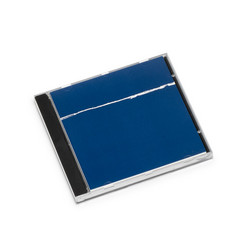
Format: CD

Genre: Electronic

In process of stocking

€11.80
VAT exempt
+
-
David Berezan’s Nautical Cycle, five multichannel acousmatic pieces from 2011 to 2017 built from sea buoys, unmanned light vessels, mooring chains in Visby harbour and the bass clarinet of Marij van Gorkom, including the Klang ! first prize winner Lightvessels.

Cycle Nautique presents the Nautical Cycle, five acousmatic works that David Berezan composed between 2011 and 2017 for 5.1 or four channels, heard here in stereo. Most were made during residencies at the Visby International Centre for Composers and at EMS in Stockholm, and in the studios of The University of Manchester, and all take their sounds and themes from the sea and from navigation.

Buoy (2011), the earliest, is built on the bells, gongs and whistles of sea buoys set off by the waves, with pulsing, droning pitches that allude to their transmitted signals; it won a prize at Música Viva 2012 in Portugal. Lightvessels (2014) portrays the unmanned ships moored at sea as floating lighthouses, fog horns and weather stations, inside and outside the hull, and took first prize at the Klang ! competition in Montpellier in 2015. Moorings (2014) uses only sounds recorded in Visby harbour, mooring rings, hawsers, chains, hulls against dock bumpers and water under the berths, with recording help from Manuella Blackburn.

Starboard (2015), a finalist at Musica Nova 2015, turns ideas of current, resistance and transmission into a language that touches ambient, noise, electronica and melody. Offshore (2017) is the exception: it is built entirely from bass clarinet improvisations by Marij van Gorkom, many of them on the detached mouthpiece, transformed into impressions of distant vessels and ocean textures.

Born in Edmonton in 1967, Berezan studied history and composition in Calgary and Edmonton before a PhD in electroacoustic composition at the University of Birmingham in 2003. He is Professor of Electroacoustic Music Composition at The University of Manchester, where he directs the studios and the MANTIS diffusion system.

CD in OGpak, empreintes DIGITALes IMED 18154, 2018.
Details
Cat. number: IMED 18154

Year: 2018
A special ending to an intriguing album.Read more

In de wereld van de elektro-akoestische muziek is het Canadese label empreintes DIGITAles een begrip. Tijd dus om een aantal albums die hier onlangs verschenen de komende dagen onder de loep te nemen. Te beginnen met Cycle nautique van de Canadese componist David Berezan, tevens directeur van de Electroacoustic Music Studios in Manchester en Senior Lecturer in Electroacoustic Music aan de University of Manchester.

Tevens is hij de oprichter van MANTIS (Manchester Theatre in Sound) met als doel om de uitvoeringspraktijk van elektro-akoestische muziek mogelijk te maken. Ook hier gaat dat gepaard met het opstellen van een relatief grote hoeveelheid luidsprekers om een breed klankpalet te creëren. We zien dit bijvoorbeeld ook terug in het door Francois Bayle ontworpen Acousmonium, waar ik eerder over schreef naar aanleiding van het FAQ Festival 2016, dat deels was geweid aan de elektro-akoestische muziek. Kenmerkend voor deze componisten, die hun werk bij empreintes DIGITAles uitbrengen is dat het hier in alle gevallen gaat om gecomponeerde muziek, ontstaan in de studio en niet om improvisatie, zoals we dat bij elektronische muziek eveneens vaak tegenkomen. En dat deze wortelt in de Musique concrète, waarin alledaagse geluiden in de vorm van samples de basis vormen van een compositie.

Alle vijf de stukken op dit album van Berezan, die samen de Cycle nautique vormen, voldoen aan deze definitie. En aangezien voor dit album, zoals de titel reeds aangeeft, Berezan zijn inspiratie haalde uit de maritieme wereld, horen we hier een uitgebreid scala aan geluiden die daarin hun basis vinden. Zo verwijst Lightvessels naar de lichtbakens die op zee schepen de weg wijzen en dienen als radio- en weerstation. Als basis gebruikt Berezan hier langgerekte geluiden, regelmatig klinkend als een duistere mist, die hij aanvult met knarsende, piepende en tikkende geluiden, soms net morsetekens en met het geluid van de golven tot een boeiend, overtuigend en zeer spannend geheel. Voor Moorings gebruikt Berezan de geluiden van scheepstrossen, knarsende touwen, de scheepsromp die langs een boeg wrijft en de krijsende meeuwen en distilleert ook hier een nieuw verhaal uit.

Het kwaliteitscriterium voor dit soort composities ligt duidelijk niet bij het basismateriaal. Berezan ontleent ze hier aan de maritieme wereld, maar had net zo goed een andere basis kunnen nemen. Waar het veeleer om draait is wat je als componist uiteindelijk doet met deze geluiden, hoe verwerk je deze tot een nieuw en coherent geheel. Daarin zit er inderdaad weinig verschil met de componist die akoestische instrumenten inzet om zijn verhaal te vertellen. Berezan slaagt er beslist in om dit basismateriaal effectief in te zetten en het beste voorbeeld daarvan is wellicht Offshore. Want beluister je dit stuk zonder er iets over te lezen dan denk je dat ook je ook hier die knarsende touwen en langs boeien wrijvende scheepsrompen hoort die zo’n grote rol spelen in Moorings. Niets is echter minder waar: de geluiden die Berezan hier gebruikt komen uit een opname van een op haar basklarinet improviserende Marij van Gorkom! De basis is dus een geheel andere, maar qua uitwerking past dit Offshore naadloos bij de overige vier stukken van dit album, waarin de componist de maritieme wereld in geluid wil vangen.

In Buoy vervolgt hij zijn ontdekkingstocht met de geluiden die bij zeeboeien horen: pulserende signalen, codes, bellen, fluiten en natuurlijk de golven, die soms met grote heftigheid klinken. En ook hier weet Berezan weer een boeiende spanning te creëren. Tot slot klinkt Starboard waarin Berezan kiest voor een veel sfeervollere aanpak. De afzonderlijke geluiden zijn hier minder goed herkenbaar en meer onderdeel van een groter harmonieus geheel. Een bijzonder slot van een intrigerend album.

I like the imaginative nature of this set.Read more

David Berezan was last heard by us with his 2013 collection Allusions Sonores, but he’s here today with Cycle nautique (IMED 18154). Unlike our two English composers above, this award-winning fellow is strictly Canadian and has held residencies in Calgary and Montréal. The entire set here has a maritime theme, with titles such as Lightvessels, Moorings and Offshore, and creates impressionistic sketches of the life on the ocean wave. However, not content with the usual viewpoint behind the wheel, Berezan also explores imaginatively what it might be like among the submerged hulls bumping about when they’re tethered along the waterfront, and tries at all times to confuse our sense of “place” by treating the ship’s exteriors like interiors, and vice versa. I’m all for letting the seawater flood inside the vessel whenever possible. One interesting experiment has been to use the clarinet improvisations of Marij von Gorkom in service of his grand plan; given the nature of the genre, her sounds are completely transformed by Berezan’s intensive digital processing, but it’s the unique action of her mouthpiece that lends Offshore its distinctive character. I’m also taken with Buoy, which speculates about the nature of the signals (bells, whistles) used by buoys to aid navigation, producing information which can also help with scientific research to do with the tides and the weather. Field recordings of wind and oceans are thus mingled with bell sounds and impressions of data-streams whizzing through the atmosphere. I like the imaginative nature of this set.

David Berezan is a notorious and well acclaimed Canadian electroacoustic composer. Teaching at the University of Manchester, where he also founded Mantis: a loudspeakers orchestra designed to perform electroacoustic music, he boasts an exceptional background.Read more

David Berezan is a notorious and well acclaimed Canadian electroacoustic composer. Teaching at the University of Manchester, where he also founded Mantis: a loudspeakers orchestra designed to perform electroacoustic music, he boasts an exceptional background. Everything in his career, from his studies with legendary personalities such as Jonty Harrison up to the many residences in famous studios and institutions around the globe, becomes solid grounding which places his well rounded, and clear aesthetic statements in the form of beautiful compositions that display all the skills and craft behind the sculpting of each sound.

Cycle nautique is by all means no different from his other records. Released like the previous ones on Empreintes DIGITALes, a label that seriously needs no presentation being home for the most iconic electroacoustic composers in history (Denis Smalley, Francis Dhomont, Åke Parmerud, Michel Chion to name a few), this work is straight walking the path to become a modern classic.

The album is mostly a collection of compositions produced 2011 and 2017, bound together by the reference to the sea world. Boats, ships, docks and the unexplored underwater depths blend together to give us an all-inclusive overview of the different aspects of the marine sound, and the many diverse and well defined moments we go through while listening provide us with abstract perceptions that feel somehow dystopian but, holding strong bonds to the sound sources, do not result in a proper Utopia.

The use of high quality, crispy and fresh sound materials together with David’s undoubted skill in the use of granular synthesis, keep his work unsullied, untouched by popular culture, hip musical tricks or references to a particular music wave or scene. What we listen to is a true and pure sound art piece, perfect in his balance. A fashionable and timeless evergreen, like a tailor-made suit. But Cycle nautique is not only an exceptionally well-composed work, with an interesting distribution of spectral components, a good balance of nice and full sound washes, overwhelming ambiences and sparse constellations — it is also an impressive demonstration of good spatial distribution.

Throughout this work, David plays with different planes of proximity and rapidly shifts between them integrating both heavily processed sound materials and plain field recordings. Even listening over only a pair of stereo loudspeakers we can appreciate the very complex sound environment he creates and the way we feel completely immersed, and I can’t dare imagining how empowered these compositions would sound by being performed over more complex speaker systems for spatialization.

A special mention would go to my favourite piece of the batch, Offshore. A great example of processing acoustic instruments’ sounds, being in fact constructed entirely with bass clarinet recordings of Marij van Gorkom and turned into streams, winds and far vessels buffs, then into stones clattering and clinking together. And again with pointy bio-luminescent creatures inhabiting the bottom of the sea, while sonars and morse signals deploy communication among the humans exploring that darkness.

More by David Berezan